
Counterpoint for modern producers involves creating multiple independent melodies that work together harmoniously. Focus on making each line unique in rhythm, contour, and character while maintaining harmonic compatibility. Manage dissonance and resolve tensions thoughtfully to keep the music emotionally engaging. Balancing melody independence with cohesive harmony adds complexity and richness to your tracks. Master these principles, and you’ll craft layered, dynamic compositions—if you want to explore deeper, there’s more to discover.
Key Takeaways
- Understand the concept of independent melodies working together to create harmonic richness.
- Use dissonance intentionally, then resolve it to add emotional tension and release.
- Ensure each melody has its own rhythm, contour, and character for melodic independence.
- Balance multiple layers to maintain clarity, avoiding chaotic clashes while enhancing complexity.
- Apply counterpoint principles in modern production to craft dynamic, engaging, and emotionally compelling music.
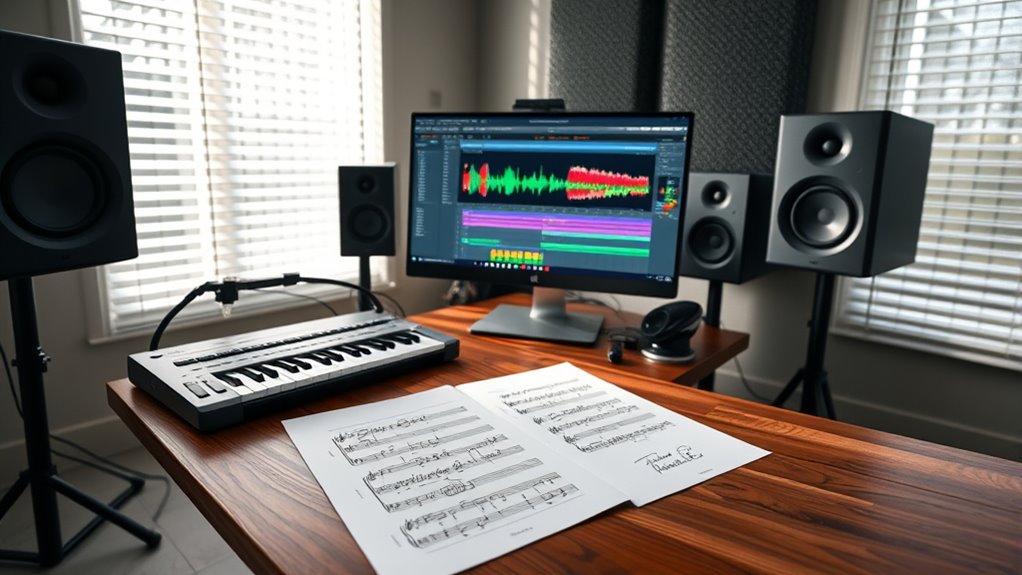
Have you ever wondered how different melodies can sound harmonious when played together? That’s where the concept of counterpoint comes into play. It’s the art of combining multiple independent melodies into a cohesive, pleasing whole. As a modern producer, understanding counterpoint helps you craft richer, more engaging compositions. One key element in this process is managing harmonic tension. When melodies interact, they create moments of stability and instability, which keep listeners interested. You want to balance these moments so the music feels dynamic but not chaotic. Harmonic tension arises when notes clash slightly or create a sense of expectancy. Properly controlled, it adds emotional depth and complexity to your tracks. For example, dissonant intervals like minor seconds or diminished chords generate tension, which you can then resolve with more stable consonant sounds. This push and pull makes your music more compelling and expressive.
Another *indispensable* aspect is melodic independence. When multiple melodies move independently, they each have their own rhythm, contour, and character, yet work together harmoniously. Think of each melody as a voice in a choir—each has its own personality but contributes to the overall sound. Achieving melodic independence requires you to write lines that follow their own internal logic, avoiding overly predictable patterns. This independence prevents the music from sounding monotonous or dull. Instead, it creates a layered texture where each voice adds a new dimension. Modern producers often use counterpoint to generate complexity in electronic or pop music, layering melodies that contrast in rhythm or pitch but still complement each other. The trick is ensuring these melodies maintain their independence without clashing or losing coherence. When done correctly, the interplay of independent lines produces a vibrant, engaging sound that holds the listener’s attention. Additionally, understanding appliance integration can inspire creative ways to incorporate technology that enhances your musical workflow.
In practice, applying counterpoint means you should focus on how each melody interacts over the harmonic foundation. Play with dissonance and consonance, resolve tension thoughtfully, and craft melodies that are distinct yet compatible. It’s about finding the right balance between melodic independence and harmonic coherence. This balance gives your music depth, making it more interesting and emotionally resonant. By mastering these principles, you’ll be better equipped to create compositions that are not only sonically rich but also emotionally compelling. Counterpoint isn’t just a historical technique; it’s a powerful tool that, when used skillfully, elevates your production to a new level. So, experiment with independent melodies and harmonic tension—your listeners will notice the difference.
Frequently Asked Questions
How Does Counterpoint Differ Across Musical Genres?
You’ll notice that counterpoint varies across genres through genre-specific techniques and stylistic adaptations. In classical music, it’s precise and rule-based, while jazz embraces improvisation and syncopation. Pop often simplifies counterpoint to highlight vocals, and electronic music experiments with unconventional textures. By understanding these stylistic differences, you can adapt counterpoint techniques to fit each genre’s unique sound, creating more compelling and authentic compositions.
What Are Common Mistakes Beginners Make With Counterpoint?
As a beginner, you often make voice leading errors by jumping between chord tones awkwardly, disrupting smooth progressions. You might also rely on improper consonances, like parallel fifths or octaves, which weaken your counterpoint. To improve, focus on guiding voices smoothly, avoiding parallel movements, and respecting traditional consonance rules. Practice slowly, listen carefully, and analyze good counterpoint examples to develop your skills and prevent these common mistakes.
How Can I Effectively Practice Counterpoint Daily?
You can effectively practice counterpoint daily by focusing on rhythmic independence and avoiding voice crossing. Start by composing short exercises that challenge you to create independent rhythmic lines, ensuring each voice maintains its own rhythm. Regularly analyze your work to spot voice crossing and correct it. Set aside just 10-15 minutes each day for these exercises, gradually increasing complexity, so you build confidence and develop a strong sense of counterpoint.
Are There Software Tools to Help Learn Counterpoint?
Think of software tools as your musical GPS, guiding your journey through counterpoint. Programs like MuseScore and Sibelius offer visual analysis features, helping you see how melodies interact, much like studying historical examples from Bach or Palestrina. These tools make practicing easier, showing where your lines clash or align, so you can learn intuitively and develop your skills faster, just like a seasoned composer refining their craft.
How Does Counterpoint Influence Modern Electronic Music?
Counterpoint influences modern electronic music by adding harmonic complexity and melodic independence to your compositions. It encourages you to create intertwined melodies that maintain their individuality while working harmoniously. This technique helps you develop more sophisticated arrangements, making your tracks richer and more engaging. By understanding counterpoint, you can craft intricate melodies and harmonies, elevating your music beyond basic loops and giving your productions a unique, timeless quality.
Conclusion
Don’t worry if counterpoint feels complex at first—you just need to start simple and practice regularly. Even if you’re tempted to skip it, mastering basic counterpoint will open new creative possibilities and add depth to your productions. Remember, every great producer started somewhere. So, embrace the challenge, experiment with different lines, and soon you’ll see how counterpoint transforms your music into something richer and more compelling. Keep going—you’re capable of creating something truly unique.