The right studio headphones for music production depend on one decision before anything else: open-back or closed-back. Open-back models like the Beyerdynamic DT 990 Pro give you a wider, more honest soundstage for mixing, while closed-back options like the Sony MDR7506 and Beyerdynamic DT 770 Pro isolate sound so you can record vocals and drums without bleed into the mic. My overall pick is the Sony MDR7506, because it delivers the flattest, most translate-friendly response at a price that leaves room in the budget for acoustic treatment or monitors. The Audio-Technica ATH-M50x stands out if you want one pair that handles production and everyday listening, and the Audio-Technica ATH-M20x is the smartest entry point under $60. The main tradeoff in this category is accuracy versus comfort versus isolation — no single pair wins all three. Keep reading for the full breakdown of all 13 models.
Complete the kit


Key Takeaways
- Closed-back models dominated the top of this ranking because most home producers need tracking and mixing in one pair — the Sony MDR7506 and Beyerdynamic DT 770 Pro balance both jobs best.
- The Audio-Technica M-series ladder (M20x, M30x, M40x, M50x) revealed a clear pattern: the M40x is the sweet spot for flat response, while the M50x’s slight bass lift suits hybrid producer-listeners more than pure mix engineers.
- Open-back picks (DT 990 Pro, HD 560S, AKG K240) offered noticeably better soundstage and mixing translation, but every one of them leaks sound and is unusable for recording vocals — they’re second-pair purchases, not first pairs.
- Sub-$50 options (OneOdio wired and A71, Samson SR850) are legitimate starter tools, but their boosted low end means mixes translated thin on reference systems — a real cost for beginners learning EQ decisions.
- Impedance separated the lineup more than price did: the 250-ohm DT 990 Pro needs an audio interface with strong headphone output, while the 80-ohm DT 770 Pro achieves similar quality from everyday interfaces.
| Beyerdynamic DT 990 Pro (250 Ohm) Open-Back Studio Headphones, Black |  | Best for Critical Mixing | Impedance: 250Ω | Design: Open-back, over-ear, circumaural | Fit: Over-ear, replaceable velour ear pads | VIEW LATEST PRICE | See Our Full Breakdown |
| OneOdio Wired DJ Hi-Res Over-Ear Headphones |  | Best Budget Starter Pair | Driver Size: 50mm | Magnet Type: Neodymium | Ear Cup Rotation: 90° | VIEW LATEST PRICE | See Our Full Breakdown |
| Audio-Technica ATH-M50X Professional Studio Monitor Headphones, Black | 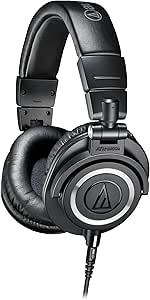 | Best Overall | Driver Size: 45mm | Design: Closed-back, circumaural | Swiveling Earcups: 90 degrees | VIEW LATEST PRICE | See Our Full Breakdown |
| Sennheiser HD 560S Open-Back Over-Ear Wired Audiophile Headphones |  | Best for Mixing Accuracy | Design: Open-back, over-ear | Connectivity: Wired | Connector Type: 1/4-inch (6.3mm) | VIEW LATEST PRICE | See Our Full Breakdown |
| Audio-Technica ATH-M40x Professional Studio Monitor Headphones, Black |  | Best Value Pick | Driver Size: 40mm | Driver Construction: Rare earth magnets, copper-clad aluminum voice coils | Design: Closed-back, circumaural | VIEW LATEST PRICE | See Our Full Breakdown |
| Audio-Technica ATH-M20x Professional Studio Monitor Headphones |  | Best Budget Entry Point | Driver Size: 40 mm | Design: Closed-back, circumaural | Cable Exit: Single side | VIEW LATEST PRICE | See Our Full Breakdown |
| Beyerdynamic DT 770 PRO 80 Ohm Studio Headphones |  | Best Closed-Back Isolation for Mixing | Impedance: 80 Ohm | Design: Closed-back, over-ear | Cable Length: 3 meters, straight | VIEW LATEST PRICE | See Our Full Breakdown |
| Audio-Technica ATH-M30x Professional Studio Monitor Headphones |  | Best Step-Up Budget Pick | Driver Size: 40 mm | Design: Closed-back, circumaural | Cable: Single-side exit | VIEW LATEST PRICE | See Our Full Breakdown |
| OneOdio A71 Hi-Res Wired Over-Ear Studio Headphones |  | Best Ultra-Budget DJ/Monitor Hybrid | Driver Size: 40 mm | Cable Length: 6.6–9.8 ft (coiled) | Connectors: 3.5mm and 6.35mm plugs | VIEW LATEST PRICE | See Our Full Breakdown |
| Sony MDR7506 Professional Large Diaphragm Headphones |  | Best Industry Standard for Reference Mixing | Driver Size: 40 mm | Magnet Type: Neodymium | Frequency Response: 10Hz – 20kHz | VIEW LATEST PRICE | See Our Full Breakdown |
| Sennheiser HD 280 Pro Headphones, Black |  | Best for Tracking in Loud Rooms | Connectivity: Wired | Design: Closed-back, around-the-ear, collapsible | Noise Attenuation: Up to 32 dB | VIEW LATEST PRICE | See Our Full Breakdown |
| AKG K240 Studio Semi-Open Studio Headphones |  | Best Mid-Price Mixing Reference | Design: Over-ear, semi-open | Transducer Size: 30 mm XXL | Diaphragm: Varimotion | VIEW LATEST PRICE | See Our Full Breakdown |
| Samson SR850 Professional Studio Reference Headphones |  | Best Budget Starter Pair | Design: Over-ear, semi-open | Driver Size: 50 mm | Frequency Response: 10 Hz – 30 kHz | VIEW LATEST PRICE | See Our Full Breakdown |
| studio headphones for music production | Design | Driver Size |
|---|---|---|
| Beyerdynamic DT 990 Pro | Open-back, over-ear, circumaural | — |
| OneOdio Wired DJ Hi-Res Over-E | Closed-back, over-ear | 50mm |
| Audio-Technica ATH-M50X Profes | Closed-back, circumaural | 45mm |
| Sennheiser HD 560S Open-Back O | Open-back, over-ear | — |
| Audio-Technica ATH-M40x Profes | Closed-back, circumaural | 40mm |
| Audio-Technica ATH-M20x Profes | Closed-back, circumaural | 40 mm |
| Beyerdynamic DT 770 PRO 80 Ohm | Closed-back, over-ear | — |
| Audio-Technica ATH-M30x Profes | Closed-back, circumaural | 40 mm |
| OneOdio A71 Hi-Res Wired Over- | Closed-back, over-ear | 40 mm |
| Sony MDR7506 Professional Larg | Closed-back, over-ear | 40 mm |
| Sennheiser HD 280 Pro Headphon | Closed-back, around-the-ear, collapsible | — |
| AKG K240 Studio Semi-Open Stud | Over-ear, semi-open | — |
| Samson SR850 Professional Stud | Over-ear, semi-open | 50 mm |
More Details on Our Top Picks
Beyerdynamic DT 990 Pro (250 Ohm) Open-Back Studio Headphones, Black
The DT 990 Pro stands out for its open-back soundstage, which gives mixes a sense of space and depth that closed-back options like the Audio-Technica ATH-M50X simply cannot replicate. That wider presentation makes it easier to judge reverb tails, panning, and subtle stereo placement during critical mixing work. German build quality and replaceable ear pads mean this pair can survive years of daily studio abuse. The catch is the 250Ω impedance: plugged straight into a laptop or interface, these will sound thin and quiet, so a dedicated headphone amp is a practical requirement, not an optional upgrade. And because sound leaks both ways, they belong in a treated room, not a shared space or vocal booth.
Pros:- Wide, natural soundstage that reveals stereo placement and reverb detail
- Comfortable for marathon mixing sessions
- Replaceable ear pads extend lifespan indefinitely
- Tank-like German build quality
Cons:- 250Ω impedance demands a headphone amp for proper volume and bass response
- Open-back design leaks sound and blocks no external noise
Best for: Producers mixing in a quiet, treated room who already own a headphone amplifier or audio interface with strong output
Not ideal for: Anyone tracking vocals or working in noisy environments — the open-back design leaks sound in both directions and isolates almost nothing
- Impedance:250Ω
- Design:Open-back, over-ear, circumaural
- Fit:Over-ear, replaceable velour ear pads
- Intended Use:Critical mixing, editing, audiophile listening
- Amplification Required:Yes — headphone amp or strong interface output
- Country of Manufacture:Germany
- Color:Black
Our verdict“If you mix in a quiet room and have amplification, the DT 990 Pro is the reference-grade choice — otherwise look at a closed-back alternative.”
OneOdio Wired DJ Hi-Res Over-Ear Headphones
Not everyone starting out can justify ATH-M50X money, and this is where the OneOdio Hi-Res earns its slot. For a fraction of the price, it delivers 50mm drivers with bass response that makes it genuinely fun for DJing and rough tracking, and the 90° rotating ear cups enable single-ear monitoring the same way pricier models do. Both 3.5mm and 6.35mm plugs are included, so it hooks up to controllers, keyboards, and interfaces without adapters. Compared with the ATH-M40x, the tuning is bass-forward rather than neutral, which flatters playback but colors mixing decisions — beginners should learn that limitation early. Build comfort is decent but bulkier, and there’s no detachable cable, so a cable failure means replacing the whole unit.
Pros:- Very low price with 50mm drivers and punchy bass
- Dual 3.5mm and 6.35mm connections without adapters
- 90° rotating cups for one-ear DJ monitoring
- Share port lets a second person plug in directly
Cons:- Bass-heavy tuning is not accurate enough for mixing decisions
- Non-detachable cable — damage means replacing the headphones
Best for: Beginner producers and DJs who need a single affordable pair for practice, tracking, and casual listening across multiple devices
Not ideal for: Anyone doing final mixes — the boosted bass signature skews low-end balance decisions compared with neutral monitors
- Driver Size:50mm
- Magnet Type:Neodymium
- Ear Cup Rotation:90°
- Connectivity:Wired (3.5mm and 6.35mm)
- Share Port:Yes
- Single-Side Monitoring:Yes
- Design:Closed-back, over-ear
Our verdict“A capable, affordable first pair for learning and DJing, but producers should graduate to neutral monitors before trusting final mixes to it.”
Audio-Technica ATH-M50X Professional Studio Monitor Headphones, Black
This is the pair I point most producers toward first. The ATH-M50X hits the rare balance of clear, detailed mids, deep contoured bass, and closed-back isolation in one package that handles mixing, tracking, and mobile work equally well. Where the DT 990 Pro needs an amp and a quiet room, the M50X runs happily off a laptop and blocks enough bleed to sit near a live microphone. The detachable cable is the quiet advantage over cheaper OneOdio models — the cable is the first thing to fail, and here it’s a $20 fix instead of a new purchase. The tradeoff is honest: the low end is slightly elevated compared with truly flat reference monitors like the Sony MDR7506, so bass-heavy genres translate with a small correction curve learned over time.
Pros:- Versatile closed-back design works for tracking and mixing
- Detachable cable makes the most common failure cheap to fix
- Folds flat with 90° swiveling earcups for one-ear monitoring
- Runs well without a dedicated amplifier
Cons:- Low end is slightly elevated rather than reference-flat
- Bulky folding frame is awkward for casual portable use
Best for: Home studio producers who want one dependable pair for tracking, mixing, and everyday listening without an amplifier
Not ideal for: Mixing engineers seeking perfectly flat reference tuning — the slightly boosted bass can mislead low-end decisions compared with neutral monitors
- Driver Size:45mm
- Design:Closed-back, circumaural
- Swiveling Earcups:90 degrees
- Cable:Detachable
- Ear Cups:Professional grade earpads and headband
- Folding Design:Yes, folds flat for transport
- Isolation:Good passive isolation
Our verdict“The safest all-around buy in this roundup — one pair that covers every stage of production for most home studios.”
Sennheiser HD 560S Open-Back Over-Ear Wired Audiophile Headphones
Where the ATH-M50X flatters, the HD 560S tells the truth. Its neutral, analytically flat tuning and wide open-back soundstage make it the closest thing in this price range to hearing your mix the way mastering engineers will — no hidden bass lumps, no smeared highs. Compared with the Beyerdynamic DT 990 Pro, the Sennheiser needs less amplification and offers a more even tonal balance, though the DT 990 Pro counters with slightly more dramatic treble energy. Ergonomically, the light clamp force and ergonomic design make long reference-checking sessions painless. The compromises are structural: open backs leak and isolate nothing, the 1/4-inch terminated cable assumes studio gear rather than phones, and there’s no folding mechanism for travel. This is a tool for a quiet room, full stop.
Pros:- Exceptionally neutral tuning for confident mix translation
- Wide soundstage with realistic depth imaging
- Light, ergonomic fit for long sessions
- Easier to drive than high-impedance alternatives like the DT 990 Pro
Cons:- Open-back design offers no isolation and leaks sound
- 1/4-inch wired connection limits use with phones and portables
Best for: Producers and mastering-focused engineers who prioritize tonal accuracy and reference-quality translation over versatility
Not ideal for: Mobile producers or anyone in shared spaces — sound leakage in and out makes them unusable for tracking or coffee-shop sessions
- Design:Open-back, over-ear
- Connectivity:Wired
- Connector Type:1/4-inch (6.3mm)
- Sound Signature:Neutral, reference tuning
- Soundstage:Wide with realistic depth
- Ergonomics:Lightweight ergonomic design for extended use
- Bass Response:Extended low end
Our verdict“For checking how a mix truly translates, this is the most honest open-back option here — provided you work in a quiet, private space.”
Audio-Technica ATH-M40x Professional Studio Monitor Headphones, Black
The ATH-M40x is the smart money answer for producers who want honest monitoring without paying the M50X premium. Its tuning is actually flatter than its bigger sibling, which many mix engineers prefer — the M50X’s bass lift is absent here, giving the 40x a more trustworthy low-end read. You still get the features that matter most: detachable cables, 90° swiveling earcups, and solid passive isolation from the circumaural cups for tracking duties. Compared with the OneOdio Hi-Res at budget prices, the step up in neutrality and build refinement is immediately audible. Two things hold it back: the clamp force runs tight and can fatigue larger heads during long sessions, and the 40mm drivers lack the last bit of resolution the M50X delivers on dense, layered mixes.
Pros:- Flatter, more neutral tuning than the ATH-M50X
- Detachable dual cables included
- Strong passive isolation for tracking
- 90° swiveling earcups for one-ear monitoring
Cons:- Clamp force runs tight and fatigues over long sessions
- 40mm drivers resolve slightly less detail than the M50X
Best for: Budget-conscious home producers who want flatter-than-M50X tuning and true studio features at a lower price
Not ideal for: Listeners with larger heads or those wanting maximum detail retrieval — the tight clamp and smaller drivers fall short of the M50X on dense mixes
- Driver Size:40mm
- Driver Construction:Rare earth magnets, copper-clad aluminum voice coils
- Design:Closed-back, circumaural
- Swiveling Earcups:90 degrees
- Cables:Detachable cables included
- Isolation:Good passive sound isolation
- Materials:Pro-grade ear pads and headband
Our verdict“The best price-to-accuracy ratio in the lineup — buy it over the M50X if flat tuning matters more to you than premium detail.”
Audio-Technica ATH-M20x Professional Studio Monitor Headphones
The ATH-M20x is the cheapest legitimate way into Audio-Technica’s studio lineup, and that’s exactly its role here. Compared with its sibling the ATH-M30x, it gives up the foldable hinge and some mid-range refinement, but keeps the circumaural isolation that makes closed-back tracking possible on a tight budget. The 40mm drivers lean toward the low end, which sounds pleasant but can flatter a mix that actually needs bass correction — a real tradeoff if accuracy matters more than enjoyment. Where it beats similarly priced options like the OneOdio A71 is in restraint: the tuning is more neutral and less hyped. Build quality is functional rather than rugged, so daily-throw-in-a-bag producers will want something sturdier.
Pros:- Genuine studio tuning at an entry-level price
- Circumaural design blocks enough noise for tracking vocals
- Single-side cable exit prevents tangles at the desk
- Lightweight enough for long sessions
Cons:- Bass response lacks the depth needed for accurate mix translation
- Plastic-heavy build won’t survive rough transport
- No folding or detachable parts
Best for: Beginner producers and home recordists who need honest closed-back monitoring under $60
Not ideal for: Producers finalizing low-end-heavy mixes — the bass response is too forgiving for critical decisions
- Driver Size:40 mm
- Design:Closed-back, circumaural
- Cable Exit:Single side
- Tuning:Enhanced low-frequency response
- Color:Black
- Intended Use:Tracking and mixing
Our verdict“The right first pair for anyone starting out who wants to learn mixing on neutral gear without overspending.”
Beyerdynamic DT 770 PRO 80 Ohm Studio Headphones
This option stands out for isolation plus long-session comfort, a combination almost nothing else in this price class matches. The velour ear pads breathe in a way the pleather-padded Sony MDR7506 and ATH-M20x simply don’t, which matters during six-hour mixing marathons. The 80-ohm version sits in a sweet spot: unlike the 250-ohm DT 990 Pro, it runs reasonably well from an audio interface’s headphone jack without a dedicated amp, though phones and laptops will still leave it underpowered. The tradeoff is size and cable management — a 3-meter non-detachable cable and a bulky frame make this a desk headphone, not a commuter one. Its low-end is fuller than the MDR7506’s, which some producers love and others find slightly flattering.
Pros:- Class-leading passive noise isolation for tracking
- Velour pads stay comfortable through marathon sessions
- Replaceable parts extend lifespan well past cheaper rivals
- 80-ohm impedance works with most audio interfaces
Cons:- Underpowered by phones and laptops without an amp
- Bulky frame and 3m fixed cable restrict portability
- Slightly elevated bass may color mix decisions
Best for: Home studio owners who mix for hours in untreated rooms and need isolation with real comfort
Not ideal for: Mobile producers or anyone mixing primarily from a phone — the 80-ohm impedance and long cable fight portability
- Impedance:80 Ohm
- Design:Closed-back, over-ear
- Cable Length:3 meters, straight
- Connector:3.5mm with 6.35mm adapter
- Ear Pads:Velour, replaceable
- Country of Manufacture:Germany
- Intended Use:Recording, mixing, editing
Our verdict“The closed-back pick for producers who prioritize comfort and isolation during long mixing sessions at an interface.”
Audio-Technica ATH-M30x Professional Studio Monitor Headphones
The ATH-M30x occupies the middle rung of Audio-Technica’s ladder, and compared with the ATH-M20x below it, the upgrades are real: clearer mid-range presentation, a foldable frame, and slightly better build. It still sits beneath the ATH-M40x, which adds detachable cables and a flatter response — so the M30x makes the most sense for buyers who want more detail than the M20x without paying the M40x premium. Its collapsible design is the practical differentiator at this price, fitting into a bag in a way the non-folding M20x can’t. The honest drawback is low-end accuracy: bass is present but not deep enough to trust for sub-heavy genres, so EDM and hip-hop producers should budget for a pairing with monitors or a bass-focused reference.
Pros:- Mid-range clarity that reveals vocal and guitar problems
- Folds flat for transport between rooms or studios
- Better build than the entry-level M20x
- Reliable sound isolation for tracking
Cons:- Bass extension falls short for low-end-critical mixing
- No detachable cable — damage means replacing the pair
Best for: Intermediate home producers upgrading from earbuds or cheap headphones who want portability and mid-range clarity
Not ideal for: Bass-driven producers finalizing 808-heavy tracks without a secondary reference
- Driver Size:40 mm
- Design:Closed-back, circumaural
- Cable:Single-side exit
- Foldable:Yes
- Tuning:Detailed sound, mid-range focused
- Color:Black
Our verdict“A sensible middle ground for producers who’ve outgrown the cheapest options but aren’t ready to pay for the M40x.”
OneOdio A71 Hi-Res Wired Over-Ear Studio Headphones
At the bottom of the price ladder, the OneOdio A71 competes by throwing in features the big brands reserve for pricier models: both 3.5mm and 6.35mm plugs, a long coiled cable, 90-degree swiveling earcups, and even a jack for chaining a second listener. For DJ-adjacent producers or anyone cueing tracks in a shared space, that flexibility is genuinely useful. The honest comparison is with the ATH-M20x: OneOdio gives you more accessories and bass energy for less money, but the tuning is less neutral, meaning mixes made on it may sound thin elsewhere. It’s better suited to tracking, cueing, and casual monitoring than final mix decisions. The coiled cable adds reach but also weight and drag that some users will find annoying at a desk.
Pros:- Includes both 3.5mm and 6.35mm plugs without adapters
- 90-degree swiveling cups for single-ear DJ cueing
- Audio-sharing jack lets a second person listen in
- Long coiled cable stretches across a desk or booth
Cons:- Tuning is bass-forward rather than neutral, coloring mixes
- Coiled cable adds noticeable weight and pull
- No active noise cancellation
Best for: DJs, podcasters, and hobbyists who need dual plugs, shared listening, and swivel cups for under $40
Not ideal for: Anyone making final mixing decisions — the hyped tuning won’t translate reliably to other systems
- Driver Size:40 mm
- Cable Length:6.6–9.8 ft (coiled)
- Connectors:3.5mm and 6.35mm plugs
- Earcups:90° swiveling
- Design:Closed-back, over-ear
- Extra Feature:Audio sharing with second device
- Color:Black
Our verdict“The cheapest way to get DJ-friendly features and usable monitoring, as long as final mix decisions happen elsewhere.”
Sony MDR7506 Professional Large Diaphragm Headphones
The MDR7506 is the headphone you’ll see hanging in nearly every professional studio, and that ubiquity is its superpower: if a mix translates on these, it translates almost everywhere. Its 10Hz–20kHz frequency response and slightly forward high end expose harshness and sibilance that smoother models like the DT 770 PRO soften — useful for problem-solving, occasionally fatiguing for long sessions. Compared with the ATH-M30x, the Sony offers a flatter, more proven reference character, though its non-detachable coiled cord and the gold-plated 1/4-inch plug mean laptop users need an adapter. The foldable frame and rugged build have kept it relevant for decades. Some heads will find the clamp force tight; that pressure is part of why isolation is so effective.
Pros:- Decades-proven reference tuning trusted across professional studios
- Wide 10Hz–20kHz response reveals harshness and detail
- Folds up compactly for location work
- Rugged construction built for daily studio abuse
Cons:- Non-detachable coiled cord means cable damage kills the pair
- Tight clamp force fatigues larger heads over long sessions
- Forward treble can be tiring during extended listening
Best for: Producers and engineers who want a proven reference tuning that most professional studios already know
Not ideal for: Long-session comfort seekers with larger heads — the tight clamp and firm pads become uncomfortable over hours
- Driver Size:40 mm
- Magnet Type:Neodymium
- Frequency Response:10Hz – 20kHz
- Cord Length:9.8 feet, coiled
- Connector:Gold-plated 1/4-inch plug
- Design:Closed-back, over-ear
- Foldable:Yes
Our verdict“The safest reference choice for anyone who wants the same monitoring sound the professional world has relied on for decades.”
Sennheiser HD 280 Pro Headphones, Black
When a session involves live drums or a vocalist recording next to a blaring monitor mix, passive isolation matters more than anything else, and that’s exactly where this option pulls ahead. The up to 32 dB of noise attenuation is among the strongest in this roundup — noticeably better than the AKG K240 Studio or Samson SR850, both of which leak in both directions due to their semi-open builds. Compared with the Sony MDR7506, the other classic closed-back tracking choice here, the HD 280 Pro trades a bit of that Sony brightness for a flatter, more predictable response. The replaceable earpads and headband padding mean the cable-and-padding wear that kills budget headphones becomes a cheap fix instead of a replacement. The tradeoff: coiled wired mobility is limited, and the tuning is workmanlike rather than fun.
Pros:- Up to 32 dB of passive noise attenuation for tracking
- Replaceable earpads and headband padding extend lifespan
- Lightweight and comfortable through long sessions
- Collapsible design travels well between rooms and sessions
Cons:- Coiled wired cable restricts movement around a desk
- Closed-back soundstage feels narrow compared to semi-open rivals
Best for: Engineers tracking live instruments or vocals who need serious isolation without bleed into the mic
Not ideal for: Anyone wanting an open, spacious sound for critical mixing — the closed, dry presentation is purely functional
- Connectivity:Wired
- Design:Closed-back, around-the-ear, collapsible
- Noise Attenuation:Up to 32 dB
- Frequency Response:Extended
- Cord Length:3.3 to 9.8 feet
- Replaceable Parts:Earpads and headband padding
Our verdict“This pick makes the most sense for tracking-heavy engineers who prioritize isolation and repairability over sonic excitement.”
AKG K240 Studio Semi-Open Studio Headphones
The K240 Studio occupies a useful middle ground that most of this lineup skips over: more spatial depth than closed-back options like the ATH-M50X or Sennheiser HD 280 Pro, yet far cheaper than premium open-backs like the Beyerdynamic DT 990 Pro. Its semi-open design and 30mm Varimotion drivers produce a wide dynamic range that helps panning and reverb decisions translate better to speakers. The self-adjusting headband disappears on your head during marathon mix sessions, and the generous 9.9-foot cable plus 1/4-inch adapter covers any studio setup without extensions. But the semi-open architecture is a double-edged sword — it leaks sound badly enough that tracking vocals alongside these is off the table, and bass response runs leaner than closed models, which can mislead low-end judgments.
Pros:- Open-feeling soundstage that improves mixing and panning decisions
- Self-adjusting headband stays comfortable for hours
- Versatile cabling with 1/8-inch plug, 1/4-inch adapter, and 9.9-foot reach
Cons:- Semi-open design leaks sound in and out
- Bass is lean compared to closed-back competitors
Best for: Home studio owners doing mixing and podcast editing who want an open sound at a mid-range price
Not ideal for: Producers tracking vocals or acoustic instruments — the semi-open design bleeds click tracks and guide mixes straight into the mic
- Design:Over-ear, semi-open
- Transducer Size:30 mm XXL
- Diaphragm:Varimotion
- Connectivity:1/8-inch stereo plug with 1/4-inch adapter
- Cable Length:9.9 feet
- Headband:Self-adjusting
- Intended Use:Mixing, podcasting, Hi-Fi listening
Our verdict“This model suits mixers who want depth and honesty on a budget, provided tracking duties belong to a separate closed-back pair.”
Samson SR850 Professional Studio Reference Headphones
For a first pair of studio cans, the SR850 gets the fundamentals right where most budget models fail. The 50mm drivers and 10Hz–30kHz frequency response deliver more detail and low-end extension than anything near its price, including the OneOdio A71 or ATH-M20x, which both sound comparatively veiled in the highs. The self-adjusting headband mirrors the comfort trick of the pricier AKG K240 Studio — unsurprising given the shared design lineage — and the gold-plated 1/4-inch adapter means it plugs straight into an audio interface. It’s not flawless: the semi-open back leaks sound like the K240, and the 32-ohm impedance is easy to drive from a phone but rewards a decent interface amp to keep the low end tight. Compared with spending three times more on an ATH-M50X, beginners lose refinement, not capability.
Pros:- Wide 10Hz–30kHz response reveals detail rare at this price
- 50mm drivers give solid low-end weight
- Self-adjusting headband fits comfortably without fiddling
- Gold-plated 1/4-inch adapter included for interface use
Cons:- Semi-open design leaks sound in both directions
- Low-end tightness suffers without decent amplification
Best for: Beginners building a first home studio who need honest reference sound under a tight budget
Not ideal for: Anyone recording with a mic in the same room — semi-open leakage will contaminate takes
- Design:Over-ear, semi-open
- Driver Size:50 mm
- Frequency Response:10 Hz – 30 kHz
- Impedance:32 ohms
- Headband:Self-adjusting
- Adapters:1/8-inch to 1/4-inch, gold-plated
Our verdict“The smartest first purchase for new producers who want reference-grade detail before committing to expensive headphones.”
How We Picked
I evaluated every pair against what actually determines success in a production workflow: frequency response neutrality (how honestly a mix translates to speakers and cars), isolation and bleed (whether you can track vocals while wearing them), comfort over long sessions, build repairability, and value relative to a home-studio budget. A headphone that flatters a mix is worse than useless in this context — it hides problems — so accuracy always outranked excitement in the ranking.
The ordering also reflects a practical reality: most buyers in this category own exactly one pair. That’s why versatile closed-backs sit higher than technically superior open-backs, and why power requirements (impedance and interface compatibility) factored into placement. Accessories matter too — the ATH-M50x’s detachable cable and the MDR7506’s foldable design earned real credit, because a broken cable kills a workflow faster than a midrange dip ever will.
| studio headphones for music production | Design |
|---|---|
| Beyerdynamic DT 990 Pro | Open-back, over-ear, circumaural |
| OneOdio Wired DJ Hi-Res Over-E | Closed-back, over-ear |
| Audio-Technica ATH-M50X Profes | Closed-back, circumaural |
| Sennheiser HD 560S Open-Back O | Open-back, over-ear |
| Audio-Technica ATH-M40x Profes | Closed-back, circumaural |
| Audio-Technica ATH-M20x Profes | Closed-back, circumaural |
| Beyerdynamic DT 770 PRO 80 Ohm | Closed-back, over-ear |
| Audio-Technica ATH-M30x Profes | Closed-back, circumaural |
| OneOdio A71 Hi-Res Wired Over- | Closed-back, over-ear |
| Sony MDR7506 Professional Larg | Closed-back, over-ear |
| Sennheiser HD 280 Pro Headphon | Closed-back, around-the-ear, collapsible |
| AKG K240 Studio Semi-Open Stud | Over-ear, semi-open |
| Samson SR850 Professional Stud | Over-ear, semi-open |
Factors to Consider When Choosing Studio Headphones For Music Production
Before spending anything, it helps to understand what actually separates a production headphone from a consumer one — and where the marketing language misleads buyers.Open-Back vs. Closed-Back: Your First and Biggest Decision
This choice shapes every session you’ll ever run. Closed-back headphones seal the ear, which blocks room noise and prevents your cue mix from bleeding into a vocal or guitar mic — non-negotiable if you record yourself or others. Open-back headphones leak sound freely in both directions but reward you with a wider, more speaker-like soundstage where panning and reverb decisions become far easier. The common mistake is treating open-backs as “better” because audiophiles prefer them; for tracking, they’re simply the wrong tool. If you can only buy one pair, closed-back wins by default. Many producers eventually own both — a closed pair for recording and an open pair for the final mix — but that’s a luxury, not a starting requirement.
Impedance and What Your Interface Can Actually Drive
Impedance, measured in ohms, determines how much power your headphones need to reach a healthy volume — and it’s the spec buyers misjudge most often. A 250-ohm model like the DT 990 Pro will sound thin and quiet straight out of a laptop headphone jack, and even some budget interfaces struggle to drive it properly. Lower-impedance models (32–80 ohms) reach full performance from nearly any source. The mistake isn’t buying high impedance — it’s buying high impedance without owning the amplification to match. Check your interface’s headphone output specification before committing. If it’s unspecified or weak, stay at 80 ohms or below.
Flat Response Means Honest, Not Boring
Consumer headphones boost bass and scoop mids to make music feel impressive; studio headphones aim for the opposite. A flat response exposes flaws — muddiness, harsh sibilance, weak low mids — so you can fix them before listeners on earbuds notice. This is why a “boring” headphone like the MDR7506 outlives trendier options in professional studios. The trap to avoid: buying bass-heavy headphones for producing bass-heavy music. Boosted low end fools you into cutting bass that was actually fine, and your mix arrives thin everywhere else. If you produce hip-hop or EDM, compensate with reference tracks you know intimately rather than with flattering headphones.
Comfort Is a Technical Spec, Not a Luxury
Production sessions run three to eight hours, and physical fatigue causes real mixing errors — tired ears and clamping pressure push engineers to finish mixes prematurely. Clamp force, ear cup depth, and pad material all matter: velour pads (common on Beyerdynamic open-backs) breathe better in long sessions, while pleather pads isolate better but get sweaty. Weight distribution matters more than total weight, since a well-suspended heavy headphone beats a poorly hinged light one. Also check pad availability — pads are wear items that degrade in one to two years, and a headphone with cheap replacement pads stays in service far longer than one without. An uncomfortable headphone you take off mid-session is a bottleneck on your entire workflow.
Cables, Parts, and the Longevity Question
The most common death of studio headphones isn’t driver failure — it’s a broken cable or a snapped headband hinge. Detachable cables (found on the ATH-M40x, M50x, and DT 770 Pro’s replaceable straight cable) turn a fatal fault into a $15 fix. Beyerdynamic goes further with user-replaceable drivers, pads, headbands, and every wearing part, which is why decades-old DT models still circulate in studios. Before buying, check whether the manufacturer sells parts at all — some budget models are effectively disposable. Spending $30 more on a repairable design often costs less over five years than replacing a cheap pair twice. This is where budget buying quietly becomes expensive.
When to Pay More — and When Not To
The honest price-performance curve in this category flattens hard above roughly $200. Between $60 and $170, each step buys measurable improvements in accuracy, comfort, and durability. Above that, gains become incremental and aimed at specialists — mastering engineers, immersive-format mixers, people with treated rooms. Pay more if you mix professionally, bill clients, or mix daily; accuracy compounds across hundreds of sessions. Don’t pay more if you’re still learning arrangement, sound design, and mixing fundamentals — a $100 pair plus $100 of room treatment, plugins, or training delivers far more improvement than a $300 headphone ever will. Your ears and habits improve faster than any transducer.
Frequently Asked Questions
Can I mix an entire track on headphones, or do I need studio monitors?
You can absolutely finish a mix on headphones — plenty of professional engineers do, especially in untreated rooms where speakers actually mislead more than headphones. The catch is that headphones exaggerate stereo width and underrepresent how bass interacts with a room, so low-end balance decisions are the weakest link. Two habits close the gap: check your mix on multiple systems (car, earbuds, phone speaker) before finalizing, and reference a commercial track in a similar genre at matched volume. Open-back models like the HD 560S or DT 990 Pro make this easier because their soundstage behaves more like speakers. Monitors become necessary when your room is treated and you’re mixing for clients who expect it — not before.
Do I need a headphone amplifier for the Beyerdynamic DT 990 Pro 250 Ohm?
Almost certainly yes, or at minimum a well-powered audio interface. The 250-ohm version needs substantially more voltage than laptop jacks or phones can deliver, and running it underpowered doesn’t just reduce volume — it changes the bass response and dynamics, so you’d be mixing on a distorted version of the headphone’s real character. Most mid-range interfaces (anything advertising a dedicated headphone amp section) drive it acceptably. If your setup is a laptop and a budget interface, the DT 770 Pro 80 Ohm gets you 90% of the same quality with far friendlier power requirements, and that’s exactly why it ranks higher in this lineup for most buyers.
Is the ATH-M50x actually a good studio headphone, or is it overhyped?
It’s genuinely good, but it’s slightly miscast as a pure mixing reference. The M50x has a modest bass lift and some treble energy that makes tracks sound energetic and flattering — great for production, tracking decisions, and client playback, less ideal for surgical balance work where the flatter M40x or MDR7506 exposes more truth. The hype comes from it being an excellent all-rounder: comfortable, foldable, detachable-cable, durable enough for daily mobile use. If the M50x is your only pair, you’ll make fine mixes by referencing against known tracks. If you already own a neutral reference, the M50x is better deployed as your production and everyday headphone than your final-mix tool.
Are cheap headphones like the OneOdio models or Samson SR850 good enough to learn on?
Good enough to learn arrangement, sound design, and workflow — yes, without question, and a beginner who finishes 20 tracks on a $35 headphone learns more than one who saves for a year. The honest limitation is EQ calibration: budget models boost bass and roll off or sharpen treble, so mixes made exclusively on them tend to sound thin or harsh elsewhere. The Samson SR850 is the strongest of the budget tier because its semi-open design gives a more realistic sense of space. The practical move is to learn on budget headphones but always sanity-check finished mixes on earbuds, a car, and phone speakers. Once your ears know what a good mix sounds like, upgrading the headphone produces an immediate and obvious improvement.
Should my first studio headphone be open-back or closed-back if I mostly make beats and record vocals?
Closed-back, without hesitation. Recording vocals is the deciding factor: open-back headphones audibly leak your beat into the microphone, and no amount of noise gate fixes that cleanly. A closed model like the DT 770 Pro 80 Ohm, HD 280 Pro, or M40x lets you track vocals, guitars, and even drums-in-the-room cue mixes without bleed. Beat-making itself doesn’t demand open-back — you’re making creative decisions, not final balance judgments. Once you’re mixing seriously and budget allows, add an open-back as a second pair for the detail work. First pair: closed. Second pair: open. That order fits how production skills actually develop.
Conclusion
Matching the pick to the buyer is straightforward once you know your workflow. For best overall, the Sony MDR7506 remains the safest all-around choice: accurate enough for real mixing decisions, closed for tracking, and priced to leave budget for everything else in your chain. The Beyerdynamic DT 770 Pro 80 Ohm is the better overall pick if long comfort and deep, controlled low end matter more to you — it’s my recommendation for beat-makers and anyone producing bass-heavy genres. For best value, the Audio-Technica ATH-M40x delivers the most neutral response per dollar in this entire lineup, outperforming its pricier M50x sibling for pure mixing. Best premium goes to the Sennheiser HD 560S, the most translation-honest headphone here — provided you already own a closed pair for tracking. Best for beginners is the ATH-M20x or, if even that strains the budget, the Samson SR850. And for specific needs: the DT 990 Pro for producers with a strong headphone amp who want an open soundstage, the HD 280 Pro for maximum isolation in loud rooms, and the ATH-M50x for the producer who wants one headphone that also handles listening and travel. Buy for the sessions you actually run, not the specs that look best on paper.