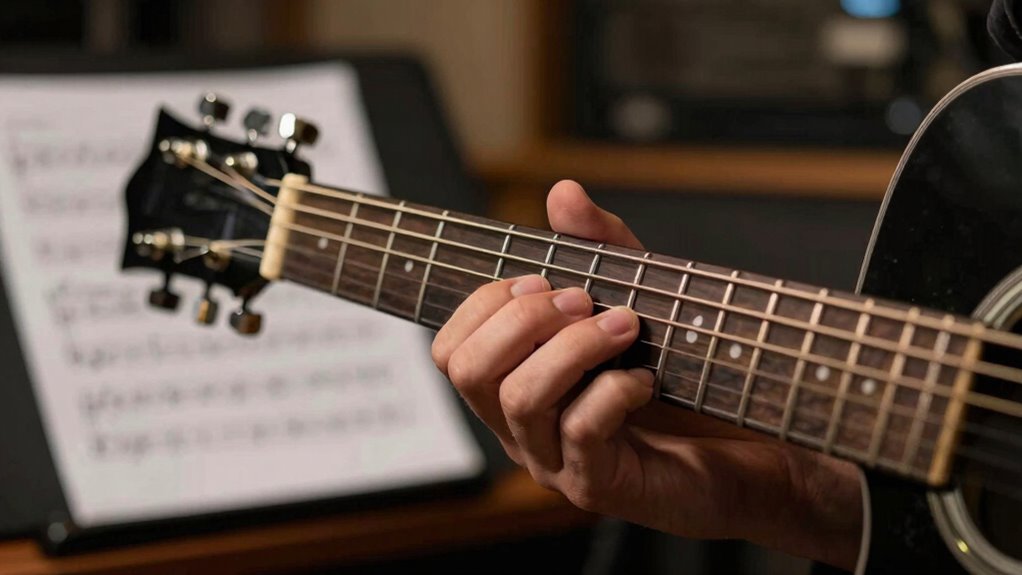

To hear chord qualities faster by ear, focus on developing your listening skills through consistent practice. Start by recognizing the unique sounds of major, minor, diminished, and augmented chords, and use ear training exercises to internalize these tonalities. Analyze chord progressions and sing along to reinforce your recognition. Combining music theory knowledge with active listening accelerates your ability to identify chords quickly. Keep practicing regularly, and you’ll soon notice your ear becoming more intuitive—there’s much more to discover ahead.

Get audio and creator gear delivered free — and shop member deals
- Fast, free delivery on millions of items
- Access to Prime Big Deal Days deals on October 6–7
- Prime Video, Amazon Music and more included
Key Takeaways
- Practice listening to isolated chords repeatedly to internalize their tonal characteristics quickly.
- Use ear training apps to develop speed in recognizing major, minor, diminished, and augmented qualities.
- Focus on emotional and tension cues in chords to differentiate qualities faster during listening.
- Analyze simple progressions actively to associate specific sound patterns with chord types.
- Incorporate regular, timed exercises to improve speed and accuracy in identifying chord qualities by ear.
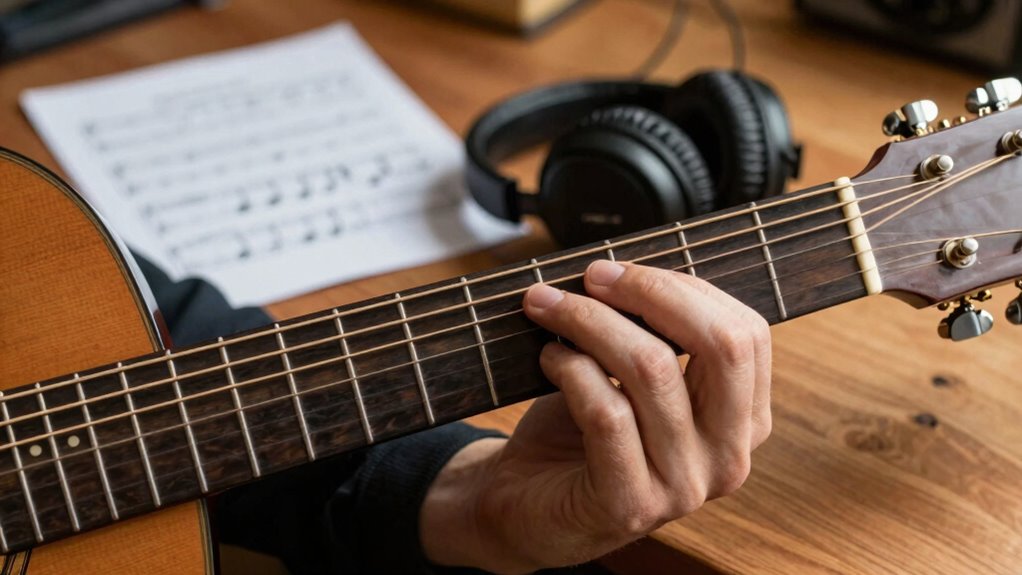
Learning to identify chord quality quickly by ear can dramatically improve your musical listening skills and improvisation. When you develop this skill, you gain a better understanding of how chords function within progressions, making your musical conversations more expressive and intuitive. To start, it’s essential to dive into music theory basics because a solid foundation helps you recognize the common characteristics of major, minor, diminished, and augmented chords. Once you understand the theoretical differences, you can focus on ear training exercises designed to sharpen your listening.
Ear training exercises are vital because they train your ear to distinguish the subtle differences in sound that define each chord quality. For example, you might practice listening to isolated chords played on a piano or guitar, trying to identify whether they’re major or minor. Over time, this helps you internalize the tonal qualities and associate them with their written symbols. Consistent practice makes it easier to recognize these qualities in real music, even when the chords aren’t played clearly or are part of a complex progression.
One effective exercise is to listen to chord progressions and actively try to identify the quality of each chord without looking at sheet music. Start with simple progressions like I–IV–V and focus on the emotional color each chord conveys. Major chords tend to sound bright and stable, while minor chords often feel more introspective or somber. Diminished and augmented chords have more unique, tense sounds that stand out once you become familiar with their qualities. You can also use apps or online tools that play random chords, encouraging your ears to recognize them on the fly. Additionally, understanding the fundamental harmonic functions of different chords can help you anticipate and identify their qualities more quickly. Incorporating contextual listening strategies can also improve your recognition skills by helping you interpret chords within musical phrases.
Another tip is to analyze recordings of songs you love, paying close attention to the harmonic shifts. Try to sing or hum along with the chords, matching their quality as closely as possible. This active engagement deepens your understanding and helps your ear associate specific sounds with their theoretical descriptions. Developing your aural skills through regular practice is essential because it accelerates your ability to identify chord qualities in real time. Consistent ear training helps reinforce your listening skills and improves your ability to recognize harmonic structures more quickly. Incorporating listening to harmonic progressions into your practice routine can further enhance your skills and help you develop a more nuanced ear for chords.
As you practice regularly, you’ll notice that your ability to identify chord qualities accelerates, and you’ll start recognizing them in real time during performances or improvisations. In short, mastering the skill of hearing chord quality faster by ear hinges on a blend of music theory knowledge and consistent ear training exercises. By focusing on these areas, you’ll develop a more intuitive sense of harmony, which will elevate your overall musicianship and make your listening experience richer and more rewarding.
As an affiliate, we earn on qualifying purchases.
Frequently Asked Questions
What Are Common Mistakes Beginners Make When Identifying Chord Quality?
A common mistake beginners make in chord recognition is relying solely on memorized shapes instead of ear training techniques. They might jump to conclusions without thoroughly analyzing the sound, leading to errors. You should focus on developing your ear by practicing interval recognition and chord quality exercises. Avoid rushing; instead, listen carefully to each chord’s tone and quality, which will help you identify chords faster and more accurately over time.
How Does Ear Training Differ for Different Musical Genres?
Ear training varies across genres because each one emphasizes different chord qualities and progressions. You adapt by focusing on genre-specific techniques, like jazz’s complex chords or blues’ soulful progressions. Cultural influences shape your hearing, making certain tonalities stand out. To improve, immerse yourself in each style, listen actively, and practice identifying their unique chord qualities, which helps you develop a versatile ear for diverse musical genres.
Can Hearing Chord Quality Improve With Practice or Is It Innate?
Imagine your ears as a muscle that can be strengthened over time. While some believe there’s an innate ability, practice is essential for hearing chord quality more accurately. Consistent ear training helps you recognize subtle differences in sound, like tuning a musical instrument. With dedication, your perception sharpens, making it easier to identify chord qualities quickly. Practice importance can’t be overstated — it transforms raw potential into expert listening skills.
What Tools or Apps Can Assist in Developing This Skill?
You can use apps like Tenuto, EarMaster, or Perfect Ear to develop your ear for musical intervals and chord qualities. These tools offer exercises that focus on tuning techniques and interval recognition, helping you train your ear more effectively. Regular practice with these apps improves your ability to identify chord qualities faster, and they provide instant feedback to refine your listening skills. Make these tools part of your daily practice routine for best results.
How Long Does It Typically Take to Hear Chord Quality Accurately?
Most people take about six months to a year to develop solid chord recognition skills, but it varies based on practice. During this time, your ear develops the ability to distinguish chord qualities quickly and accurately. Consistent ear development exercises help you hear the differences more clearly, sharpening your skills over time. With dedication, you’ll notice faster and more precise chord recognition, making musical analysis and improvisation much smoother.
Conclusion
By honing your ear for chord qualities, you unleash a musical superpower that transforms your listening experience. With consistent practice, you’ll identify chord colors faster than lightning strikes, turning complex progressions into second nature. Keep practicing, and soon, your ears will be like a finely tuned orchestra, revealing the hidden hues of every chord with breathtaking clarity. Embrace the journey, and watch your musical intuition soar to heights you never imagined possible!
Fall Picks
fall essentials
As an affiliate, we earn on qualifying purchases.