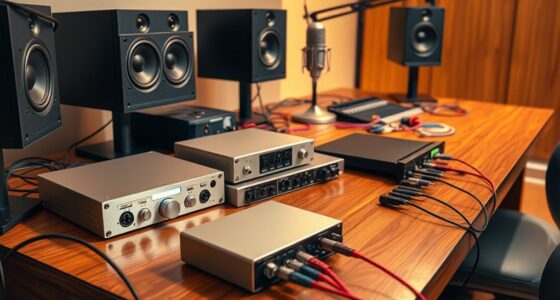
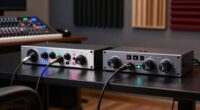
Finding the right handheld recorder for field recording music involves balancing audio quality, portability, ease of use, and durability. The Zoom H1 Essential stands out as the best overall due to its simplicity and solid sound capture for most musicians and content creators. For more advanced needs, the Zoom H5 offers versatile multi-track recording suited for filmmakers and musicians, while the TASCAM DR-05XP provides excellent value with 32-bit float recording for those on a budget. Each option presents tradeoffs, such as size, feature complexity, or price, making it crucial to match a recorder to your specific recording environment and experience level. Continue reading for a detailed comparison of these top choices.
Open a free Amazon Business account
Business pricing, bulk buying and tax-exempt orders.
Create a free accountAs an affiliate, we earn on qualifying purchases.
Complete the kit


Key Takeaways
- The top picks balance audio fidelity with ease of use, prioritizing features like 32-bit float recording for flexible field capture.
- Size and weight vary significantly, affecting portability for on-the-go recording in outdoor environments.
- More advanced models like the H5 and TASCAM DR-40XP offer multi-track and higher input options, but tend to be bulkier and pricier.
- Budget-friendly options such as the TASCAM DR-05XP and Zoom H2 deliver reliable performance without overwhelming beginners with complexity.
- Build quality and durability are often overlooked but are critical for field use, especially in unpredictable outdoor settings.
| Zoom H1 Essential Recorder for Musicians, Podcasters & Content Creators |  | Best for Beginners and Content Creators | Microphone Type: X/Y stereo microphones | Recording Format: 32-bit float | Storage: SD card | VIEW ON AMAZON | See Our Full Breakdown |
| Zoom H5 4-Track Handheld Recorder for Filmmakers & Musicians |  | Best for Versatile, Multi-Input Recording | Input Capsules: Interchangeable, includes detachable X/Y capsule | Recording Tracks: 4 tracks simultaneous | Inputs: Two mic/line inputs with XLR/TRS | VIEW ON AMAZON | See Our Full Breakdown |
| Zoom H4 Essential Handheld Recorder for Musicians, Podcasters & Filmmakers |  | Best for High-Quality 4-Track Recording | Number of Tracks: 4 | Maximum Sample Rate: 96 kHz | Inputs: 2 XLR/TRS | VIEW ON AMAZON | See Our Full Breakdown |
| TASCAM DR-05XP 32-Bit Float Portable Handheld Field Recorder and USB-C Audio Interface | 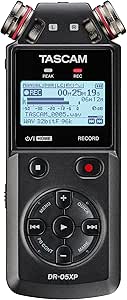 | Best for Long-Lasting, Versatile Recording | Recording Modes: 32-bit float/24-bit/16-bit, 96kHz/48kHz/44.1kHz | Microphone: Omnidirectional condenser | Connectivity: USB-C, USB Audio Class 2.0 | VIEW ON AMAZON | See Our Full Breakdown |
| Xvive XV1-R Portable Stereo Audio Recorder with 32-Bit Float, X/Y Microphones, WAV/AAC Format, USB Microphone, Auto Record, for Musicians, Podcasters, Filmmakers |  | Best for Compact, High-Quality On-the-Go Recording | Recording Format: WAV, AAC | Sample Rate: 96 kHz | Bit Depth: 32-bit float | VIEW ON AMAZON | See Our Full Breakdown |
| TASCAM DR-40XP 4-Channel 32-Bit Float Portable Handheld Field Recorder and USB-C Audio Interface |  | Best Overall for Versatile Field Recording and Studio Integration | Item Weight: 6.1 ounces | Product Dimensions: 1.38 x 2.76 x 6.13 inches | ASIN: B0GWCJMTRR | VIEW ON AMAZON | See Our Full Breakdown |
| Zoom H2 Essential Handheld Recorder for Musicians, Podcasters & Filmmakers |  | Best for All-in-One Versatility and Accessibility | Microphones: 3 built-in microphones | Recording Patterns: 9 selectable patterns | Audio Quality: 32-bit float/96kHz | VIEW ON AMAZON | See Our Full Breakdown |
| TASCAM DR-07XP 32-Bit Float Portable Handheld Field Recorder and USB-C Audio Interface |  | Best Budget-Friendly High-Quality Recorder with Long Battery Life | Recording Modes: 32-bit float/24-bit/16-bit, 96kHz/48kHz/44.1kHz, MP3 | Microphones: Stereo AB/XY condenser microphones | Input/Output: 3.5mm stereo MIC/EXT IN, 3.5mm stereo HEADPHONES/LINE OUT | VIEW ON AMAZON | See Our Full Breakdown |
| handheld recorder for field recording music | Connectivity |
|---|---|
| Zoom H1 Essential Recorder for | USB-C |
| Zoom H5 4-Track Handheld Recor | — |
| Zoom H4 Essential Handheld Rec | USB-C |
| TASCAM DR-05XP 32-Bit Float Po | USB-C, USB Audio Class 2.0 |
| Xvive XV1-R Portable Stereo Au | USB-C, USB Audio Class 2.0 |
| TASCAM DR-40XP 4-Channel 32-Bi | — |
| Zoom H2 Essential Handheld Rec | USB, Bluetooth, SD card |
| TASCAM DR-07XP 32-Bit Float Po | USB-C audio interface |
More Details on Our Top Picks
Zoom H1 Essential Recorder for Musicians, Podcasters & Content Creators
The Zoom H1 Essential stands out for its affordability and simplicity, making it ideal for newcomers to field recording. Compared with the Zoom H4, it offers fewer advanced features but excels in portability and ease of use. Its built-in X/Y microphones deliver clear stereo sound, perfect for capturing music, podcasts, or interviews on the go. The inclusion of 32-bit float recording helps avoid clipping, a feature usually found in higher-end models. However, it requires an SD card for storage, and battery life can be limiting during long sessions, which is a tradeoff for its compact size. This pick makes the most sense for casual creators or beginners who prioritize straightforward recording without the complexity of more advanced gear.
Pros:- Affordable and user-friendly for beginners
- High-quality stereo sound with built-in X/Y microphones
- Versatile with USB-C for streaming and calls
- Compact and portable for field recording
Cons:- Limited features for professional studio use
- Needs SD card for storage
- Battery life may be insufficient for extended recordings
Best for: Amateur musicians and podcasters starting out with limited budget
Not ideal for: Professionals needing extensive input options or long recording sessions without frequent battery changes
- Microphone Type:X/Y stereo microphones
- Recording Format:32-bit float
- Storage:SD card
- Connectivity:USB-C
- Use Cases:Music recording, podcasts, interviews, video, streaming
Our verdict“Best suited for entry-level users looking for straightforward, portable recording for music, podcasts, or content creation.”
Zoom H5 4-Track Handheld Recorder for Filmmakers & Musicians
The Zoom H5 offers a clear advantage over the H1 by supporting four simultaneous tracks, making it a more flexible choice for multi-source recordings. Its interchangeable input capsules, including a detachable X/Y, allow tailored setups for different environments, suitable for both musicians and filmmakers. The device can operate on batteries, providing true portability, unlike some larger recorders that require external power. Its support for all Zoom input capsules extends its versatility, but it’s limited to SD/SDHC cards up to 32GB, which may be restrictive for long recording sessions. While it is more feature-rich than the H1, it involves a steeper learning curve, making it less ideal for complete beginners. It’s best for creative professionals who need flexible, multi-input recording in the field.
Pros:- Interchangeable input capsules for tailored recording setups
- Supports four tracks simultaneously for complex projects
- Battery-powered for true portability
- Compatible with all Zoom input capsules
Cons:- Limited to SD/SDHC cards up to 32GB
- Requires batteries, adding to operational needs
Best for: Musicians and filmmakers who need multi-track recording and modular input options
Not ideal for: Beginners or users requiring simple, plug-and-play devices without interchangeable parts
- Input Capsules:Interchangeable, includes detachable X/Y capsule
- Recording Tracks:4 tracks simultaneous
- Inputs:Two mic/line inputs with XLR/TRS
- Phantom Power:Selectable
- Recording Media:SD / SDHC cards up to 32GB
- Power:2 AA batteries
Our verdict“Ideal for experienced creators needing multi-input flexibility and modular components for varied recording scenarios.”
Zoom H4 Essential Handheld Recorder for Musicians, Podcasters & Filmmakers
The Zoom H4 Essential offers a significant step up from the H1 with four tracks and high-resolution audio up to 96 kHz. Its built-in stereo mics and external XLR/TRS inputs provide versatile options for capturing live performances or interviews, rivaling the H5 in audio quality but with a simpler design. The inclusion of user-friendly controls and spoken guidance makes it manageable for users familiar with basic audio equipment, though it may be overwhelming for absolute beginners. Unlike the H5’s modular approach, the H4 is more straightforward but less expandable. This device makes the most sense for creators who want professional-quality audio without the complexity of multiple input capsules or extensive configuration.
Pros:- High-resolution 96 kHz audio with 4 tracks
- Built-in stereo mics plus external XLR/TRS inputs
- User-friendly interface with guidance features
- Supports multiple recording methods including SD card and device connection
Cons:- Less expandable than the H5 with fixed inputs
- Requires external power for longer sessions
Best for: Musicians and podcasters seeking high-quality, multi-track field recordings with minimal setup
Not ideal for: Users requiring extensive input options or modular components for specialized recording needs
- Number of Tracks:4
- Maximum Sample Rate:96 kHz
- Inputs:2 XLR/TRS
- Connectivity:USB-C
- Recording Format:32-bit float
- Built-in Microphones:Stereo
Our verdict“Best suited for those needing high-quality, multi-track recordings with straightforward operation and professional results.”
TASCAM DR-05XP 32-Bit Float Portable Handheld Field Recorder and USB-C Audio Interface
The TASCAM DR-05XP emphasizes endurance and versatility, supporting up to 17.5 hours of continuous recording on AA batteries—ideal for extended field sessions. Its 32-bit float recording technology rivals higher-end devices like the Xvive XV1-R, offering lossless audio quality and flexible recording modes suitable for music, meetings, or podcasts. Its omnidirectional condenser microphones capture wide soundscapes, and the USB-C interface doubles as an audio interface for direct connection to computers. The main tradeoff is that the SD card isn’t included, requiring an additional purchase, and frequent battery replacements can be a hassle. Still, for those prioritizing long recording durations and multiple modes, this model provides a practical, portable solution.
Pros:- Long battery life of up to 17.5 hours
- High-quality 32-bit float recording for professional sound
- Multiple recording modes for various needs
- USB-C interface for direct computer connection
Cons:- SD card must be purchased separately
- Requires AA batteries, which need regular replacement
Best for: Field recordists needing extended battery life and flexible recording modes for diverse environments
Not ideal for: Casual users who don’t want to carry extra batteries or purchase additional SD cards
- Recording Modes:32-bit float/24-bit/16-bit, 96kHz/48kHz/44.1kHz
- Microphone:Omnidirectional condenser
- Connectivity:USB-C, USB Audio Class 2.0
- Battery Life:Up to 17.5 hours
- SD Card:Not included
- Power:2 x AA alkaline batteries
Our verdict“Great for professionals or enthusiasts who need prolonged recording sessions with flexible mode options and high audio fidelity.”
Xvive XV1-R Portable Stereo Audio Recorder with 32-Bit Float, X/Y Microphones, WAV/AAC Format, USB Microphone, Auto Record, for Musicians, Podcasters, Filmmakers
The Xvive XV1-R is distinguished by its ultra-compact size and high-end 32-bit float recording, making it a strong choice for mobile creators. Its X/Y microphones handle high SPL environments up to 130 dB, ideal for capturing loud performances or outdoor soundscapes. The device supports WAV and AAC formats at up to 96 kHz, providing flexibility for different needs. Though its battery life isn’t specified, its USB-C connectivity allows for convenient power options and direct use as a USB microphone. The main limitation is that long recordings may be split at the 4GB file size, which could interrupt continuous sessions. Compared with larger units like the H4 or H5, it sacrifices some expandability for portability, making it best for quick, high-quality captures in the field.
Pros:- High-quality 32-bit float lossless recording
- Compact and lightweight for portability
- X/Y microphones handle high SPL environments
- Supports multiple formats and high sample rates
Cons:- Battery life not specified, limiting planning
- File size split at 4GB may interrupt long recordings
Best for: Musicians and podcasters needing a small, high-quality recorder for quick, on-the-move captures
Not ideal for: Users requiring long, uninterrupted recording sessions or extensive input options
- Recording Format:WAV, AAC
- Sample Rate:96 kHz
- Bit Depth:32-bit float
- Microphone Type:X/Y directional microphones
- Maximum SPL:130 dB
- Storage:MicroSDHC 32GB, MicroSDXC 128GB
- Connectivity:USB-C, USB Audio Class 2.0
- Maximum Recording Time:12 hours
Our verdict“Perfect for mobile creators who want high-fidelity recordings in a tiny form factor with versatile format support.”
TASCAM DR-40XP 4-Channel 32-Bit Float Portable Handheld Field Recorder and USB-C Audio Interface
This model stands out for its combination of professional-grade 32-bit float recording and flexible multi-channel inputs. Compared to the Zoom H2 Essential, which offers excellent pattern versatility but lacks multi-channel capabilities, the TASCAM DR-40XP excels in producing high-quality audio across a range of scenarios. Its ability to serve as a USB-C audio interface simplifies the workflow for creators who switch between field and studio work. The main tradeoff is its slightly complex interface, which could challenge beginners. MicroSD cards and batteries are sold separately, adding to initial costs, and its feature set might be overwhelming for casual users. Best for musicians and creators needing a portable, professional-grade recorder with studio connectivity.
Pros:- High-quality 32-bit float recording ensures professional sound quality
- Versatile 4-channel recording with adjustable microphones
- Functions as a USB-C audio interface for flexible workflow
Cons:- MicroSD card and batteries are not included, increasing initial setup costs
- Some users may find the device’s interface complex for quick operation
Best for: Professional musicians, sound designers, and creators who need high-quality multi-channel recording and seamless computer integration
Not ideal for: Beginners or casual users who prefer simple operation and minimal setup, due to the device’s complexity
- Item Weight:6.1 ounces
- Product Dimensions:1.38 x 2.76 x 6.13 inches
- ASIN:B0GWCJMTRR
- Item Model Number:DR-40XP
- Customer Reviews:4.1/5
- Best Sellers Rank:#5,781 in Musical Instruments, #7 in Portable Studio Recorders
Our verdict“This pick makes the most sense for experienced field recorders and studio users who value flexibility and high fidelity in a portable device.”
Zoom H2 Essential Handheld Recorder for Musicians, Podcasters & Filmmakers
The Zoom H2 Essential shines as an all-in-one recorder, thanks to its nine selectable recording patterns and three microphones, making it ideal for capturing a wide range of audio situations. Its clip-free recording capability at any volume level sets it apart from simpler models like the TASCAM DR-07XP, which rely more heavily on gain adjustments. The inclusion of Bluetooth for multi-unit sync and multi-language menu navigation enhances its accessibility for diverse users. However, its many features can be overwhelming for beginners who prefer a straightforward device, and it’s limited to handheld use, making it less suitable for studio setups or stationary recording. This makes it suitable for field recordists who need flexibility and ease of use in diverse environments.
Pros:- Multiple microphone patterns allow tailored recording for different environments
- Clip-free recording at any volume prevents distortion
- Supports simultaneous USB and SD card recording with wireless sync
Cons:- The extensive feature set can be confusing for less experienced users
- Limited to handheld use, so not ideal for studio or stationary setups
Best for: Field recordists, podcasters, and filmmakers needing a versatile, easy-to-use device with multiple mic patterns and wireless capabilities
Not ideal for: Beginners or users seeking a simple, no-frills recorder for straightforward tasks, due to its feature complexity
- Microphones:3 built-in microphones
- Recording Patterns:9 selectable patterns
- Audio Quality:32-bit float/96kHz
- Connectivity:USB, Bluetooth, SD card
- Languages:7 languages
Our verdict“Ideal for mobile creators who need a flexible, feature-rich recorder with wireless multi-unit capabilities.”
TASCAM DR-07XP 32-Bit Float Portable Handheld Field Recorder and USB-C Audio Interface
The TASCAM DR-07XP offers a compelling blend of high-quality 32-bit float recording and versatile modes suitable for different recording needs. Compared to the Zoom H2 Essential, it provides broader format options, including MP3, and longer battery life—up to 17.5 hours with AA batteries—making it ideal for long field sessions. Its stereo condenser microphones deliver clear sound, though it lacks the multi-pattern flexibility of the Zoom. The device’s reliance on AA batteries might be inconvenient for extended use without spares, and microSD cards are sold separately, adding to costs. It’s best suited for users who want reliable performance without a hefty price tag. This device is perfect for budget-conscious field recorders who prioritize battery longevity and format versatility.
Pros:- High-quality 32-bit float recording ensures professional results
- Multiple recording modes support various audio needs
- Long battery life up to 17.5 hours with AA batteries
Cons:- MicroSD card must be purchased separately, increasing initial cost
- Requires AA batteries, which may need frequent replacements during extended recording
Best for: Budget-conscious musicians, podcasters, and field recorders who need a reliable device with long battery life and multiple recording modes
Not ideal for: Users needing advanced multi-pattern microphone options or studio-grade multi-channel recording, due to its more straightforward design
- Recording Modes:32-bit float/24-bit/16-bit, 96kHz/48kHz/44.1kHz, MP3
- Microphones:Stereo AB/XY condenser microphones
- Input/Output:3.5mm stereo MIC/EXT IN, 3.5mm stereo HEADPHONES/LINE OUT
- Connectivity:USB-C audio interface
- Battery Life:Up to 17.5 hours with 2 x AA batteries
- Storage:Supports microSD, microSDHC, microSDXC up to 512 GB
Our verdict“This recorder suits those seeking a cost-effective, long-lasting device with versatile recording options for field use.”
How We Picked
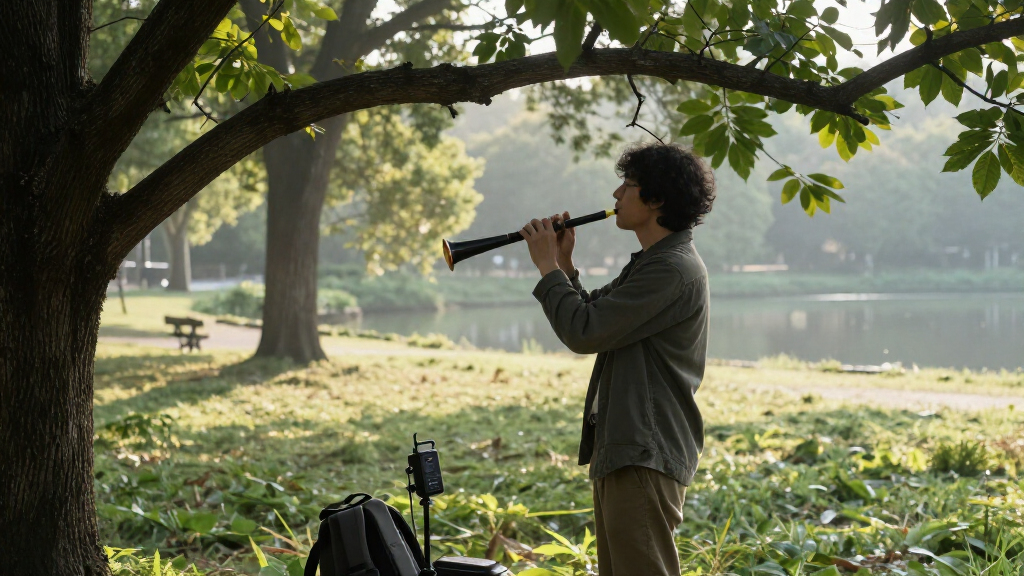
To compile this list, I evaluated each recorder based on core factors relevant to field music recording: audio quality, ease of operation, portability, durability, and value. I prioritized models that perform well in outdoor and unpredictable environments, with features like built-in microphones, multiple input options, and reliable power sources. Devices with user-friendly interfaces and minimal setup time were favored for their practicality in field use. The ranking reflects a balance between professional-grade features and accessibility for hobbyists or semi-professionals, ensuring each option serves a distinct user need.
| handheld recorder for field recording music | Connectivity |
|---|---|
| Zoom H1 Essential Recorder for | USB-C |
| Zoom H5 4-Track Handheld Recor | — |
| Zoom H4 Essential Handheld Rec | USB-C |
| TASCAM DR-05XP 32-Bit Float Po | USB-C, USB Audio Class 2.0 |
| Xvive XV1-R Portable Stereo Au | USB-C, USB Audio Class 2.0 |
| TASCAM DR-40XP 4-Channel 32-Bi | — |
| Zoom H2 Essential Handheld Rec | USB, Bluetooth, SD card |
| TASCAM DR-07XP 32-Bit Float Po | USB-C audio interface |
Factors to Consider When Choosing Handheld Recorder For Field Recording Music
Choosing the right handheld recorder for music field recording requires understanding your specific needs and environment. The following factors can help narrow your options and avoid common pitfalls, such as sacrificing sound quality or portability for unnecessary features.
Audio Quality and Recording Format
High-quality audio capture is essential for music recording. Look for recorders that support formats like WAV or BWF for lossless sound, especially if you plan to do mixing or editing later. 32-bit float recording offers more flexibility in dynamic range, reducing the need for precise gain staging. Don’t overlook built-in microphones; directional XY microphones can help capture clear, focused sound in outdoor settings, while multiple inputs give versatility for external mics or instruments.
Portability and Size
Since field recording often involves moving around, a compact, lightweight device is a must. Larger units may offer more features but can become cumbersome during extended outdoor shoots. Consider how you’ll carry the recorder—should it fit comfortably in your pocket, or does it need to mount on a rig or stand? Battery life is also critical; longer-lasting power sources reduce interruptions during recording sessions.
Durability and Build Quality
Field environments can be unpredictable, so a recorder with a rugged design, weather resistance, or shockproof features can make a significant difference. Cheaper models may lack durability, risking damage from drops or moisture, which can ruin your recordings. Investing in a sturdy device can save money and frustration in the long run, especially if you plan to record outdoors frequently.
Ease of Use and Interface
A straightforward user interface with dedicated controls helps prevent mistakes and allows quick adjustments in dynamic recording situations. Overly complex menus can slow you down or lead to errors in gain or input selection. Consider whether the recorder offers physical knobs or buttons for common functions, as these are easier to operate in outdoor conditions than touchscreens, especially in bright sunlight or with gloves.
Price and Value
While high-end recorders deliver advanced features, they come at a premium. Balance your budget against the features you need, such as multiple inputs, built-in mics, or specialized formats. Sometimes, spending a bit more on a durable, feature-rich device pays off by reducing the need for upgrades or repairs. For casual or infrequent recording, more affordable models can suffice without sacrificing too much quality.
Frequently Asked Questions
What is the best handheld recorder for outdoor music recording?
The best choice for outdoor recording combines good wind noise reduction, durable build, and clear stereo capture. Models like the Zoom H5 or TASCAM DR-40XP excel here, offering weather-resistant features and versatile microphone options. Using an external windscreen further improves sound quality outdoors. These recorders also support longer battery life, essential for extended outdoor sessions. Choose a device with sturdy construction to avoid damage from accidental drops or weather exposure.
Should I prioritize built-in microphones or external inputs?
This depends on your recording setup and environment. Built-in microphones are convenient for quick, spontaneous captures, especially with directional XY patterns that minimize background noise. External inputs, however, provide flexibility to connect higher-quality microphones or instruments, which can significantly improve sound fidelity. If you plan to record multiple sources or need specialized microphones, a recorder with multiple inputs becomes more valuable, despite increased complexity and size.
How important is battery life for field recording?
Battery life is critical because interruptions can ruin a session, especially in remote locations. Look for recorders with extended battery endurance or compatible with external power banks. Some models offer power-saving modes or can operate on AA batteries, which are easy to replace in the field. Planning for backup batteries or portable chargers ensures you won’t lose valuable recordings due to power loss.
Is 32-bit float recording necessary for casual musicians?
While not essential for casual use, 32-bit float recording provides significant benefits in dynamic range, making it easier to recover from gain mismatches or clipping. For musicians recording in unpredictable environments, this feature offers a safety net, reducing the need for precise gain adjustments. However, if you’re recording in controlled settings or primarily want straightforward files, standard formats like WAV may suffice and simplify workflow.
What features should I avoid if I want a simple, portable recorder?
Avoid models with overly complex menus, large touchscreens, or excessive input options if portability and simplicity are priorities. These features can add weight, increase setup time, and complicate quick recording. Instead, opt for devices with physical controls, straightforward interfaces, and minimal settings adjustments. This approach ensures reliable operation in field conditions without frustration or accidental misconfigurations.
Conclusion
For users seeking the best overall balance of quality and ease of use, the Zoom H1 Essential remains a strong choice. Those who need versatile multi-channel recording and expandability should consider the Zoom H5. Budget-conscious musicians and content creators will find the TASCAM DR-05XP offers impressive value. Beginners will benefit from simpler models like the Zoom H2, while professionals requiring rugged, feature-rich gear may prefer the TASCAM DR-40XP. Matching your specific recording environment and experience level is key to selecting the right device.
NFL season / tailgating Picks
team gear
As an affiliate, we earn on qualifying purchases.