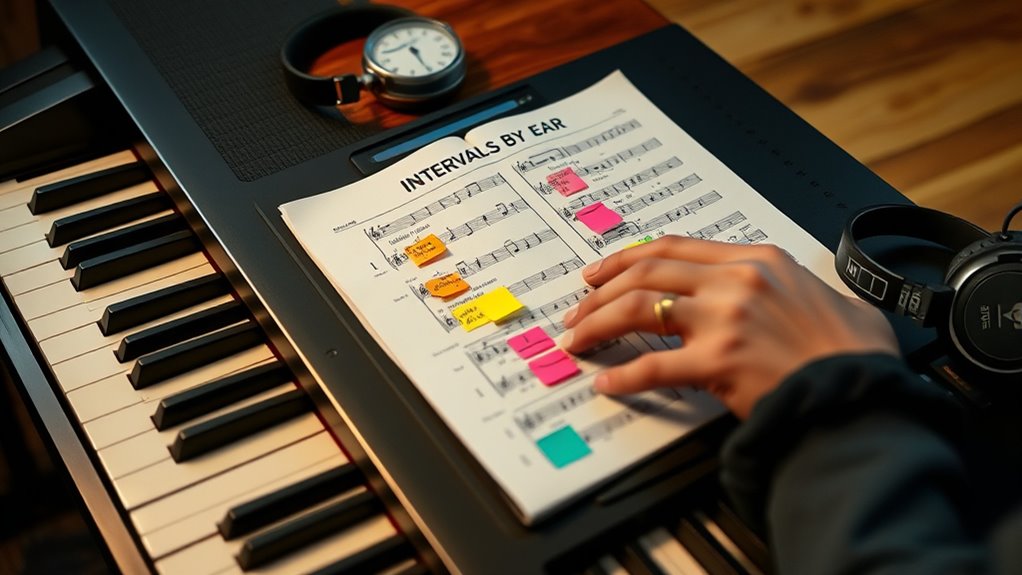

To train your ear to identify intervals by ear, focus on regular rhythm exercises like tapping with a metronome and listening to isolated notes. Practice recognizing intervals within simple melodies and chord progressions, paying attention to how different chords relate to specific intervals. Combining rhythm, chord, and interval exercises accelerates your skills. Keep practicing consistently and gradually increase difficulty—sticking to this routine will deepen your understanding and improve your auditory abilities. Continue exploring for more effective tips.
Key Takeaways
- Incorporate rhythmic exercises with a metronome to internalize timing and improve interval recognition.
- Practice identifying intervals within chord progressions to connect harmonic context with pitch differences.
- Use daily listening of isolated intervals and simple melodies to sharpen aural skills consistently.
- Combine rhythm, chord, and interval exercises to reinforce understanding and develop an integrated ear.
- Gradually increase difficulty by exploring complex intervals and advanced chord structures for progressive growth.

Have you ever wondered how musicians identify intervals just by listening? Developing this skill isn’t just about innate talent; it’s about consistent practice and sharpening your ear. A great way to start is by integrating rhythm exercises into your routine. These exercises help you internalize timing and beat, making it easier to distinguish between different intervals within musical contexts. For example, tapping or clapping along with a metronome while trying to identify the duration of specific notes trains your ear to recognize subtle rhythmic differences, which can influence how you perceive pitches. When you become comfortable with rhythm exercises, you’ll notice a quicker connection between rhythm and pitch, enabling you to identify intervals more accurately during active listening. Additionally, understanding how musical intervals relate to chord structures can deepen your ear training, as chords are built from specific intervals that form the harmonic foundation of music.
Next, focus on chord recognition. Many musicians find that understanding chords enhances their ability to identify intervals because chords are built from specific intervals. By practicing chord recognition, you learn to identify the unique sound of major, minor, diminished, and augmented chords. When you listen to a chord progression, try to pick out the individual intervals that make up each chord. This approach encourages your ear to associate certain sounds with specific intervals, such as the perfect fifth or major third. Over time, this recognition becomes automatic, allowing you to hear the interval between any two notes within the chord instantly. Combining chord recognition with interval training offers a powerful reinforcement loop—your understanding of chords enhances interval identification, and your ability to recognize intervals deepens your grasp of chords.
Incorporating these exercises into your daily practice is essential. Dedicate a few minutes each day to rhythm exercises, such as counting beats or practicing with a metronome, to strengthen your sense of timing. Then, spend additional time listening to isolated intervals or simple melodies, trying to identify the intervals by ear. Use ear training apps or online resources that provide immediate feedback, so you can correct mistakes and reinforce learning. As you progress, challenge yourself with more complex intervals and chord progressions, aiming to recognize them quickly and effortlessly. Remember, the key is consistency—regular exposure and active listening will gradually develop your ability to identify intervals just by hearing, turning what once seemed impossible into second nature.

Ueteto Mechanical Metronome Black/Loud Sound Piano Drum Violin Guitar
- Develops Rhythm and Timing: Helps improve tempo and musical awareness
- Universal Compatibility: Suitable for piano, violin, guitar, bass, drums
- Loud Audible Click: Clear sound for accurate timing
As an affiliate, we earn on qualifying purchases.
As an affiliate, we earn on qualifying purchases.
Frequently Asked Questions
How Long Should I Practice Intervals Daily?
You should aim for about 15-30 minutes of practice session duration daily. This allows you to maintain consistency without burnout. The ideal training frequency is every day or at least five times a week, ensuring steady progress. Short, focused sessions are more effective than long, infrequent ones. Stick to this routine, and you’ll improve your interval recognition skills steadily while keeping your practice enjoyable and manageable.
What Are the Best Apps for Ear Training?
If you’re looking for the best apps for ear training, think of it as your own musical Swiss Army knife. Apps like Tenuto, Perfect Ear, and EarMaster excel at interval recognition and offer app comparison features to find what fits your style. They provide interactive exercises, progress tracking, and varied difficulty levels. Jump in and find the perfect tool to sharpen your ear—your future musical self will thank you.
Can Beginners Effectively Train Their Ear?
Yes, beginners can effectively train their ear by focusing on musical memorization and pitch recognition. You should start with simple exercises, like identifying basic intervals and melodies, to build confidence. Consistent practice helps your brain recognize sounds more quickly. Use apps and tools designed for ear training, and gradually increase difficulty. With patience and regular effort, you’ll improve your ability to distinguish notes and develop a strong musical ear.
How Do I Identify Complex Interval Sounds?
You probably think complex intervals sound like a cat in a blender, but with practice, you’ll master harmony recognition and timbre differentiation. To identify such sounds, listen carefully to how the notes blend or clash, focusing on subtle tonal differences. Use slow, isolated exercises, and compare them to simpler intervals. Soon, you’ll distinguish those tricky sounds, turning chaos into musical clarity. Who knew ear training could be so fun?
Are There Specific Warm-Up Exercises for Ear Training?
Yes, you should start with vocal warm-ups and breathing exercises to prepare your ears. These exercises help relax your voice and improve your focus. Practice simple scales, lip trills, or humming to warm up your vocal cords. Incorporate breathing exercises like diaphragmatic breathing to enhance your control. Doing these regularly boosts your ear-training skills and makes identifying complex intervals easier over time.
Conclusion
Now that you’ve mastered identifying intervals by ear, the real challenge begins. Can you trust your instincts when the stakes are higher? As you push your limits, subtle differences will reveal themselves—are you ready to open the next level of musical mastery? Keep listening, stay sharp, and remember: the true test is just around the corner. The question is, will you rise to it or let it slip away? The choice is yours.