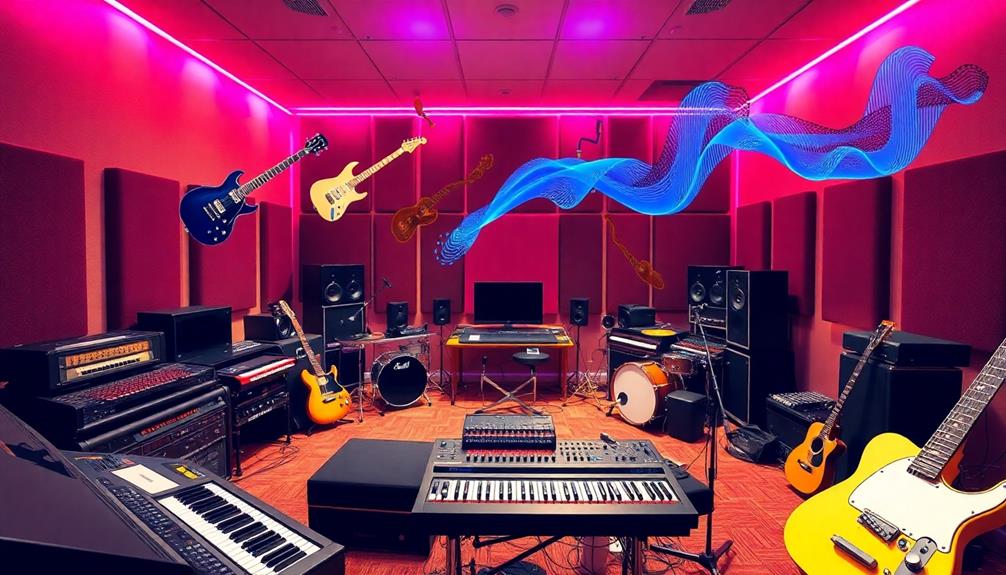

Hybrid acoustic-synth layers combine natural instrument sounds with synthesized elements to create rich, versatile textures tailored to modern music and sound design. By blending real recordings like piano, guitar, or percussion with digital synthesis, you can craft organic yet innovative soundscapes. Applying signal processing such as EQ, reverb, and modulation enhances these layers further. Keep exploring to discover how mastering this approach can expand your sonic possibilities and shape unique textures for your projects.
Key Takeaways
- Combine real acoustic recordings with synthesized sounds to create rich, textured hybrid layers for innovative sound design.
- Use processing techniques like EQ, reverb, and modulation to seamlessly blend acoustic and synthesized elements.
- Layer and manipulate acoustic samples with synthesis methods such as granular synthesis or filtering for unique textures.
- Employ signal processing to shape hybrid layers, adding movement, depth, and dynamic characteristics.
- Integrate hybrid layers into projects for cinematic, electronic, or experimental soundscapes, expanding sonic possibilities.

Hybrid acoustic-synth layers combine the warmth and natural complexity of acoustic sounds with the versatility and precision of synthesizers. This blending allows you to craft unique textures that are both organic and modern, opening new possibilities for sound design. When working with these layers, you leverage signal processing techniques to sculpt each element, ensuring they fit seamlessly into your mix. By combining real-world recordings with synthesized sounds, you can create richer, more dynamic textures that stand out. For instance, start by recording an acoustic instrument—like a piano, guitar, or percussion—and then process it through various effects to emphasize certain frequencies or add character. You might use EQ to highlight the instrument’s natural tone or employ reverb and delay to give it space within your composition.
Combining acoustic recordings with synthesis creates rich, dynamic textures through expert signal processing techniques.
Once you’ve captured and processed your acoustic recordings, you can layer them with synthesized sounds generated from your DAW or hardware synth. This process enhances the acoustic tone with digitally created textures, allowing you to control every aspect of the sound with precision. Signal processing becomes essential here, as it helps you manipulate the layers to achieve the desired aesthetic. Techniques like granular synthesis, modulation, or filtering can transform a simple acoustic sample into a complex, evolving soundscape. You can also use modulation effects—such as chorus or flangers—to add movement and depth, making the layers more engaging. Understanding tuning and calibration is crucial when integrating acoustic and synth layers to ensure harmonious blending.
In sound design, hybrid layers give you the flexibility to experiment with different combinations, blending the natural qualities of acoustic recordings with the infinite possibilities of synthesis. You can shape a piano note, then add a synthetic pad underneath, creating a lush background. Or process a drum hit with distortion and filtering, then layer it with a clean acoustic percussion for contrast. Signal processing tools allow you to fine-tune these layers, controlling attack, decay, sustain, and release to craft sounds that fit perfectly within your project. The key is to think of each layer as a building block—adjusting parameters until they complement each other harmoniously.
Ultimately, hybrid acoustic-synth layers empower you to push creative boundaries. By mastering sound design and signal processing, you gain the ability to craft sounds that are both authentic and innovative. This approach not only enhances your sonic palette but also encourages experimentation, helping you develop unique textures that define your music or sound projects. Whether you’re designing a cinematic score, electronic track, or experimental soundscape, blending acoustic and synthesized elements gives you the tools to shape complex, enthralling sounds that resonate with listeners.
Frequently Asked Questions
How Do Hybrid Layers Impact Overall CPU Performance?
Hybrid layers can impact your CPU performance by requiring more resources for processing complex sounds, which affects CPU optimization. You might notice increased CPU usage and potential lag if your system struggles with resource management. To improve performance, optimize your settings and consider upgrading your hardware. Managing these layers effectively guarantees smoother operation and helps your system handle the demanding processing tasks without slowing down.
Can Hybrid Acoustic-Synth Layers Be Used in Real-Time Live Performances?
Yes, you can use hybrid acoustic-synth layers in real-time live performances, adding excitement to your improvisation and audience interaction. These layers allow you to seamlessly blend organic sounds with synthesized textures, creating a dynamic and immersive experience. As you manipulate them live, you’ll surprise your audience with spontaneous shifts and rich soundscapes, making every performance unique. Just make certain your setup is optimized for minimal latency to keep the energy flowing smoothly.
What Are the Best Software Tools for Creating Hybrid Layers?
You should explore software like Ableton Live, Logic Pro, or Bitwig Studio for creating hybrid layers. These tools excel at layer blending and offer advanced sound design techniques, allowing you to seamlessly combine acoustic and synth sounds. They provide flexible workflows, real-time processing, and extensive plugin support, making them ideal for crafting dynamic hybrid layers. Immerse yourself in their features to enhance your sound design and achieve impressive hybrid effects.
How Do Hybrid Layers Differ in Sound Quality From Traditional Layers?
You’ll notice hybrid layers deliver a natural blending of sounds, creating a more seamless and realistic tonal richness compared to traditional layers. This fusion enhances the depth and complexity of your sound, making it feel more alive and dynamic. Unlike pure acoustic or synthetic layers, hybrid layers combine the best of both worlds, giving your music a fuller, more textured quality that can elevate your production to a higher level.
Are There Specific Genres That Benefit Most From Hybrid Layers?
You’ll find hybrid layers work best in experimental genres and ambient textures, as they add depth and unique character to your sound. These layers allow you to blend acoustic warmth with synthetic versatility, making your compositions more immersive and dynamic. If you’re exploring innovative soundscapes or atmospheric music, integrating hybrid layers can elevate your work, giving you richer textures and a broader sonic palette that traditional layers might not achieve as effectively.
Conclusion
By combining acoustic and synthetic layers, you unlock richer, more versatile sounds that push creative boundaries. Did you know that hybrid layers can reduce production time by up to 30%, allowing you to experiment faster? This innovative approach not only enhances your sound palette but also streamlines your workflow. Embrace hybrid acoustic-synth layers to elevate your music, making every track more dynamic and engaging. Immerse yourself and discover the endless possibilities waiting for you.