
To create a smooth setlist flow, focus on aligning keys and tempos to guarantee seamless links between songs. Start with an energetic opener, then alternate between high-energy and relaxed tunes to maintain momentum. Use connectors like gradual fades or medleys to link songs smoothly, keeping the mood consistent. Thoughtful sequencing of keys and tempos guides the audience through an emotional journey. Keep exploring how these elements work together for a riveting performance—you’ll discover even more effective strategies.

Get audio and creator gear delivered free with Prime
- Fast, free delivery on millions of items
- Prime Video, Amazon Music and more included
- Member-only deals all year
Key Takeaways
- Use key compatibility and modulations to ensure smooth musical transitions between songs.
- Vary tempos strategically to create dynamic energy shifts and maintain audience engagement.
- Incorporate connectors like medleys or fades to link songs seamlessly and tell a cohesive story.
- Start with energetic, major-key songs to grab attention and balance high and low energy moments.
- Plan transitions by matching rhythms or motifs to maintain flow and prevent abrupt shifts.
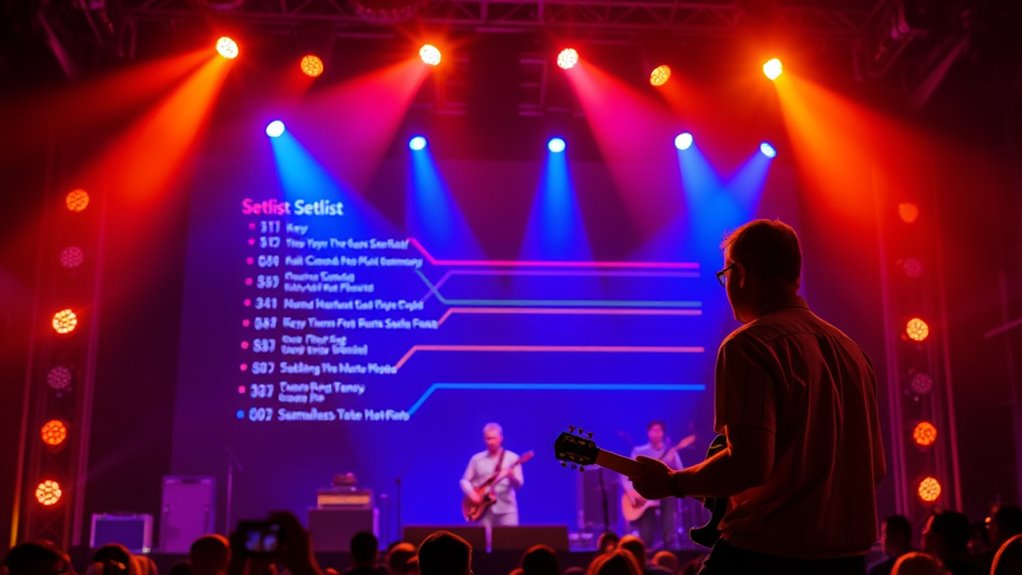
Setlist Flow refers to the strategic arrangement of songs during a live performance, aiming to create an engaging and seamless experience for the audience. When you focus on how you order your songs, you’re shaping the entire atmosphere of your show. A well-thought-out song arrangement keeps your audience captivated from start to finish, preventing lulls or abrupt shifts that can break their immersion. By carefully selecting the order, you guide your listeners on an emotional journey, building anticipation, providing moments of relief, and delivering impactful peaks. This dynamic flow sustains audience engagement and makes your performance memorable.
Key to this is understanding how to use different keys, tempos, and *connectors* to craft a cohesive setlist. Starting with an energetic opener in a major key can immediately grab attention, encouraging audience participation. As your set progresses, mixing in songs with contrasting tempos—slowing down for intimacy or speeding up for excitement—adds variety and keeps listeners alert. You want the *link* between songs to feel natural, avoiding sudden stops or awkward pauses that can disrupt the flow. Smooth *connectors* might involve matching tempos or keys, or creatively blending melodies to maintain momentum. When you master these elements, your audience stays invested, *anxiously* awaiting each new piece.
Tempo plays a *vital* role in shaping the mood and energy level of your show. You might begin with a lively tune to energize the crowd and then shift into a slower, more emotional song to create intimacy. Alternating between high-energy and relaxed moments helps maintain a balanced experience, preventing fatigue or boredom. Additionally, choosing songs that share similar keys allows for seamless key changes, making *connectors* feel effortless. This musical continuity keeps the audience immersed, as they don’t sense a jarring shift but instead experience a natural evolution in sound. Incorporating proper planning of transitions and setlist order can further enhance the overall flow, ensuring a cohesive performance from start to finish.
*Connectors* are the glue that holds your setlist together. They can be as simple as a quick musical fade or as elaborate as a medley that combines two songs into a cohesive piece. When you plan *connectors* carefully, you create a sense of narrative that guides your audience through the performance. Whether you’re linking songs with a common motif, a shared rhythm, or a clever remix, smooth *connectors* heighten audience engagement by maintaining energy and emotional flow. Ultimately, a well-crafted setlist *sequence*, built on thoughtful song arrangement, strategic use of keys and tempos, and seamless *connectors*, transforms a collection of songs into a captivating live experience.
As an affiliate, we earn on qualifying purchases.
Frequently Asked Questions
How Do I Adapt Setlists for Different Audience Types?
You adapt setlists for different audience types by doing an audience analysis beforehand, understanding their preferences and energy levels. Be flexible with genres, mixing up styles to keep everyone engaged. Adjust your song choices, tempos, and overall vibe based on the crowd’s mood. This approach guarantees your performance resonates, maintains engagement, and creates a memorable experience tailored to each audience’s unique tastes.
What Tools Help With Real-Time Setlist Adjustments?
You can use setlist software and cueing systems to make real-time adjustments seamlessly. These tools act like a musical GPS, guiding you through shifts and letting you modify your setlist on the fly. Setlist software offers instant updates and visual cues, while cueing systems help you trigger songs or effects instantly. Together, they guarantee your performance stays smooth and engaging, even when you need to adapt quickly to audience energy or unexpected changes.
How Can I Incorporate Improvisation Into Setlist Planning?
You can incorporate improvisation into your setlist by leaving space for musical spontaneity, allowing yourself to adapt songs on the spot. Plan flexible sections or jam moments where you can explore creative freedom without disrupting the overall flow. Practice improvising within different song structures beforehand, so you’re comfortable taking risks live. This approach keeps your performance fresh, engaging, and full of genuine musical expression.
What Are Common Mistakes When Transitioning Between Songs?
You often stumble with shifts when you ignore song key conflicts and tempo mismatches. To avoid this, make sure songs are in compatible keys or smoothly modulate between them. Pay attention to tempo changes; slowing down or speeding up abruptly disrupts flow. Practice transitions, experimenting with gradual adjustments. Keep your setlist flexible, and always rehearse tricky transitions to make your performance seamless.
How Do I Balance Energy Levels Throughout a Performance?
You can balance energy levels by carefully planning your setlist for dynamic pacing and emotional flow. Start with an engaging opener to hook your audience, then vary tempos and intensity to build excitement or create moments of calm. Pay attention to progressions, using dynamics and song choices to smoothly shift energy. Regularly read the crowd’s mood, adjusting your performance to maintain a mesmerizing rhythm that keeps everyone emotionally connected.
Conclusion
Think of your setlist as a river weaving through varied landscapes. Each key change and tempo shift is a gentle current guiding your audience on a journey. Smooth progressions are the smooth stones that keep the flow steady, while moments of surprise are the rapids that thrill. When you craft your flow with intention, your music becomes a seamless voyage—an endless stream that carries your audience effortlessly from one musical valley to the next.
Fall Picks
fall essentials
As an affiliate, we earn on qualifying purchases.