The best resources to learn music production depend on whether you need a broad introduction, software-specific help, or deeper recording and mixing skills. I’d make Beginner’s Guide to Music Production my best overall starting point for a general foundation, while Music Theory for Electronic Music Producers is a focused choice for writing electronic tracks and Modern Recording Techniques offers a more advanced studio reference. The main tradeoff is breadth versus specificity: broad guides cover more stages of making music, while focused books can be more useful for a particular workflow or skill gap. Your experience level and DAW also affect which resource will be practical rather than merely informative. Read on for the full breakdown and help matching a guide to your next learning goal.

Get audio and creator gear delivered free with Prime
- Fast, free delivery on millions of items
- Prime Video, Amazon Music and more included
- Member-only deals all year
Complete the kit

Key Takeaways
- Broad introductions suit undecided learners: Beginner’s Guide to Music Production is the most balanced starting point when you want an overview before specializing.
- Focused resources solve narrower problems: Music Theory for Electronic Music Producers centers harmony and song structure, while The Mixing Engineer’s Handbook concentrates on mixing decisions.
- Software-specific books depend on your DAW: The two FL Studio guides make more sense for FL Studio users than for learners working in another program.
- Advanced references reward existing context: Modern Recording Techniques and Music Production, Pro Edition are better fits when you already recognize studio concepts and want greater technical depth.
- Several beginner titles overlap in audience: Compare their teaching format, included video lessons, and stated scope instead of assuming that similar titles cover identical material.




| resources to learn music production | Format |
|---|---|
| Beginner’s Guide to Music Prod | Book |
| The Mixing Engineer’s Handbook | Book |
| Audio Effects | Book |
| Music Theory for Electronic Mu | Book |
| Music Production Masterclass: | Two-book bundle |
| Music Production | Book |
| Ultimate Guide to Producing Re | Guide |
| The Music Producer’s Ultimate | Guide |
| FL Studio Music Production for | Guide |
| Music Production For Beginners | Guide with bonus video lessons |
| Music Production For Beginners | Book with bonus video lessons |
| Music Technology 101: Home Stu | — |
| Music Production for Beginners | — |
| Modern Recording Techniques: A | — |
| Music Theory: From Beginner to | — |
More Details on Our Top Picks
Beginner’s Guide to Music Production
Beginner’s Guide to Music Production is the clearest starting point here for readers who want a broad introduction before choosing a specialist topic. Its beginner-friendly explanations and step-by-step tutorials connect essential software and hardware basics with practical track-making workflows, helping new producers move from unfamiliar terms toward making music. Compared with Music Theory for Electronic Music Producers, it casts a wider net rather than focusing on MIDI-grid harmony; that makes it a better fit if you have not settled on a genre or workflow. The tradeoff is breadth over depth: the supplied description notes limited coverage of advanced techniques, and it does not identify particular software or hardware. I’d choose it to build foundational confidence, not as a substitute for focused mixing instruction or advanced production study.
Pros:- Beginner-friendly explanations introduce core production concepts without assuming extensive prior knowledge.
- Step-by-step tutorials provide practical guidance for applying ideas while making tracks.
- Covers both software and hardware basics, giving newcomers a broad foundation.
- General introductory scope suits readers who have not yet chosen a specific production specialty.
Cons:- Advanced production techniques receive limited coverage.
- The provided details do not identify specific software, hardware models, or a particular DAW workflow.
Best for: New producers who want accessible explanations of core concepts, basic gear and software, and practical first-track workflows.
Not ideal for: Experienced producers seeking advanced techniques, or learners who need instruction tied to a named DAW, specific equipment, or a specialist mixing workflow.
- Format:Book
- Level:Beginner
- Subject:Music production fundamentals
- Coverage:Essential concepts, software, and hardware basics
- Learning approach:Step-by-step tutorials with practical examples
- Workflow focus:Creating tracks
Our verdict“Choose this as a broad, practical first book if you are new to production and do not need advanced or DAW-specific instruction.”
The Mixing Engineer’s Handbook: 6th Edition
The Mixing Engineer’s Handbook: 6th Edition is the specialist pick in this group: its title points directly to mixing, rather than the broad beginner workflow covered by Beginner’s Guide to Music Production or the songwriting and recording scope of Music Production Masterclass. That narrower focus makes it a more relevant choice for a learner ready to concentrate on the mixing stage of production. The listing confirms a sixth edition, but provides no description of its chapters, methods, intended level, or examples, so I can’t reliably promise a particular teaching style or technical depth. It is also not presented as a start-to-finish introduction to producing a track. I’d select it when mixing is the specific skill gap, while a complete beginner may benefit more from a broader foundation first.
Pros:- The title identifies mixing engineering as its clear specialist subject.
- Sixth edition is specified in the product information.
- A focused subject may suit learners who want to study mixing rather than a broad survey.
- Offers a distinct specialization alongside the general production and theory books in this roundup.
Cons:- The supplied listing gives no description of topics, teaching approach, or technical depth.
- No beginner level, software coverage, or practical exercise details are confirmed.
- Its mixing focus does not establish coverage of songwriting, recording, or full-track production.
Best for: Learners who already understand the basic stages of music production and want a book specifically centered on mixing engineering.
Not ideal for: First-time producers looking for a verified step-by-step introduction to recording, songwriting, software, and production from the ground up.
- Format:Book
- Edition:6th
- Primary subject:Mixing engineering
- Product type:Handbook
- ASIN:1946837520
- Additional content details:Not provided
Our verdict“Pick this when mixing is your main learning goal, but choose a broader introductory resource if you need confirmed guidance across the whole production process.”
Audio Effects, Mixing and Mastering
Audio Effects, Mixing and Mastering is a potentially useful match for learners who want to focus on three production areas named in its title, rather than start with broad fundamentals like Beginner’s Guide to Music Production. Its subject combination suggests a route from shaping sounds with effects through mixing and finalization, but the supplied product information contains no description, so I can’t confirm the order, level, examples, or specific techniques taught. That uncertainty matters: unlike The Mixing Engineer’s Handbook: 6th Edition, whose title signals a dedicated mixing handbook, this book’s stated scope spans effects and mastering too, but its actual depth in each area is unknown. I’d treat it as a topic-led option for readers already curious about these stages, not as a verified course or a guaranteed beginner roadmap.
Pros:- The title explicitly covers audio effects, mixing, and mastering.
- Its stated topic range differs from the mixing-only focus signaled by The Mixing Engineer’s Handbook.
- May suit learners who want to explore multiple post-recording production stages in one resource.
Cons:- No product description is provided to verify chapter coverage, teaching style, or level.
- No specific software, exercises, or practical examples are confirmed.
- The actual depth across effects, mixing, and mastering cannot be established from the supplied details.
Best for: Producers looking for a resource whose stated subject areas include audio effects, mixing, and mastering, and who are comfortable checking whether its teaching level fits.
Not ideal for: Absolute beginners who need confirmed step-by-step instruction, named DAW examples, or a clearly described path through music production.
- Format:Book
- Primary subject:Audio effects
- Additional subjects:Mixing and mastering
- Product type:Learning resource
- ASIN:1520999453
- Edition:Not provided
Our verdict“Consider this for its effects, mixing, and mastering subject scope, but choose a better-documented beginner guide if you need a dependable learning path.”
Music Theory for Electronic Music Producers: The producer’s guide to harmony, chord progressions, and song structure in the MIDI grid
Music Theory for Electronic Music Producers earns its place by tying harmony, chord progressions, and song structure to the MIDI grid, making theory more directly applicable to electronic production than the broad fundamentals in Beginner’s Guide to Music Production. Its workflow-centered explanations can help producers turn abstract concepts into choices inside a DAW, especially when building progressions and arranging ideas. That specificity is also its limit: the book is aimed at electronic music workflows, so it is less relevant if you work mainly with acoustic recording or want general studio instruction. The listing also says it assumes a basic understanding of music theory, which makes it a less suitable first resource for readers starting from zero. I’d place it after foundational production study, or alongside it for electronic songwriters.
Pros:- Connects music theory concepts to electronic production workflows.
- Uses MIDI-grid examples that relate directly to DAW-based composition.
- Explains harmony, chord progressions, and song structure in a practical context.
- Provides a specialist complement to broad introductory resources such as Beginner’s Guide to Music Production.
Cons:- Its electronic-production focus may not fit acoustic or non-electronic workflows.
- Assumes some prior understanding of music theory.
- Does not claim broad coverage of recording, mixing, mastering, or studio equipment.
Best for: Electronic music producers with basic theory knowledge who want to apply harmony, chord progressions, and song structure in a MIDI-based DAW workflow.
Not ideal for: Complete theory beginners, acoustic-focused musicians, or producers seeking broad recording, mixing, and hardware guidance.
- Format:Book
- Audience:Electronic music producers
- Primary topics:Harmony, chord progressions, and song structure
- Workflow focus:MIDI grid and DAW-based production
- Teaching approach:Step-by-step, workflow-friendly explanations
- Prerequisite:Basic understanding of music theory
- ASIN:172786302X
Our verdict“Choose this if you already know basic theory and want to write electronic music more confidently in a MIDI grid.”
Music Production Masterclass: Everything You Need to Know About Producing, Studio Recording, Mixing, Mastering, and Songwriting (2 Book Bundle) (The Modern Musician Series 1)
Music Production Masterclass is the broadest packaged study option in this set: its two-book bundle covers production, studio recording, mixing, mastering, and songwriting. That range makes it a stronger fit for aspiring musicians who want several connected parts of the process in one resource than The Mixing Engineer’s Handbook: 6th Edition, which signals a narrower focus on mixing. It also reaches beyond the introductory foundations of Beginner’s Guide to Music Production, though the supplied information does not say how the books divide the subjects or which workflows they teach. The bundle is described as suitable for beginners and intermediate learners, but may be too basic for advanced producers. With no named software or technical details provided, I’d choose it for breadth rather than a precise DAW-specific curriculum.
Pros:- Two-book bundle spans several connected stages of music creation.
- Covers production, studio recording, mixing, mastering, and songwriting.
- The described audience includes both beginner and intermediate learners.
- Broader scope than The Mixing Engineer’s Handbook, which is specifically presented as a mixing handbook.
Cons:- The supplied details do not identify specific software, hardware, or technical workflows.
- The content may not provide enough depth for advanced producers.
- The listing does not explain how subjects are divided between the two books.
Best for: Aspiring musicians and beginner-to-intermediate producers who want one bundle spanning songwriting, recording, mixing, mastering, and production.
Not ideal for: Advanced producers seeking specialist technical depth, or learners who need instruction tied to a particular DAW, software package, or studio setup.
- Format:Two-book bundle
- Series:The Modern Musician Series 1
- Audience:Aspiring musicians and beginner-to-intermediate producers
- Primary topics:Music production, studio recording, mixing, mastering, and songwriting
- Book count:2
- ASIN:B0GX383MXS
- Software or technical details:Not provided
Our verdict“Choose this bundle for broad beginner-to-intermediate coverage across songwriting and production stages, not for advanced or software-specific training.”
Music Production, Pro Edition: Advanced Studio & Recording Techniques for Producers, Artists, Songwriters and Audio Engineers
Music Production, Pro Edition is the specialist pick here: its focus is advanced studio and recording techniques, rather than a broad first tour of music production. That makes it a stronger fit for producers, artists, songwriters, and audio engineers who already know the basics and want to refine how they record and create. By contrast, Ultimate Guide to Producing Records, Music & Songs covers a wider workflow, including songwriting, mixing, and mastering, so it is a more natural choice for readers seeking an all-in-one foundation. The tradeoff is that the advanced focus may leave beginners without enough step-by-step scaffolding, and the available description does not identify specific chapters or techniques. I’d choose this when studio craft is the main learning goal, not when I need a general introduction.
Pros:- Focuses on advanced studio and recording techniques
- Addresses producers, artists, songwriters, and audio engineers
- Studio-oriented focus distinguishes it from broader workflow guides
- Part of the Modern Musician Series
Cons:- Advanced subject matter may be difficult for newcomers
- Available product details do not specify chapter topics or learning exercises
Best for: Producers, recording artists, and audio engineers who already understand basic production and want a more advanced studio-focused resource.
Not ideal for: Complete beginners looking for a guided introduction to beats, recording, mixing, and mastering from the ground up.
- Format:Book
- Series:Modern Musician Series
- Focus:Advanced studio and recording techniques
- Intended readers:Producers, artists, songwriters, and audio engineers
- Production scope:Music creation and recording quality
- Experience level:Advanced
Our verdict“Choose this if you have production fundamentals in place and want an advanced studio-focused resource rather than a general workflow guide.”
Ultimate Guide to Producing Records, Music & Songs: Everything You Need to Know About Producing, Recording, Mixing & Mastering Music at Home or in the Studio
Ultimate Guide to Producing Records, Music & Songs earns its place as the broadest workflow resource in this group. It follows music from songwriting and recording through mixing and mastering, while addressing both home setups and professional studios. That wider scope makes it a better starting point for someone who wants to connect the stages of production than Music Production, Pro Edition, which concentrates on advanced studio and recording techniques. Its practical advice and real-world examples also give readers a route from concepts to decisions in a session. The compromise is breadth: absolute newcomers may find so many stages difficult to absorb at once, and the text is described as dense with few visual diagrams or screenshots. I’d pick it for a wide-ranging reference, not the most visual or tightly beginner-paced lesson.
Pros:- Covers songwriting, recording, mixing, and mastering in one guide
- Addresses both home-studio and professional environments
- Offers practical techniques and real-world examples
- Accessible to many beginner and intermediate readers
Cons:- The wide scope may overwhelm readers new to production
- Dense text and limited diagrams or screenshots may not suit visual learners
Best for: Aspiring producers and intermediate home-studio musicians who want one resource spanning songwriting, recording, mixing, and mastering.
Not ideal for: Absolute beginners who need short, visual lessons or a narrow first step before tackling the whole production process.
- Format:Guide
- Identifier:ISBN 1955652031
- Topics:Producing, recording, mixing, and mastering
- Workflow coverage:Songwriting through mastering
- Studio settings:Home and professional studios
- Intended level:Beginner to intermediate
- Learning approach:Practical techniques and real-world examples
Our verdict“Pick this for a broad, practical map of the complete production workflow, provided you are comfortable learning from a text-heavy guide.”
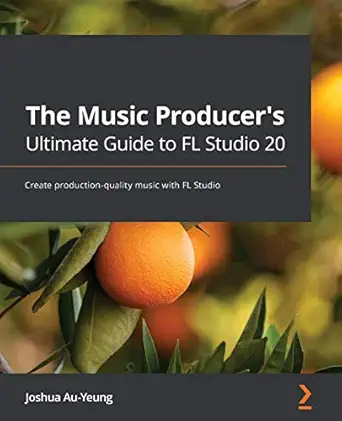
The Music Producer’s Ultimate Guide to FL Studio 20: Create Production-Quality Music with FL Studio
The Music Producer’s Ultimate Guide to FL Studio 20 is the clearest choice for readers who want their learning anchored to a specific digital audio workstation. Its stated focus on FL Studio 20 and its production, mixing, and mastering workflows can help users connect software techniques to finished tracks. Compared with FL Studio Music Production for Beginners, this guide is presented as a broader resource for both beginners and experienced producers, while the other book is explicitly framed as a step-by-step starting point. That extra range may be useful once the basics feel familiar, but it also means a complete newcomer could find the material harder to follow. The software-specific scope is another real limitation: readers using another DAW will get less direct value. I’d choose it for FL Studio users, not as a general production manual.
Pros:- Focuses specifically on FL Studio 20
- Covers production, mixing, and mastering workflows
- Aims to serve both beginner and experienced producers
- Connects software-specific learning to making complete tracks
Cons:- Its FL Studio 20 focus limits direct usefulness for users of other DAWs
- The content may be too advanced for complete beginners
- Available product details do not specify chapter structure or exercises
Best for: FL Studio 20 users who want guidance across production, mixing, and mastering within their chosen software.
Not ideal for: New producers who use another DAW or need a highly introductory, step-by-step first lesson.
- Format:Guide
- Identifier:ISBN 1800565321
- Software focus:FL Studio 20
- Topics:Production, mixing, and mastering
- Intended readers:Music producers
- Stated experience range:Beginners and experienced producers
- Learning goal:Creating production-quality music with FL Studio
Our verdict“Choose this if FL Studio 20 is your main DAW and you want software-specific production guidance beyond a beginner-only introduction.”
FL Studio Music Production for Beginners: A Step-by-Step Guide
FL Studio Music Production for Beginners has the most clearly beginner-directed promise among the software-specific options: it guides readers through making beats, melodies, and full songs with practical tools and workflows. That focus gives it a more approachable starting point than The Music Producer’s Ultimate Guide to FL Studio 20, whose description also targets experienced producers and may feel less structured for a first-timer. It is also narrower than Ultimate Guide to Producing Records, Music & Songs, which covers a wider chain of production stages and studio settings. The tradeoff is that the available information gives little detail about the actual contents or format, so buyers cannot tell how deeply it explains each workflow. I’d favor it when learning FL Studio through clear beginner steps matters more than broad coverage or advanced depth.
Pros:- Explicitly aimed at beginners
- Covers beats, melodies, and full songs
- Emphasizes practical tools and clear workflows
- Provides a more entry-level framing than the broader FL Studio 20 guide
Cons:- Available details do not specify chapters, exercises, or depth
- FL Studio focus may not transfer directly to other DAWs
Best for: First-time producers who use FL Studio and want to learn a practical path from beats and melodies to complete songs.
Not ideal for: Experienced producers seeking advanced mixing or mastering instruction, or learners who want a detailed contents list before choosing.
- Format:Guide
- Software focus:FL Studio
- Intended level:Beginner
- Topics:Beats, melodies, and full songs
- Learning approach:Step-by-step guidance
- Production focus:Practical tools and workflows
Our verdict“Choose this as a first FL Studio resource if you want step-by-step guidance toward making complete songs rather than advanced software instruction.”
Music Production For Beginners: How to Produce Music – Easy Guide for Producers, Artists & Songwriters (Includes Bonus Video Lessons)
Music Production For Beginners stands apart through its bonus video lessons, which give visual learners another way to reinforce the written explanations. Its beginner-friendly, step-by-step framing makes it a broader first introduction than FL Studio Music Production for Beginners, which centers on one DAW and the path from beats to full songs. That makes this guide a better fit for aspiring producers, artists, and songwriters who want general production fundamentals rather than software-specific instruction. The tradeoff is limited depth: experienced producers are likely to outgrow the material, and the description does not identify the videos’ topics or how closely they track the book. I’d select it when accessible explanations and video support matter more than advanced techniques or a tightly defined DAW workflow.
Pros:- Beginner-friendly explanations and step-by-step fundamentals
- Includes bonus video lessons for visual reinforcement
- Written for producers, artists, and songwriters
- Offers a general introduction rather than focusing on one DAW
Cons:- May be too basic for experienced producers
- Limited depth on advanced production techniques
- Available details do not describe the video lesson topics
Best for: New producers, artists, and songwriters who want an accessible introduction with video lessons to support written learning.
Not ideal for: Experienced producers seeking advanced studio methods, or learners who need confirmed details about video content before buying.
- Format:Guide with bonus video lessons
- Intended level:Beginner
- Intended readers:Producers, artists, and songwriters
- Topics:Music production fundamentals
- Learning approach:Step-by-step explanations
- Supplementary material:Bonus video lessons
Our verdict“Choose this for an accessible first introduction with video support, but look elsewhere if you already need advanced production instruction.”
Music Production For Beginners: How to Produce Music, The Easy-to-Read Guide for Music Producers, Artists & Songwriters
This guide is aimed at readers who want music-production basics explained in an accessible way, with bonus video lessons to add a visual learning path. That makes it a natural starting point for songwriters and artists who are new to production but may not want a classroom-style overview. Compared with Music Technology 101: Home Studio and Classroom Guide for Beginners, its description puts more weight on an easy read and broad creative audience than on named topics such as MIDI recording and editing. The videos may help connect introductory ideas to practical demonstrations, though the available details do not specify their length or depth. I would choose it for low-pressure orientation, not as a technical reference: advanced producers and readers seeking detailed workflows may outgrow its beginner focus.
Pros:- Easy-to-read approach suited to newcomers
- Bonus video lessons add a visual learning format
- Designed with artists and songwriters as well as producers in mind
Cons:- The provided information does not identify specific technical topics or software workflows
- Beginner-level scope may not offer enough depth for experienced producers
Best for: Songwriters, artists, and first-time producers who want an approachable introduction supported by video lessons.
Not ideal for: Experienced producers or learners seeking detailed DAW workflows, advanced techniques, or a clearly specified technical syllabus.
- Format:Book with bonus video lessons
- Subject:Music production
- Intended level:Beginner
- Intended readers:Music producers, artists, and songwriters
- Learning approach:Easy-to-read guide
- Video content:Bonus video lessons
Our verdict“Choose this for an accessible first step into production, but pick Music Technology 101 if you want named coverage of DAW and MIDI basics.”
Music Technology 101: Home Studio and Classroom Guide for Beginners
For a beginner who wants a clearer map of the tools and tasks involved in making music, Music Technology 101 names practical subjects including DAW operation, MIDI recording, and editing. Online video tutorials support that material, while the home-studio and classroom framing makes it suitable for self-study or guided lessons. Compared with Music Production For Beginners: How to Produce Music, The Easy-to-Read Guide for Music Producers, Artists & Songwriters, this guide gives a more explicit picture of what technical fundamentals it covers; the latter may suit readers who prefer a general, less equipment-focused introduction. The tradeoff is its introductory level: learners already comfortable with recording and editing may find little new here. Its broad usefulness comes from covering foundational studio skills rather than specializing in a genre or advanced production method.
Pros:- Names practical basics including DAW operation, MIDI recording, and editing
- Online video tutorials reinforce the written material
- Designed for both home-studio learning and classroom use
- Author and beginner audience are identified
Cons:- Introductory coverage may not stretch experienced producers
- The supplied information does not identify a particular DAW or software version
Best for: New home-studio learners or music instructors looking for beginner material on DAWs, MIDI recording, and editing.
Not ideal for: Producers who already know their DAW and want advanced mixing, sound design, or genre-specific instruction.
- Author:Heath Jones
- Subject:Music production
- Target audience:Beginners
- Intended settings:Home studio and classroom
- Topics:DAW operation, MIDI recording, and editing
- Supplementary material:Online video tutorials
Our verdict“Pick this if you want a beginner guide with explicit DAW, MIDI, and editing topics rather than a more general introduction.”
Music Production for Beginners (2020 Edition): How to Produce Music – Easy-to-Read Guide for Music Producers
This beginner guide reaches beyond general production fundamentals by including electronic dance music and the business side of the industry. That pairing may help an aspiring producer connect the mechanics of making tracks with questions about working in music. Its step-by-step tutorials and approachable explanations are a better fit for structured self-study than a purely theory-focused resource such as Music Theory: From Beginner to Expert, which concentrates on musical concepts rather than production and industry context. Compared with Music Technology 101: Home Studio and Classroom Guide for Beginners, this title has a more genre-specific angle, while the latter spells out DAW, MIDI, and editing topics. The main caveat is the 2020 edition: some guidance may not reflect later changes in tools or industry practice, and the supplied details do not identify specific software.
Pros:- Combines production fundamentals with music-business topics
- Includes EDM and electronic music guidance
- Step-by-step tutorials suit self-paced learning
- Beginner-friendly explanations lower the entry barrier
Cons:- The 2020 edition may not reflect newer tools or industry changes
- The provided information does not identify specific DAWs or technical requirements
Best for: New electronic music producers who want introductory production guidance alongside EDM context and music-business basics.
Not ideal for: Learners seeking current software-specific instructions, advanced production techniques, or a dedicated music-theory course.
- Edition:2020 Edition
- Subject:Music production
- Intended level:Beginner
- Topics:Production fundamentals and music business
- Genre focus:EDM and electronic music
- Learning approach:Step-by-step tutorials and practical tips
Our verdict“Choose this if EDM and music-business context matter alongside beginner production lessons, and favor a newer software-specific guide for current workflows.”
Modern Recording Techniques: A Practical Guide to Modern Music Production
The supplied information identifies Modern Recording Techniques as a practical guide to modern music production, making it the most recording-oriented choice in this group. That focus gives it a different role from Music Technology 101: Home Studio and Classroom Guide for Beginners, which specifically calls out beginner DAW, MIDI, and editing instruction, and from Music Theory: From Beginner to Expert, which centers on musical concepts. The title may suit a reader looking for a wider recording reference rather than a gentle first introduction, but the product details provided here do not establish its level, chapter coverage, format, or included learning materials. I would not choose it based on the word “modern” alone if you need software-specific steps or a beginner syllabus. Its appeal is practical recording orientation; its limitation is the lack of confirmed detail about what that means inside the guide.
Pros:- Explicitly framed as a practical guide
- Focuses on recording and modern music production
- Offers a distinct recording-oriented alternative to theory-led learning
Cons:- The supplied product information does not specify skill level or chapter topics
- No details are provided about format, software coverage, or supplementary materials
Best for: Learners prioritizing practical recording and production reference material over a narrowly beginner-focused or music-theory resource.
Not ideal for: First-time producers who need confirmed step-by-step DAW instruction, or buyers who require details about edition, format, and included materials before choosing.
- Title:Modern Recording Techniques: A Practical Guide to Modern Music Production
- Subject:Music production
- Focus:Recording techniques
- Approach:Practical guide
- Software coverage:Not specified in supplied product information
- Supplementary materials:Not specified in supplied product information
Our verdict“Consider this for a practical recording-focused resource, but choose a more fully specified beginner guide if you need a confirmed learning path.”
Music Theory: From Beginner to Expert – The Ultimate Step-by-Step Guide to Understanding and Learning Music Theory Effortlessly
Production skills are not only about operating a DAW; understanding musical concepts can help a producer make more intentional choices about notes, chords, and song ideas. This guide is positioned as a step-by-step path through music theory, with coverage pitched from beginner to expert. That makes it a useful companion to production instruction, not a replacement for it: unlike Music Technology 101: Home Studio and Classroom Guide for Beginners, it does not claim to teach DAW operation, MIDI recording, or editing. Compared with the 2020 Music Production for Beginners, its focus is narrower and more musical rather than genre and industry context. The tradeoff is that the supplied description does not specify which theory topics, exercises, or production applications are included, and author and edition details are absent.
Pros:- Step-by-step presentation is intended for learners at different levels
- Focuses on music-theory understanding that can complement production study
- Provides a focused alternative to broad production guides
Cons:- The supplied description does not list specific theory topics or exercises
- No author or edition information is provided
- Does not claim to teach DAW or recording workflows
Best for: Producers and songwriters who want a step-by-step grounding in music theory to support their creative decisions.
Not ideal for: Learners whose main need is recording, DAW operation, mixing, or production workflows rather than theory.
- Subject:Music theory
- Stated level range:Beginner to expert
- Learning approach:Step-by-step guide
- Intended audience:Musicians seeking stronger theory knowledge
- Author:Not specified in supplied product information
- Edition:Not specified in supplied product information
Our verdict“Choose this as a theory companion for songwriting and production, not as your main guide to using a studio or DAW.”

How We Picked
I ranked these resources by how directly they help a learner make progress in music production: clarity for the intended experience level, practical coverage of the production process, usefulness of the stated focus, and how well a book can serve as a reference after an initial read. I also considered whether a title teaches transferable skills or depends on a particular DAW, genre, or technical background. Because this lineup consists of books and guides, I treated claims about video lessons and software coverage as part of the learning format rather than assuming every resource offers hands-on instruction.
The order favors the most broadly useful starting points, followed by focused guides for mixing, theory, home recording, and FL Studio, then more specialized or advanced references. A narrower title can still be the better pick for a buyer with a defined goal; it ranks lower only because it serves fewer learning paths. Similar beginner titles are separated by their stated format and scope, not by assuming differences that their descriptions do not establish.
| resources to learn music production | Format |
|---|---|
| Beginner’s Guide to Music Prod | Book |
| The Mixing Engineer’s Handbook | Book |
| Audio Effects | Book |
| Music Theory for Electronic Mu | Book |
| Music Production Masterclass: | Two-book bundle |
| Music Production | Book |
| Ultimate Guide to Producing Re | Guide |
| The Music Producer’s Ultimate | Guide |
| FL Studio Music Production for | Guide |
| Music Production For Beginners | Guide with bonus video lessons |
| Music Production For Beginners | Book with bonus video lessons |
| Music Technology 101: Home Stu | — |
| Music Production for Beginners | — |
| Modern Recording Techniques: A | — |
| Music Theory: From Beginner to | — |
Factors to Consider When Choosing Resources To Learn Music Production
Before choosing a book, decide what you want to be able to do after studying it. A resource can explain production concepts clearly and still be a poor fit if it assumes a different DAW, skips the skill you need, or presents more theory than you can apply right now.
Choose breadth or a specific skill
A broad guide can show how songwriting, recording, arranging, mixing, and mastering connect, which helps when you do not yet know where your weak spots are. A focused resource can offer a clearer route when you already know the problem, such as understanding chord progressions or making better mix decisions. A common mistake is buying several books that all introduce the same basics instead of choosing one general resource and one targeted follow-up. Think about the next task you want to complete, not just the subject that sounds most interesting. If you cannot name a specific gap, start broad; if you can, prioritize the guide that addresses it directly.
Match the guide to your experience level
Beginner resources should explain terminology and sequence tasks clearly, while advanced references can assume familiarity with signal flow, recording setups, and mixing vocabulary. A book that is too advanced may leave you looking up every other term; one that is too elementary can slow you down once you know the basics. Check the title’s stated audience and chapter scope, then preview sample pages when available. Do not treat words such as “ultimate” or “masterclass” as proof that a book suits every level. Choose a resource that stretches your current abilities without making the first chapters inaccessible.
Check whether software instructions will age well
DAW-specific instruction can make early sessions easier because it connects concepts to actual menus and workflows. Its tradeoff is that interface details can change, and software-specific steps may not transfer cleanly to another program. If you use FL Studio, the dedicated FL Studio books can give you a more direct path through that environment than a general production guide. If you might switch DAWs, prioritize fundamentals such as arrangement, gain staging, and listening skills alongside any software tutorial. Match the edition and software version to what you run, and treat interface directions as a starting point rather than the whole skill.
Look for practice, not just explanation
Reading can clarify why a process works, but music production improves when you apply the idea to a project and listen to the result. Before buying, check whether the resource includes exercises, examples, project walkthroughs, or companion video lessons; the formats in this lineup vary, and not every title advertises the same support. A book without guided projects can still be useful, but you will need to create your own practice plan. Set a small outcome for each study session, such as arranging a short loop or comparing two EQ choices. This habit helps turn concepts into repeatable decisions instead of notes you never revisit.
Decide how much technical depth you need
Recording and mixing references can explain details that a beginner overview must leave out, but depth only helps when it connects to your current work. If you record vocals or instruments at home, microphone placement and room limitations may matter more than advanced studio techniques. If your main goal is electronic composition, harmony, arrangement, and sound design may be more immediately useful. Avoid paying for complexity simply because a title sounds authoritative; identify which technical decisions you need to make. You can build depth in stages, adding a specialized reference after you have completed a few projects and can ask more precise questions.
Build a small learning set instead of a shelf
One general guide plus one specialist resource is often easier to use than a stack of overlapping beginner books. The several beginner titles in this roundup share a broad audience, so compare their stated teaching approach and extras before choosing among them. Then add a focused title only when your projects reveal a recurring need, such as mixing, music theory, or studio recording. This avoids spending study time comparing explanations of the same introductory topics. A short, finished project will usually show you what to learn next more clearly than collecting more materials in advance.
Frequently Asked Questions
Which resource should I choose if I have never produced a track?
I would begin with a broad, beginner-facing guide rather than a specialist book on mixing or studio technique. Beginner’s Guide to Music Production is the roundup’s best overall starting point because it is positioned as a general introduction, while the dedicated theory and mixing titles address narrower skills. Pick one introductory resource and apply each lesson to a small project as you read. If the guide assumes software you do not use, focus on the transferable concepts and use your DAW’s own documentation for interface steps.
Should I learn music theory before learning production?
No; you can begin producing while learning theory alongside your projects. A theory guide can help when you want to understand harmony, chord progressions, or song structure, but it does not replace learning arrangement, recording, and DAW workflow. Music Theory for Electronic Music Producers is the more targeted fit here if electronic composition is your focus. If you are still unsure what kind of music you want to make, start with production basics and study theory when a specific musical question comes up.
Are the FL Studio books useful if I use another DAW?
They are most useful when you work in FL Studio, since their appeal is connecting production lessons to that software’s workflow. Some underlying ideas may carry over, but menus, editing steps, and terminology can differ between DAWs. If you use another program, a general production resource is likely to give you more relevant instruction without constant translation. Choose a software-specific book only when its focus matches the tool you actually use or plan to learn.
Do I need a mixing book before I start releasing music?
You do not need to master every mixing technique before finishing or sharing a track. A focused mixing reference becomes helpful when you can identify recurring problems, such as unclear balance or competing sounds, and want a more systematic way to address them. The Mixing Engineer’s Handbook is more directly aimed at that skill than a general beginner guide. Start with basic level balance and arrangement, then use a mixing resource to work on problems you can hear in your own projects.
Is a book enough to learn music production without a course?
A book can explain concepts and provide a reference, but production is a practical skill that depends on making and listening to music. Look for a title with exercises or companion materials if you benefit from guided practice, and set your own project tasks when it does not provide them. The beginner book in this lineup that advertises bonus video lessons may suit learners who want an additional format, while other guides may work better as reading references. You do not need a formal course to start, but you do need regular practice and a way to hear whether your choices work.
Conclusion
For the best overall starting point, I’d choose Beginner’s Guide to Music Production for its broad entry into the subject. For best value in learning time, pick one beginner guide that matches your preferred format rather than buying several similarly scoped introductions; the title with bonus video lessons may suit readers who want another way to follow along. For a best premium-depth option, Modern Recording Techniques is the stronger fit for readers ready for a more technical studio reference. New producers should start with a beginner-oriented resource, while FL Studio users can narrow their choice to the software-specific guides. For specific needs, turn to Music Theory for Electronic Music Producers for harmony and song structure, The Mixing Engineer’s Handbook for mixing, or Music Production, Pro Edition for advanced studio and recording topics. Choose the guide that addresses your next project’s biggest obstacle, then put its lessons to work before adding another resource.