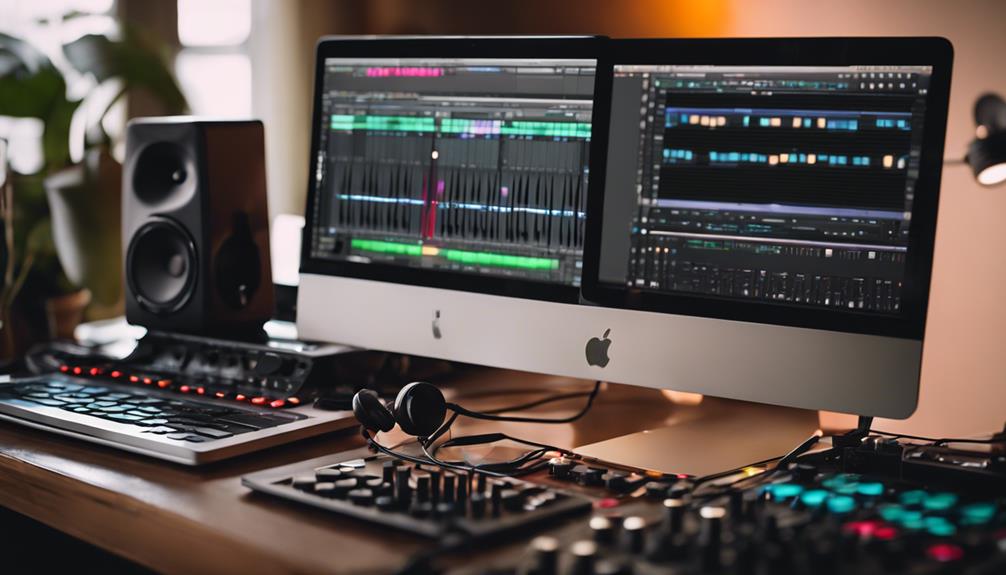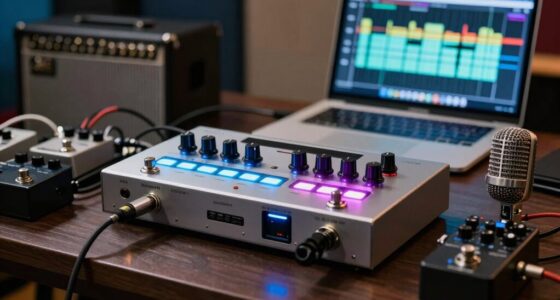
Searching for the perfect music production groovebox can feel overwhelming with so many options available. The Novation Circuit Rhythm stands out as the best overall pick thanks to its standalone sampling and sequencing power. For those focused on portability, the Akai MPC Live III offers a robust, portable production center. Meanwhile, the Roland MC-505 appeals to users seeking a classic, hands-on workflow. Each of these options balances features and price differently, presenting tradeoffs in usability, versatility, and cost. Continue reading for a detailed breakdown of each product to find your perfect match.

Get audio and creator gear delivered free — and shop member deals
- Fast, free delivery on millions of items
- Access to Prime Big Deal Days deals on October 6–7
- Prime Video, Amazon Music and more included
Complete the kit

Key Takeaways
- Top picks excel in either standalone capability or integration with other gear, depending on user needs.
- Price range varies widely; the best value often balances features with affordability rather than outright specs.
- Workflow design—whether sampler, sequencer, or synth-focused—significantly influences suitability for different producers.
- Portability impacts the choice, with some models designed for studio use only and others offering battery power.
- More advanced features like multi-track recording and deep editing tend to come with higher price tags.


More Details on Our Top Picks
Novation Circuit Rhythm Groovebox Workstation with Standalone Sampler Bundle with Studio Pro Monitor Headphones, 32GB Memory Card, and 2x MIDI Cable
This standalone sampler from Novation stands out for its comprehensive sampling capabilities, intuitive workflow, and performance features. Unlike the Circuit Tracks, which focuses more on sequencing and synthesis, the Circuit Rhythm emphasizes sample manipulation with direct recording, slicing, and resampling, making it ideal for beatmakers who want hands-on control over their sounds. Its 8 sample tracks with 32-step patterns support both quantized and off-grid grooves, while performance FX add real-time expressiveness. The included accessories, like studio monitor headphones and MIDI cables, enhance immediate usability. However, the extensive features come with a steeper learning curve, and its focus on sampling might be overwhelming for users primarily interested in synth-driven sequences. This pick suits producers seeking flexible, performance-ready sampling in a portable format, but less so for beginners or those wanting simple melodies without sampling.
Pros:- Powerful in-sample recording, slicing, and resampling capabilities
- 8 sample tracks with chainable patterns for complex groove creation
- Performance FX for live effects and real-time control
- Full connectivity including MIDI In/Out/Thru and analogue sync out
Cons:- Steep learning curve due to extensive feature set
- Battery life limited to around four hours, less suited for all-day sessions
Best for: Beatmakers and performers who prioritize sample manipulation and live improvisation
Not ideal for: Beginners seeking a straightforward synth-focused groovebox without deep sampling features
- Sample Tracks:8
- Memory Card Included:32GB
- Connectivity:MIDI In/Out/Thru, analogue sync out
- Battery Life:Up to 4 hours
- Included Accessories:Studio monitor headphones, MIDI cables
Our verdict“This device is perfect for advanced beatmakers and live performers who want a portable, feature-rich sampler, but may be too complex for beginners.”
Novation Circuit Tracks Groovebox Sequencer with Synth Engines and MIDI Control
Compared with the Circuit Rhythm, the Circuit Tracks offers a more streamlined approach focused on sequencing and synthesis, making it ideal for users who want quick pattern building and sound design. Its 2 digital synth tracks and 4 drum tracks, combined with a 32-step sequencer, support expressive live performance and studio work. The 32 RGB pads facilitate hands-on control, while pattern mutation and probability features promote creative variation. The absence of built-in speakers means you’ll need external gear, unlike the more portable Circuit Rhythm, which includes sampling features. Its limited polyphony of 2 voices per synth track may restrict complex arrangements, but its intuitive layout benefits producers seeking immediate results. This groovebox makes the most sense for musicians who want fast, tactile sequencing combined with versatile sound design, whereas beginners might find the interface somewhat overwhelming.
Pros:- Intuitive 32-step sequencer with pattern chaining
- Full-color RGB pads for expressive control
- Supports custom patches and pattern mutation for variety
- Full MIDI I/O for hardware integration
Cons:- Limited polyphony restricts complex textures
- No built-in speakers, requiring external audio setup
Best for: Live performers and studio producers who value quick pattern creation and hands-on control
Not ideal for: Beginners or producers primarily interested in sampling and complex audio editing
- Synth Tracks:2
- Drum Tracks:4
- Sequencer:32-step, chainable up to 256 steps
- MIDI I/O:Full-size MIDI in, out, thru
- Pads:32 RGB
Our verdict“This groovebox excels for producers who want fast sequencing and expressive control, but may not suit those needing deep sampling or polyphonic synths.”
myTRACKS Groovebox – Sequencer, Sampler, Drum Machine
This all-in-one groovebox makes music creation accessible without any prior experience, setting itself apart from more complex devices like the Novation Circuit Rhythm. Its emphasis on automatic note generation and built-in sampler allows users to craft complete songs by combining drums, instruments, and recordings effortlessly. Unlike the more advanced Pioneer AlphaTheta Chordcat, which includes detailed pattern control, myTRACKS simplifies the process for total novices by automating musical notes and offering endless sound combinations. While it lacks the deep editing tools and advanced connectivity of more professional gear, its intuitive interface encourages rapid experimentation and immediate results. This pick is ideal for absolute beginners or anyone wanting to compose on the fly without technical barriers, but less suitable for seasoned producers seeking detailed control.
Pros:- No experience needed with automatic musical notes
- All-in-one design for drums, instruments, and recordings
- Hands-on controls for effects and sound shaping
- Encourages experimentation and immediate song creation
Cons:- Limited editing and customization compared to professional workstations
- Lacks advanced connectivity and detailed parameter controls
Best for: Beginners eager to create full songs quickly without technical complexity
Not ideal for: Experienced producers requiring advanced editing, sampling, or studio integration
- Features:Sequencer, sampler, drum machine
- Ease of Use:Automatic notes, no lessons needed
- Connectivity:Limited compared to advanced gear
- Sound Library:Built-in sounds and effects
Our verdict“This groovebox is perfect for newcomers wanting a straightforward, fun way to make full tracks, but not for those seeking professional-level editing tools.”
Pioneer DJ AlphaTheta Chordcat 8-Track Groovebox Bundle with Headphones, MIDI Cable, and Polishing Cloth
Compared with the Novation Circuit Tracks, the Pioneer AlphaTheta Chordcat offers a more traditional multi-track workflow with 8 independent tracks and 16 patterns, suitable for complex song structures. Its 128-step sequencer and expressive effects like arpeggiator and delay support dynamic live performances and detailed arrangement work. The included bundle enhances immediate use, especially with the bundled headphones and MIDI cable. While the interface is straightforward for producers familiar with multi-track workflows, it may seem complex to complete beginners. The description provides limited detail on sound quality, but the device’s capacity for layering and performance makes it well-suited for advanced users focused on comprehensive song creation. This device appeals to producers who want a dedicated, multi-track groovebox with expressive effects, but might overwhelm newcomers or those seeking a simple setup.
Pros:- 8 independent tracks with 16 patterns for complex arrangements
- 128-step sequencer with real-time expressive effects
- Includes bundle of headphones, MIDI cable, and cleaning cloth for immediate use
- Seamless MIDI and USB-C connectivity
Cons:- Steeper learning curve for those unfamiliar with multi-track workflows
- Limited details on sound quality and sonic depth in the description
Best for: Producers and performers focused on multi-track arrangements and live show setups
Not ideal for: Beginners or producers who prefer streamlined, all-in-one solutions without detailed multi-track control
- Tracks:8
- Patterns:16
- Sequencer:128 steps
- Effects:Arpeggiator, delay
- Included Accessories:Headphones, MIDI cable, cloth
Our verdict“This groovebox is ideal for advanced producers seeking multi-track flexibility and expressive live control, less suited for newcomers or minimal setups.”
Akai Professional MPC Key 37 G2 Next-Gen Standalone Production Keyboard | Synthesizer for Producers, For Sampling & Sequencing, With USB-C, 37 Keys, 16 MPC Pads, 8-core Processor, 4GB RAM
Compared to the Novation Circuit Rhythm, the MPC Key 37 G2 offers a hybrid workflow with a 37-key synth-action keyboard and MPC pads, blending melody, harmony, and sampling into a single instrument. Its powerful 8-core processor and 4GB RAM support complex projects with up to 16 stereo audio tracks and a range of plugins, making it suitable for producers who want a studio-grade, standalone device. The inclusion of Ableton Live Lite and project import/export compatibility facilitates seamless studio integration. Its advanced sampling and sequencing capabilities, along with a modern touchscreen interface, cater to seasoned producers who want a versatile, all-in-one solution. However, its size and feature set might be overkill for casual or beginner users, and the price reflects its professional focus. This device is perfect for producers needing a portable, high-performance production hub, but less appropriate for those seeking simple grooveboxes or minimal setups.
Pros:- Hybrid 37-key synthesizer with MPC pads for versatile performance
- Supports full sampling, sequencing, and plugin support
- Fast 8-core processor with extensive project capability
- USB-C for streamlined studio connectivity
Cons:- High complexity and cost may be intimidating for newcomers
- Size may be less portable compared to smaller grooveboxes
Best for: Professional producers and advanced musicians needing a portable, studio-ready workstation
Not ideal for: Beginners or casual hobbyists looking for a simple groovebox with basic features
- Keys:37
- Pads:16 MPC pads
- Processor:8-core
- RAM:4GB
- Connectivity:USB-C
Our verdict“This MPC Key 37 G2 is best for pros who want a comprehensive, portable production instrument capable of professional studio work, but is overkill for beginners.”
Sonicware Liven Lofi-12 Lo-fi Groovebox & Sampler
The Sonicware Liven Lofi-12 stands out for its compact design and battery-powered operation, making it ideal for musicians who want to create on the move. Its 12-bit sampler and multiple effects enable creative, lo-fi beats, but the limited 4-track setup restricts complexity in larger projects. Compared to the MPC Live III, it sacrifices advanced features and storage for portability and simplicity, which is perfect for casual or sketching sessions but less suited for detailed production. The built-in speaker provides convenience but falls short for critical listening. Best for mobile creators and lo-fi enthusiasts who prioritize portability over multi-track depth.Pros:- Portable and battery-powered for on-the-go use
- Versatile 12-bit sampling and multiple effects
- Intuitive step sequencer with sound locking
Cons:- Limited to 4 tracks, restricting complex compositions
- Built-in speaker may not deliver high-quality sound for critical listening
Best for: Musicians seeking portable, lo-fi beat-making with minimal setup
Not ideal for: Producers working on complex arrangements or studio-based projects
- Sampler Mode:12-bit
- Tracks:4
- Voices:10
- Track Effects:12
- Master Effects:9
- Power:Battery-powered
- Built-in speaker:Yes
Our verdict“This groovebox suits casual, portable lo-fi production but isn’t designed for multi-layered studio projects.”
Akai Professional MPC Live III Retro – Standalone Portable Music Production Center
The MPC Live III Retro delivers a robust, all-in-one production experience with its powerful hardware, including an 8-core processor and 8GB RAM—far surpassing the capabilities of the Roland MC-101, which is more limited in processing power. Its 7-inch multi-touch screen and expressive pads make detailed editing and performance intuitive, though the larger size and weight can be a drawback for those needing ultra-portability. The extensive library of samples and plugins makes it well-suited for serious producers, but the complexity may be overwhelming for beginners. Compared to the Roland MC-505, it offers more advanced features and deeper control, at a higher cost. Best for serious beatmakers and performers who want a standalone, feature-rich device.Pros:- Powerful hardware supporting extensive tracks and plugins
- Expressive MPCe pads for dynamic playing
- Comprehensive connectivity for studio and live performance
Cons:- Large and potentially heavy for portable use
- Complex features may require time to master
Best for: Producers needing a complete, portable studio for live and studio use
Not ideal for: Beginners or those with limited space who prefer simpler devices
- Processor:8-core
- RAM:8GB
- Display:7-inch multi-touch
- Internal Storage:128GB
- Expandable Storage:SD or SSD
- Battery:Rechargeable
Our verdict“This model is best suited for experienced producers seeking an all-in-one, portable production hub.”
Roland MC-505 Dance Series Sequencer Machine Groove Box
The Roland MC-505 offers versatile sequencing and sound-shaping tailored for dance music production and live sets. While its capabilities for sequencing are broad, specific technical details are less emphasized compared to newer models, making it a bit opaque for detailed comparison. It’s suitable for electronic music creators who value rich sound design and live control, but it may have a steep learning curve for beginners unfamiliar with Roland’s interface. Unlike the more modern Roland MC-101, it emphasizes sequencing richness over portability, which can be limiting for those on the move. Best for DJs and producers focused on dance music who need robust sequencing and sound-shaping tools.Pros:- Versatile sequencing capabilities
- Rich sound-shaping features
- Ideal for live performances
Cons:- Lacks detailed specifications in the description
- May have a learning curve for new users
Best for: Electronic music producers and live performers seeking classic, versatile sequencing
Not ideal for: Beginners or those requiring detailed specs and ease of use
- Sequencing:Advanced
- Sound Design:Rich
- Performance Features:Live-ready
Our verdict“This groove box is a strong choice for dance producers valuing sequencing depth over modern interface simplicity.”
Roland MC-101 Groovebox Compact Music Production Workstation
The Roland MC-101 provides a balanced mix of portability and versatility, making it ideal for musicians who need to produce and perform on the move. Its 128-step sequencer, multiple track types, and built-in effects rival larger devices but with a compact footprint. While it supports various connection types and includes a sizable library, its 4-track limit may restrict more complex arrangements, especially compared to the MPC One G2, which supports full song production. The lack of a touchscreen limits detailed editing, but the dedicated controls keep workflow intuitive. Best suited for mobile musicians who want flexible production tools in a lightweight package.Pros:- Portable and lightweight design
- Wide variety of built-in effects and track types
- Supports multiple connection options for flexible setup
Cons:- Limited to 4 tracks, which can be restrictive
- No built-in display or touchscreen for detailed editing
Best for: Traveling performers and songwriters needing versatile, portable production options
Not ideal for: Producers requiring extensive multi-track arrangements or advanced editing features
- Track Types:Tone, Drum, Looper
- Connections:1/4″ jacks, MIDI, USB
- Power:Batteries or USB
- Tracks:4
- Clips:64 (16 per track)
- Effects:90 Track + 90 Master
Our verdict“This groovebox excels for on-the-go production but is less suited for complex, multi-layered projects.”
Akai Professional MPC One G2 Next-Generation Standalone Production Center
The MPC One G2 stands out for its ability to handle full song production independently, thanks to its powerful 8-core processor and 7″ touchscreen. Its extensive factory library and support for MPC Editions make it a top choice for producers who want a comprehensive setup without a computer. Compared to the Roland MC-505, it offers a modern interface and more flexible workflow, though its price and learning curve may challenge newcomers. The inclusion of over 20GB of content and software like MPC3 OS enhances its appeal for serious producers. However, the device’s complexity and limited RAM for heavy projects are considerations. Best for producers seeking a standalone, all-in-one solution capable of full production and performance.Pros:- Powerful 8-core processor supports extensive projects
- Standalone operation eliminates need for a computer
- Large library of factory sounds and plugins included
Cons:- Learning curve may be steep for beginners
- Limited to 4GB RAM for complex, multi-layered projects
Best for: Experienced beatmakers and studio producers wanting a portable, feature-rich device
Not ideal for: Beginners or users with limited budget or space for high-end gear
- Processor:8-core
- RAM:4GB
- Display:7″ touchscreen
- Pads:16 MPC pads
- Connectivity:USB-C, MIDI, audio streaming
- Factory Content:Over 20GB
Our verdict“This device is ideal for dedicated producers needing a comprehensive, standalone production platform.”
AlphaTheta Chordcat 8-Track Groovebox
The AlphaTheta Chordcat stands out for its staggering capacity to generate up to 110,000 chord combinations, making it a top choice for producers seeking expansive harmonic options. Compared with the Novation Circuit Rhythm, which emphasizes standalone sampling, the Chordcat offers far more in-depth chord variety, though it lacks a built-in speaker or display, which can hinder immediate workflow. Its 145 sound presets and 16 drum kits provide versatile tones suitable across genres, and its USB and MIDI connectivity facilitate seamless integration with external synths and DAWs, appealing to producers who prioritize studio flexibility. However, the absence of onboard controls for editing or a display may introduce a steep learning curve for beginners, and limited info on power options could be a concern for mobile use. This pick makes the most sense for advanced users who want maximum creative options and external gear compatibility.
Pros:- Massive variety of chord combinations for rich harmonic exploration
- Wide range of sound presets and drum kits for genre versatility
- Easy external gear and software integration via MIDI and USB
Cons:- No built-in speakers or display, limiting immediate hands-on editing
- Potentially steep learning curve for new users unfamiliar with advanced MIDI setups
Best for: Producers and composers who want a highly flexible chord generator and integrate with external hardware and software.
Not ideal for: Beginners or live performers who need a standalone, portable groovebox with onboard controls and easy interface.
- Chord Combinations:up to 110,000
- Sound Presets:145
- Drum Kits:16
- Connectivity:MIDI OUT/THRU, MIDI IN, USB Type-C
- Power Options:Not specified
- Built-in Speakers:No
- Display:No
Our verdict“This groovebox is ideal for experienced producers seeking maximum harmonic creativity and flexible integration options.”

How We Picked
These products were evaluated based on their performance, ease of use, build quality, feature set, and value for money. We prioritized versatility—whether a groovebox could serve both live performances and studio production—and considered user interface design, which impacts workflow efficiency. Products were ranked to favor those that balance professional features with intuitive operation, ensuring suitability for a range of skill levels from beginners to seasoned producers. Cost was also a factor, but higher prices were justified only when they delivered meaningful enhancements in capability or durability.Factors to Consider When Choosing Music Production Groovebox
Choosing the right music production groovebox involves understanding your specific needs and how each device’s features align with your workflow. Beyond basic specs, consider how intuitive the interface is, whether it supports your preferred genre, and if it offers enough flexibility for future growth. Avoid models that overpromise on features you won’t use, as they can complicate your setup and increase costs unnecessarily. Instead, focus on a device that strikes a balance between ease of use and expandable capabilities, ensuring it remains a valuable tool as your skills develop.Workflow and Use Case Compatibility
Assess whether the groovebox’s core functions match your production style. Do you need deep sampling, hands-on sequencing, or synthesis? Some devices excel in live performance, while others are better suited for studio-centric workflows. Clarifying your primary use case helps you avoid paying for features you won’t utilize, making your investment more efficient.
Portability and Power Supply
Decide if portability matters. Battery-powered models allow for music creation on the go, ideal for live gigs or travel. Conversely, larger, mains-powered units often provide more extensive controls and larger screens, which benefit studio setups. Weigh the importance of mobility against the need for comprehensive controls and connectivity options.
Interface and Ease of Use
Look for an intuitive interface, especially if you’re a beginner. Devices with tactile controls, clear menus, and straightforward workflows reduce the learning curve. More complex models might offer advanced features but can be daunting for newcomers. Prioritize a device that encourages experimentation without overwhelming you.
Connectivity and Expandability
Check the available connectivity options—USB, MIDI, CV/Gate, audio inputs/outputs. These determine how well the groovebox integrates into your existing setup or future upgrades. Devices with expandability options allow you to add external gear or expand functions over time, offering better long-term value.
Price and Value
Price varies greatly, but the most expensive isn’t always the best fit. Focus on what features you truly need; a more affordable model can deliver excellent value if it covers your core requirements. Conversely, investing in a higher-priced unit might be justified if it offers durability, advanced features, or professional-grade outputs that you plan to use regularly.
Frequently Asked Questions
Can a groovebox replace a full studio setup?
While a groovebox offers a powerful all-in-one solution for creating beats, melodies, and arrangements, it may not fully replace a dedicated studio setup depending on your production needs. Grooveboxes excel at portability, live performance, and quick idea iteration, but they often lack the extensive mixing, editing, and sound design capabilities of a full DAW. For most producers, a groovebox complements a more comprehensive studio rather than replacing it entirely.
Is a standalone groovebox better than one that requires a computer?
Standalone grooveboxes offer the advantage of portability and immediate hands-on control, making them ideal for live use or on-the-fly creation. However, they might be limited in storage, editing, and complex processing compared to models that connect to a computer. Your choice depends on whether you prioritize mobility and simplicity or deep editing and integration with your existing software environment.
Do I need advanced features if I am a beginner?
Beginners benefit from grooveboxes with intuitive interfaces, preset patterns, and straightforward controls. Advanced features can be overwhelming and may hinder learning. Starting with a simpler device allows you to grasp core concepts of sequencing, sampling, and sound design before exploring more complex options as your skills grow.
Can I use a groovebox for live performances?
Many grooveboxes are designed with live performance in mind, offering features such as real-time sequencing, pattern switching, and robust build quality. Devices like the Akai MPC Live III and Roland MC-505 are especially suited for live use thanks to their standalone operation and performance-focused controls. If live performance is your goal, prioritize models with durable construction, battery power, and performance-oriented features.
How important is the number of tracks and sampling options?
The number of tracks and sampling capabilities directly impact your creative flexibility. More tracks allow for complex arrangements, while extensive sampling options enable a broader palette of sounds. However, more features can also mean increased complexity. Choose a groovebox that offers enough tracks and sampling options to support your typical projects without overwhelming your workflow.
Conclusion
For those seeking an all-around performer, the Novation Circuit Rhythm delivers versatile standalone sampling and sequencing. Beginners should consider the Sonicware Lofi-12 for its approachable interface and compact design. Producers looking for premium features and portability will find the Akai MPC Live III to be a powerful companion. If budget is a concern, models like the Roland MC-101 offer solid performance at a lower price point. Your ideal choice depends on whether you prioritize ease of use, advanced features, portability, or price—match your needs to these strengths for the best results.
Fall Picks
fall essentials
As an affiliate, we earn on qualifying purchases.