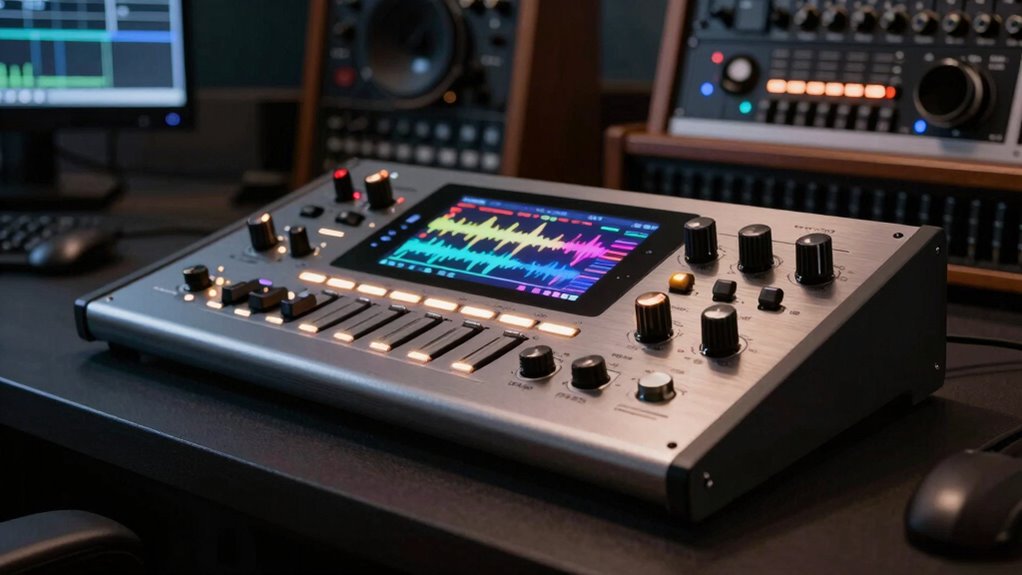

Choosing a hardware multiband compressor for mastering means separating true frequency-dependent processing from stereo bus compression and software controlled by a hardware surface. I rank the Drawmer 1973 first for its three independently controlled analog bands, and the Elysia Xmax as a compact 500-series option with several finishing tools. The Dangerous Music COMPRESSOR is my pick for clean, full-band stereo control, though it is not a multiband unit.

Get audio and creator gear delivered free — and shop member deals
- Fast, free delivery on millions of items
- Access to Prime Big Deal Days deals on October 6–7
- Prime Video, Amazon Music and more included
That distinction matters: only some picks let you compress low, middle, and high frequencies separately. The TC Electronic Master X HD-DT supplies multiband processing in a plugin, not an analog signal path; the SSL-style 500-series module is a bus compressor rather than a multiband design. I have ranked the products by how closely they serve mastering needs, while noting when a listing’s description does not establish the specific functionality its title or category might imply.
Complete the kit


Key Takeaways
- Drawmer 1973 is the clearest fit for analog three-band mastering control, with per-band adjustments and onboard parallel mix.
- Elysia Xmax combines listed multiband operation with stereo bus finishing features, but buyers should confirm its crossover and band controls before relying on it for detailed band-by-band mastering.
- Dangerous Music COMPRESSOR is a strong clean stereo compressor, not a multiband compressor; choose it for full-range dynamics and sidechain flexibility.
- TC Electronic Master X HD-DT offers multiband processing through software and a compact controller, so it does not meet a strictly analog-hardware requirement.
- Stereo Buss Compressor Module is a 500-series stereo bus option, not a multiband processor; compatibility with a suitable rack is part of the decision.
| Drawmer 1973 3-Band Stereo FET Compressor |  | Best Overall for Analog Multiband Mastering | Bands: 3 | Compressor type: FET | Crossover: Variable frequency, 6 dB/octave | VIEW ON AMAZON | See Our Full Breakdown |
| Elysia Xmax 500 Series Stereo Master Bus Compressor |  | Best Compact Multiband-Listed Master Bus Option | Type: Stereo master bus compressor | Channels: 2 | Multiband: Listed as yes | VIEW ON AMAZON | See Our Full Breakdown |
| TC Electronic Master X HD-DT Multiband Dynamics Processor Plug-in with Dedicated Hardware Controller |  | Best Hybrid Option for Software-Based Mastering | Processing format: Plugin with dedicated hardware controller | Dynamics: Compression, expansion, and limiting | Additional processing: Soft clipping | VIEW ON AMAZON | See Our Full Breakdown |
| Dangerous Music COMPRESSOR |  | Best for Clean Full-Band Stereo Mastering | Processing: Two-channel stereo compressor | Attack and release: Auto options | Detection: Dual-slope | VIEW ON AMAZON | See Our Full Breakdown |
| Stereo Buss Compressor Module for 500-Series MK3 |  | Best 500-Series Pick for Full-Band Bus Glue | Product type: Stereo bus compressor module | Format: 500-series | Compression ratios: Multiple settings | VIEW ON AMAZON | See Our Full Breakdown |
| hardware multiband compressor for mastering | Dimensions |
|---|---|
| Drawmer 1973 3-Band Stereo FET | — |
| Elysia Xmax 500 Series Stereo | — |
| TC Electronic Master X HD-DT M | 6.75 x 4.7 x 3.45 inches |
| Dangerous Music COMPRESSOR | 22.65 x 18.95 x 8.7 inches |
| Stereo Buss Compressor Module | 8.07 x 6.3 x 3.74 inches |
More Details on Our Top Picks
Drawmer 1973 3-Band Stereo FET Compressor
The Drawmer 1973 takes the top position because it is the most clearly specified analog multiband compressor in this group. Its three bands have independent threshold, gain, attack, and release controls, giving a mastering engineer the ability to respond differently to bass, midrange, and treble dynamics. That is a more direct match for corrective or tonal band-specific compression than the Dangerous Music COMPRESSOR, which processes the stereo signal as a full-range pair.
Its variable-frequency, 6 dB/octave crossovers and per-band gain-reduction meters support deliberate setup and monitoring. The onboard wet/dry control also allows parallel blending without adding a separate mixer loop, while the dual VU meters offer another view of overall level. “Big” and “Air” modes add optional low- and high-frequency shaping, but mastering users should treat those as creative controls rather than a substitute for careful level-matched decisions.
The tradeoff is a hands-on analog workflow: the supplied specs list no preset memory or digital recall. That makes repeatable revisions slower than on the TC plugin/controller combination, and three independent bands bring more setup decisions than a straightforward stereo bus compressor. I would choose it when band-specific analog control is the priority, and skip it if instant session recall or a minimal control set matters more.
Pros:- Three independently controlled compression bands
- Variable-frequency crossovers and per-band gain-reduction meters
- Built-in wet/dry blend for parallel compression
- Dual VU meters and dedicated low- and high-frequency enhancement modes
Cons:- No preset memory or digital recall is specified
- Its many band controls require careful setup
- Analog hardware does not offer the software portability of the TC option
Best for: Mastering engineers who want clearly described, independently adjustable three-band analog compression and onboard parallel blending.
Not ideal for: Buyers who need digital presets, fast project recall, or a simple single-stage stereo bus compressor.
- Bands:3
- Compressor type:FET
- Crossover:Variable frequency, 6 dB/octave
- Per-band controls:Threshold, gain, attack, release, mute, bypass
- Metering:Per-band gain reduction and dual analog VU meters
- Parallel blend:Variable wet/dry mix
- Construction:Steel chassis and aluminum front panel
Our verdict“I rank the Drawmer first for buyers who want the most clearly documented analog, three-band mastering control in this lineup.”
Elysia Xmax 500 Series Stereo Master Bus Compressor
The Elysia Xmax is the compact alternative for buyers who want a stereo analog finishing processor with multiband capability listed alongside bus-oriented tools. Its variable crossover, soft clipper, bass mono maker, global release control, and one-knob shelving EQ suggest a workflow aimed at shaping the final stereo mix, rather than just controlling isolated peaks. Compared with the Drawmer, it is described as a more integrated finishing tool, but the supplied specifications do not spell out the number of bands or the independent controls available for each one.
That gap is important for a mastering purchase. The Drawmer explicitly identifies three bands and their individual dynamics controls; the Xmax listing says “multiband: yes” but does not provide comparable detail. I would confirm the actual band architecture and control layout with the manufacturer or seller before choosing it for precise low-, mid-, and high-band compression. Its 500-series format also means buyers need a compatible rack and should check the physical and power requirements for their own setup.
The Xmax makes more sense than the Drawmer when a small module and finishing features are the draw, and less sense when exhaustive multiband specifications are required upfront. Its two-channel format is for stereo processing, not for handling multiple independent stereo sources at once. Buyers seeking uncomplicated operation may also find the combination of multiband dynamics, clipping, bass management, and EQ a broader toolkit than they need.
Pros:- Listed as a two-channel analog processor with multiband capability
- Variable crossover and global release control
- Soft clipper, bass mono maker, and shelving EQ add finishing options
- Compact 500-series module format
Cons:- Supplied details do not identify the number of bands or per-band controls
- Requires a compatible 500-series rack
- Two channels do not provide separate processing for multiple stereo sources
Best for: Mastering or mix engineers with a compatible 500-series rack who want a stereo finishing module and are prepared to verify its multiband control details.
Not ideal for: Buyers who need clearly documented independent band controls, a standalone full-size unit, or multi-source processing.
- Type:Stereo master bus compressor
- Channels:2
- Multiband:Listed as yes
- Crossover:Variable
- Additional features:Soft clipper, bass mono maker, VariLink, global release, one-knob shelving EQ
- Signal format:Analog
- Warranty:2 years
Our verdict“I would shortlist the Xmax for compact stereo finishing, but verify its specific band architecture before treating it as a detailed multiband mastering solution.”
TC Electronic Master X HD-DT Multiband Dynamics Processor Plug-in with Dedicated Hardware Controller
The TC Electronic Master X HD-DT earns its place for a different kind of buyer: someone who wants multiband processing with tactile control, but does not require the audio to pass through an analog compressor. The supplied description identifies compression, expansion, and limiting, plus soft clipping and presets. That gives it a broader software dynamics toolkit than the Drawmer’s listed analog compressor, while a dedicated controller can make hands-on adjustments more immediate than relying only on a mouse.
This is a plugin with a hardware controller, not a standalone hardware multiband compressor. That distinction puts it behind the Drawmer and the analog-listed Elysia for a strictly outboard signal path, but it may be the practical choice for an in-the-box mastering workflow. Presets can help move between starting points, while soft clipping offers another way to shape peaks; neither removes the need to check how processing affects the whole stereo image and tonal balance.
Buyers should account for the software setup and compatibility needs rather than judging the small controller by its physical size alone. The product information supplied here does not identify detailed crossover, band-count, or connectivity specifications, so those should be checked against the current software and controller requirements. I would skip it if the goal is an all-analog chain, or if adding a plugin-dependent system is undesirable.
Pros:- Plugin multiband dynamics with dedicated tactile controller
- Description includes compression, expansion, and limiting
- Preset options can support repeatable software workflows
- Soft clipping adds another digital peak-shaping option
Cons:- Not an analog hardware compressor or standalone audio processor
- Requires software setup and compatibility checks
- Supplied specifications do not detail band count or crossover controls
Best for: Mastering engineers working primarily in a digital audio workstation who want tactile control, presets, and multiband dynamics in software.
Not ideal for: Buyers seeking a standalone analog processor, a fully specified outboard signal path, or a unit that operates without compatible software.
- Processing format:Plugin with dedicated hardware controller
- Dynamics:Compression, expansion, and limiting
- Additional processing:Soft clipping
- Presets:Preset options listed
- Controller weight:11.7 ounces
- Dimensions:6.75 x 4.7 x 3.45 inches
- Material:Stainless steel
Our verdict“I recommend the Master X HD-DT to software-first buyers who value a physical controller more than an analog signal path.”
Dangerous Music COMPRESSOR
The Dangerous Music COMPRESSOR is a serious mastering-oriented stereo compressor, but it is not a multiband processor based on the supplied description. I include it because buyers searching this category may be comparing overall mastering dynamics tools, and this unit offers a useful contrast: its two-channel full-range approach prioritizes clean stereo control rather than independent frequency-band compression. If a mix needs gentle cohesion without splitting its spectrum into bands, that distinction may be an advantage.
Auto attack and release, dual-slope detection, and active sidechain send/return circuitry give it tools for controlling response and shaping detector behavior. Those features differ from the Drawmer’s explicit per-band controls: they can help tailor how the full stereo signal reacts, but they do not let the user compress only the bass or treble independently. For precise frequency-specific correction, I would choose the Drawmer instead; for a software workflow with multiband functions, the TC is the closer fit.
The large, heavy enclosure is a practical studio consideration, and the listed connections are unusual enough to check against the intended wiring before purchase. Its mastering-oriented design may also be more than a home setup needs. I would shortlist it for clean stereo bus compression and sidechain flexibility, while steering away anyone who requires true multiband hardware.
Pros:- Mastering-grade two-channel stereo compression
- Auto attack and release options
- Active sidechain send and return circuitry
- Dual-slope detection for shaping full-band response
Cons:- Not a multiband compressor
- Large and heavy compared with the 500-series options
- Supplied connection details should be checked against the studio’s cabling
Best for: Mastering engineers seeking clean two-channel, full-range compression with auto timing options and active sidechain connections.
Not ideal for: Anyone whose primary requirement is independent low-, mid-, and high-frequency compression or compact equipment.
- Processing:Two-channel stereo compressor
- Attack and release:Auto options
- Detection:Dual-slope
- Sidechain:Active send and return circuitry
- Audio output:Stereo
- Weight:17.4 pounds
- Dimensions:22.65 x 18.95 x 8.7 inches
- Listed power:9 volts, 300 milliamps
Our verdict“I rate it as a strong full-band mastering compressor, but not as a substitute for the Drawmer when separate frequency-band control is required.”
Stereo Buss Compressor Module for 500-Series MK3
This 500-series stereo bus compressor is the least direct match for a multiband mastering search: the supplied description presents it as an SSL G Series-style stereo bus compressor, not as a multiband design. It is included for buyers who may actually want mix-bus cohesion, punch, and a switchable sidechain high-pass filter rather than frequency-separated dynamics. That high-pass option can reduce bass-driven pumping, but it does not create a separately compressed low band as the Drawmer does.
Its compact module format makes it easier to fit into a compatible 500-series rack than the full-size Dangerous unit, but rack dependence is a real requirement, not a minor footnote. The listed description mentions multiple ratios and sidechain options, while offering no multiband crossover controls or per-band metering. Compared with the Xmax, the available details also do not list a suite of finishing features such as a bass mono maker or soft clipper.
I would choose this module only when the goal is straightforward stereo bus compression in an existing compatible rack. It is a poor pick for someone expecting independent spectral control, and the product naming should not be mistaken for evidence of multiband operation. Buyers should confirm the exact model and rack requirements before ordering.
Pros:- Compact 500-series module format
- Multiple compression ratio settings are described
- Switchable sidechain high-pass filter
- Straightforward stereo bus compression approach
Cons:- Not described as a multiband compressor
- Requires a compatible 500-series rack
- No digital recall or advanced connectivity is specified
Best for: Studio owners with a compatible 500-series rack who want a straightforward stereo bus compressor and sidechain high-pass filtering.
Not ideal for: Mastering engineers who need true multiband processing, or buyers without a compatible 500-series chassis.
- Product type:Stereo bus compressor module
- Format:500-series
- Compression ratios:Multiple settings
- Sidechain:Switchable high-pass filter
- Weight:1.12 pounds
- Dimensions:8.07 x 6.3 x 3.74 inches
- Model number:500BUSCOMPRESSOR
Our verdict“I would choose this for full-band stereo bus glue in an existing rack, not for mastering that depends on separate band compression.”
How We Picked
I ranked these options by their fit for mastering-specific multiband work, not by brand reputation or broad studio usefulness alone. My first question was whether the supplied product details describe separate frequency bands with independent dynamics control. The Drawmer listing gives the clearest evidence: three bands, variable-frequency crossovers, and per-band threshold, attack, release, and gain controls. The Elysia listing identifies multiband capability and a variable crossover, but provides fewer details about the band’s controls, so I treat its precise multiband workflow as something to verify.
I then considered signal path and mastering workflow: analog hardware versus plugin processing, stereo operation, sidechain options, parallel blending, metering, and practical setup requirements. A clean full-band stereo compressor can be useful on a master bus, but it cannot independently restrain a bass-heavy region while leaving the treble less compressed. I therefore keep the Dangerous and SSL-style unit below the genuine multiband candidates rather than presenting them as equivalent tools. The TC controller earns a place for buyers comfortable with a hybrid software setup, with its status clearly identified.
Finally, I weighed fit, control, and tradeoffs. A 500-series device needs a compatible rack; an analog unit takes space and offers no software recall unless its design includes it; a plugin controller depends on the associated software environment. Product details here are based on the supplied descriptions and specifications, not claims of personal testing. Where the supplied information leaves a material question open, I say so instead of filling the gap with assumptions.
Factors to Consider When Choosing Hardware Multiband Compressor For Mastering
Before choosing a unit, I would first define what “hardware multiband” means for the intended mastering chain. In this roundup, the Drawmer is the clearest analog multiband design, while the TC is software processing controlled by hardware. The Elysia is described as analog and multiband, but its supplied details are less complete. The Dangerous and SSL-style units are useful stereo compressors, not multiband alternatives.
Confirm that the processor is genuinely multiband
A true multiband compressor splits audio into frequency ranges and applies dynamics control to those ranges separately. That makes it possible, for example, to reduce a low-frequency swell without applying the same amount of gain reduction to the upper mids. The Drawmer 1973 lists three bands and per-band controls, which gives buyers clear evidence of that workflow. Elysia lists multiband capability and a variable crossover, but its supplied details do not identify the bands or individual controls. I would ask for those specifics before buying it for detailed mastering work. Sidechain filtering on a full-band compressor is not the same thing: it changes detector response rather than creating independent band compressors.
Choose analog, hybrid, or software control
Analog outboard suits studios that want a physical signal path and hands-on controls, but it can take rack or desk space and may lack easy digital session recall. The Drawmer has detailed manual band controls, while the Dangerous is a larger full-range stereo unit. The TC Master X HD-DT is a plugin plus controller, so its audio processing depends on compatible software even though the controller supplies tactile operation. That can suit an in-the-box mastering setup, but it does not satisfy a requirement for analog hardware in the audio path. Decide which part matters more before comparing features.
Think about crossover behavior and band controls
Crossover design affects how the spectrum is divided and how processing decisions interact near the boundaries between bands. The Drawmer specifies a variable-frequency, 6 dB/octave crossover and separate threshold, attack, release, and gain controls. This makes its operating concept easier to evaluate from the supplied information. The Xmax also lists a variable crossover, but its band count and per-band controls are not included in the provided specs. I would not assume both processors offer the same level of control based on the word “multiband” alone; confirm the actual routing and adjustment options.
Match stereo workflow to the finishing task
Mastering usually demands attention to stereo balance as well as tonal and dynamic changes. The Drawmer is explicitly a three-band stereo compressor, and the Dangerous is a two-channel stereo compressor with sidechain facilities. The Elysia adds a bass mono maker and soft clipping to its listed features, which may suit broader stereo finishing, though its multiband layout needs clarification. The SSL-style module focuses on full-band bus cohesion. I would select a tool based on whether the task calls for separate band dynamics, overall stereo glue, or a combination of finishing functions, rather than expecting one label to cover all three.
Check recall, metering, and system requirements
Small workflow details become important when mastering revisions arrive. The Drawmer’s analog meters and per-band gain-reduction indicators make reduction visible, but it has no preset memory listed. The TC includes preset options, although software compatibility must be checked. A 500-series choice such as the Elysia or SSL-style module needs a suitable rack; confirm rack space and power support before planning a chain. The Dangerous is notably large and heavy according to its supplied specifications. For any option, verify connectors, software requirements, and the exact current product configuration rather than inferring them from a short listing.
Frequently Asked Questions
Which product here is the clearest true hardware multiband compressor?
The Drawmer 1973 is the clearest match in the supplied information: it is an analog three-band stereo compressor with separate threshold, gain, attack, and release controls for each band. The Elysia Xmax is also listed as analog and multiband, but its band count and independent control details are not provided here. I would verify those details if comparing the two for precise frequency-specific mastering.
Is the Dangerous Music COMPRESSOR a multiband compressor?
No. The supplied description identifies it as a two-channel mastering compressor with auto timing, dual-slope detection, and active sidechain send and return. Those features support stereo full-band dynamics work, but they do not describe independent compression bands. I would choose it for clean stereo compression and sidechain flexibility, not for controlling bass, mids, and highs separately.
Does the TC Electronic Master X HD-DT process audio in analog hardware?
No. The product is described as a multiband dynamics plugin with a dedicated hardware controller. The controller provides a physical interface, while the processing remains software-based. It can fit a digital mastering workflow, but buyers seeking an analog outboard signal path should look at the Drawmer or investigate the Elysia after confirming its detailed band controls.
Can a stereo bus compressor replace a multiband compressor for mastering?
Not when the job requires independent dynamics control across frequency ranges. A full-band compressor such as the Dangerous or the SSL-style module can shape overall cohesion and level, while a sidechain high-pass filter can reduce bass influence on the detector. Neither feature creates separate low-, mid-, and high-band compression. If band-specific control is central to the task, choose a genuine multiband processor instead.
What should I verify before choosing a 500-series processor?
Confirm that you own or plan to buy a compatible 500-series rack, then check that the rack supports the module’s power and physical requirements. For the Elysia, I would also confirm the number of bands and the independent controls available, since the supplied description only states multiband capability and a variable crossover. For the SSL-style module, verify the exact model and remember that its description presents it as a full-band bus compressor.
Conclusion
For buyers who specifically want analog multiband mastering control, I would start with the Drawmer 1973 because its three bands, per-band adjustments, and metering are explicitly described. Choose the Elysia Xmax if a compact 500-series finishing module appeals to you, but verify its band layout and rack requirements first. Software-first engineers should consider the TC Master X HD-DT, accepting that its controller does not make the processor analog.
If your real need is full-band stereo compression rather than multiband processing, the Dangerous Music COMPRESSOR is the more appropriate mastering-focused pick, while the SSL-style module makes sense for stereo bus glue in an existing 500-series rack. I would not buy either as a replacement for independent frequency-band control. That distinction is the central decision in this lineup: choose by the processing task and signal path you actually need, not by the broad compressor label.
Halloween Picks
halloween
As an affiliate, we earn on qualifying purchases.