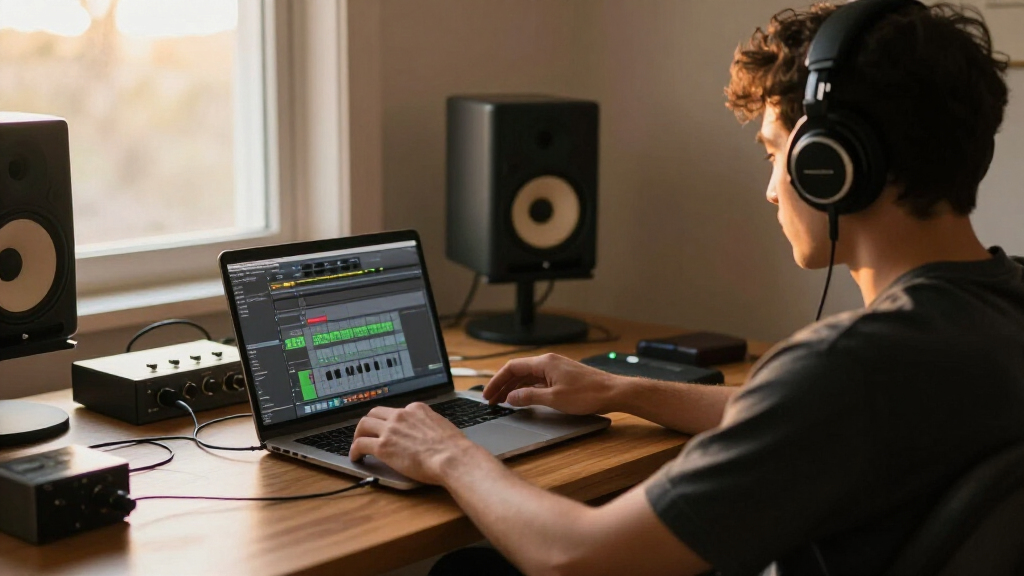

Choosing studio headphones for music production means balancing accuracy, comfort, and isolation against your budget. For most home producers, the Sony MDR7506 remains the best overall pick: it delivers the flat, revealing midrange you need for mixing at a price that leaves room in the budget for acoustic treatment or monitors. The beyerdynamic DT 770 Pro (80 Ohm) stands out for tracking thanks to its exceptional isolation and all-day comfort, while the beyerdynamic DT 990 Pro offers a wider, more natural soundstage for critical mixing — if you can work in a quiet room. The main tradeoff you’ll face is closed-back isolation versus open-back accuracy, plus whether your audio interface can drive higher-impedance models. Continue reading for the full breakdown of all 13 options and which one fits your workflow.

Get audio and creator gear delivered free — and shop member deals
- Fast, free delivery on millions of items
- Access to Prime Big Deal Days deals on October 6–7
- Prime Video, Amazon Music and more included
Complete the kit


Key Takeaways
- Closed-back models (DT 770 Pro, HD 280 Pro, M50X) dominated for tracking and vocal recording, while open-back options (DT 990 Pro, HD 560S) won for final mixing decisions — no single pair excels at both stages.
- The Sony MDR7506 and AKG K240 Studio delivered mixing-grade accuracy under $100, showing that price stopped predicting performance above roughly the $170 mark in this lineup.
- The 250 Ohm DT 990 Pro requires a headphone amp or strong audio interface to sound its best; the newer 48 Ohm DT 990 Pro X solved this for laptop-only producers at a modest accuracy cost.
- Audio-Technica‘s M-series ladder (M20x, M30x, M40x, M50X) showed clear diminishing returns above the M40x — the M50X’s boosted bass actually made it slightly worse for mixing despite the higher price.
- Budget picks like the FIFINE HD8 and ATH-M20x are fine for rough tracking and editing, but their rolled-off low end makes them risky as a sole mixing reference.
| Audio-Technica ATH-M30x Professional Studio Monitor Headphones, Black |  | Best Budget Entry Point | Driver Size: 40 mm | Design: Closed-back, circumaural | Cable Exit: Single side | VIEW LATEST PRICE | See Our Full Breakdown |
| beyerdynamic DT 770 PRO 80 Ohm Over-Ear Studio Headphones, Gray |  | Best Overall Closed-Back | Impedance: 80 Ohm | Type: Closed-back, over-ear | Cable Length: 3 meters | VIEW LATEST PRICE | See Our Full Breakdown |
| Beyerdynamic DT 990 Pro (250 Ohm) Open-Back Studio Headphones, Black |  | Best for Mixing and Mastering | Impedance: 250 Ohm | Frequency Response: 5 – 35,000 Hz | Headphone Type: Open-back, dynamic | VIEW LATEST PRICE | See Our Full Breakdown |
| Beyerdynamic DT 990 Pro X (48 Ohm) Open-Back Studio Headphones, Black | 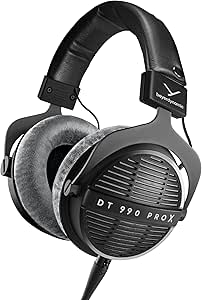 | Best Versatile Open-Back | Impedance: 48 Ohm | Type: Open-back, over-ear | Driver: STELLAR.45 dynamic | VIEW LATEST PRICE | See Our Full Breakdown |
| Beyerdynamic DT 270 Pro Closed-Back Wired Studio Headphones, Black | 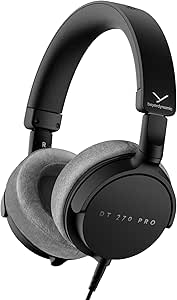 | Best for Podcasting and Vocal Tracking | Type: Closed-back, over-ear | Connectivity: Wired | Cable Length: 3 meters | VIEW LATEST PRICE | See Our Full Breakdown |
| Sennheiser HD 560S Open-Back Over-Ear Wired Audiophile Headphones |  | Best Open-Back Mixing Reference | Type: Open-back over-ear | Connectivity: Wired | Connector: 1/4-inch (6.3mm) | VIEW LATEST PRICE | See Our Full Breakdown |
| Audio-Technica ATH-M20x Professional Studio Monitor Headphones, Black |  | Best Budget Entry Point | Driver Size: 40 mm | Magnet Type: Rare earth magnets | Voice Coil: Copper-clad aluminum wire | VIEW LATEST PRICE | See Our Full Breakdown |
| FIFINE HD8 Wired Studio Monitor Headphones |  | Best Value Feature Set | Driver Size: 50 mm | Frequency Range: 20 Hz – 20 kHz | Weight: 265 g | VIEW LATEST PRICE | See Our Full Breakdown |
| AKG K240 Studio Semi-Open Studio Headphones | 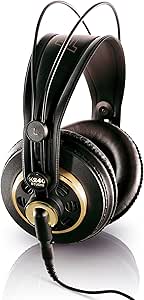 | Best Semi-Open Classic | Design: Semi-open, over-ear | Transducer Size: 30 mm Varimotion | Connectivity: Stereo 1/8-inch connector with 1/4-inch adapter | VIEW LATEST PRICE | See Our Full Breakdown |
| Audio-Technica ATH-M50X Professional Studio Monitor Headphones, Black |  | Best Closed-Back All-Rounder | Type: Professional closed-back monitor headphones | Driver Size: 45 mm large-aperture | Connectivity: Detachable cable | VIEW LATEST PRICE | See Our Full Breakdown |
| Sennheiser HD 280 Pro Headphones |  | Best for Tracking in Noisy Rooms | Connectivity: Wired | Design: Closed-ear, collapsible | Sound Attenuation: Up to 32 dB | VIEW LATEST PRICE | See Our Full Breakdown |
| Audio-Technica ATH-M40x Professional Studio Monitor Headphones |  | Best Value Workhorse | Driver Size: 40 mm | Design: Circumaural, closed-back | Swiveling Earcups: 90 degrees | VIEW LATEST PRICE | See Our Full Breakdown |
| Sony MDR7506 Professional Large Diaphragm Headphones |  | Best Classic Studio Reference | Driver Size: 40 mm | Magnet Type: Neodymium | Frequency Response: 10 Hz – 20 kHz | VIEW LATEST PRICE | See Our Full Breakdown |
| studio headphones for music production | Design |
|---|---|
| Audio-Technica ATH-M30x Profes | Closed-back, circumaural |
| beyerdynamic DT 770 PRO 80 Ohm | — |
| Beyerdynamic DT 990 Pro | — |
| Beyerdynamic DT 990 Pro X | — |
| Beyerdynamic DT 270 Pro Closed | — |
| Sennheiser HD 560S Open-Back O | Over-ear, ergonomic earcups |
| Audio-Technica ATH-M20x Profes | Closed-back, circumaural |
| FIFINE HD8 Wired Studio Monito | Closed-back over-ear with passive isolation |
| AKG K240 Studio Semi-Open Stud | Semi-open, over-ear |
| Audio-Technica ATH-M50X Profes | Over-ear with swiveling earcups |
| Sennheiser HD 280 Pro Headphon | Closed-ear, collapsible |
| Audio-Technica ATH-M40x Profes | Circumaural, closed-back |
| Sony MDR7506 Professional Larg | Closed-ear, foldable |
More Details on Our Top Picks
Audio-Technica ATH-M30x Professional Studio Monitor Headphones, Black
For producers buying their first pair of studio headphones, the ATH-M30x delivers the core thing that matters: a reasonably flat mid-range at a price that leaves room in the budget for an interface or mic. Compared with the step-up Audio-Technica ATH-M40x, it trades away the detachable cable and slightly tighter bass control, which is the real cost here — a fixed cable means a broken wire ends the headphone’s life. Its mid-range clarity holds up for tracking vocals and rough mixes, though the low end is less revealing than the beyerdynamic DT 770 PRO. The collapsible design makes it a sensible carry-along option for laptop producers. This pick makes the most sense for anyone who needs honest-enough sound now and plans to upgrade later.
Pros:- Clear, detailed mid-range that suits vocal and instrument tracking
- Strong passive isolation from the closed-back circumaural design
- Foldable and durable enough for portable setups
- Comfortable through multi-hour sessions
Cons:- Fixed cable cannot be replaced if it fails
- Bass response is less accurate than pricier closed-back rivals
Best for: Beginner producers and home recordists who need functional studio sound under a tight budget
Not ideal for: Mixing engineers who need surgical low-end accuracy — the bass response is too forgiving for confident mix decisions
- Driver Size:40 mm
- Design:Closed-back, circumaural
- Cable Exit:Single side
- Connectivity:Wired
- Style:Studio monitor
- Foldable:Yes, collapsible
- Warranty:2 years
Our verdict“A sensible starter pair that gets you tracking today without pretending to be a final-word mixing tool.”
beyerdynamic DT 770 PRO 80 Ohm Over-Ear Studio Headphones, Gray
This is the closed-back most home studios eventually land on, and the reasoning is simple: it pairs excellent passive isolation with a comfortable, forgiving fit that survives entire tracking days. The 80-ohm version splits the difference nicely — unlike the DT 990 Pro 250 Ohm, which genuinely needs a dedicated amp, the 80-ohm runs acceptably from most audio interfaces while still scaling up with better gear. Its velour ear pads feel cooler than the leatherette pads on the ATH-M50x during long sessions, and its bass extends deeper and tighter than Audio-Technica’s offering. The tradeoffs: a fixed straight cable you can’t swap, and a slightly elevated low end that flatters rather than reveals — great for tracking, something to account for when mixing.
Pros:- Outstanding passive isolation that keeps click tracks and bleed out of recordings
- Velour ear pads stay comfortable and cool through long sessions
- Deep, controlled bass extension rare at this price
- German-built durability with replaceable ear pads
Cons:- Fixed cable cannot be replaced if damaged
- 80-ohm impedance still benefits from an interface or headphone amp for full performance
Best for: Producers and engineers who want one closed-back for tracking vocals, drums, and general monitoring
Not ideal for: Anyone planning to mix primarily on headphones without checking against another reference — the bass is slightly boosted
- Impedance:80 Ohm
- Type:Closed-back, over-ear
- Cable Length:3 meters
- Cable Type:Fixed straight cable
- Connector:1/4-inch (6.35 mm) adapter
- Ear Pads:Velour, replaceable
- Warranty:2 years
Our verdict“The safest all-round closed-back pick — isolate well, track comfortably, and cross-check your low end elsewhere.”
Beyerdynamic DT 990 Pro (250 Ohm) Open-Back Studio Headphones, Black
When the job shifts from recording to making final mix decisions, the DT 990 Pro’s open-back design becomes its greatest asset: a wide, natural stereo image that closed models like the DT 770 PRO simply can’t match, because sound isn’t trapped against your ears. That spaciousness makes panning, reverb tails, and stereo placement far easier to judge. The 250-ohm impedance is the defining constraint — plugged into a phone or laptop jack it will sound thin and quiet, so this model assumes you own an audio interface or headphone amp with real output. The velour pads remain comfortable through mastering-length sessions. Be aware the treble is famously present; some listeners find it bright, which is useful for catching harsh sibilance but can be fatiguing. Sound leakage also rules it out for tracking.
Pros:- Open-back design delivers spacious, natural stereo imaging for mix decisions
- Extended frequency response reveals detail across the spectrum
- Velour ear pads and a soft headband suit long mastering sessions
- German build quality with replaceable parts
Cons:- Requires a headphone amp or strong interface output for adequate volume
- Bright treble tuning can fatigue some listeners
- Open-back design leaks sound in both directions
Best for: Home mix engineers with a proper headphone amp or interface who mix at a desk
Not ideal for: Vocal tracking and mobile producers — the open back leaks sound and the 250-ohm impedance starves portable devices
- Impedance:250 Ohm
- Frequency Response:5 – 35,000 Hz
- Headphone Type:Open-back, dynamic
- Cable:Fixed 3m coiled cable
- Adapter:1/4-inch (6.35 mm)
- Ear Pads:Velour, replaceable
- Made In:Germany
Our verdict“A desk-bound mixing headphone for amp-equipped studios that rewards careful listeners with a genuinely wide soundstage.”
Beyerdynamic DT 990 Pro X (48 Ohm) Open-Back Studio Headphones, Black
The DT 990 Pro X solves the original DT 990’s biggest headache: with a 48-ohm impedance and the STELLAR.45 driver, it runs happily from phones, laptops, and interfaces without a dedicated amp, while keeping the open-back spaciousness that makes its sibling a mixing favorite. Compared with the 250-ohm DT 990 Pro, the Pro X trades a little of that model’s refined top-end resolution for genuine versatility — you can edit on a train and mix at a desk with the same pair. The detachable mini-XLR cable is a meaningful upgrade over both the DT 990 Pro and DT 770 PRO, since cable failure no longer kills the headphone. The tradeoffs are inherent to the category: open backs leak sound, so tracking vocals while monitoring through them invites bleed into the mic.
Pros:- 48-ohm impedance works directly with phones, laptops, and interfaces
- Detachable mini-XLR cable extends the headphone’s lifespan
- Wide, natural soundstage for mixing and critical listening
- German manufacturing with a durable, comfortable build
Cons:- Open-back design leaks sound in and out, limiting recording use
- Slightly less resolving than the dedicated 250-ohm model when both are properly amped
Best for: Mobile producers and editors who want open-back sound quality from laptops and phones without carrying an amp
Not ideal for: Anyone recording acoustic sources in the same room — sound leakage will contaminate takes
- Impedance:48 Ohm
- Type:Open-back, over-ear
- Driver:STELLAR.45 dynamic
- Cable:Detachable 3m mini-XLR
- Adapter:1/4-inch (6.35 mm)
- Color:Black
- Made In:Germany
Our verdict“The open-back choice for producers who refuse to be tethered to a headphone amp but still want honest, spacious sound.”
Beyerdynamic DT 270 Pro Closed-Back Wired Studio Headphones, Black
The DT 270 Pro is built around a single scenario: hearing yourself clearly while recording. Its isolation-focused closed-back design and zero-latency wired monitoring make it a natural fit for podcasters and vocalists, where even slight lag or bleed ruins a take. Compared with the ATH-M30x, it prioritizes comfort and clean vocal monitoring over portability — it doesn’t fold, which matters if your studio doubles as a backpack. Against the DT 770 PRO, it gives up some of that model’s bass extension and audiophile detail, but sits at a friendlier starter price and keeps the essentials: soft pads, a long 3-meter cable, and dependable German construction. At just 6.8 ounces it’s light enough for guests wearing it through a two-hour episode. This model is better suited to speech work than critical music mixing.
Pros:- Strong isolation that keeps mic bleed and room noise out of recordings
- Zero-latency wired monitoring for confident vocal performances
- Lightweight at 6.8 ounces with soft pads for guest comfort
- Approachable entry price with German build quality
Cons:- No foldable design makes transport awkward
- Sound tuning is less mix-revealing than the DT 770 PRO or DT 990 line
Best for: Podcasters and home vocalists who need isolation and zero-latency monitoring at a starter price
Not ideal for: Producers seeking a do-everything mixing headphone — the tuning prioritizes clarity for speech over mix-critical accuracy
- Type:Closed-back, over-ear
- Connectivity:Wired
- Cable Length:3 meters
- Weight:6.8 ounces
- Foldable:No
- Monitoring:Zero-latency wired
- Warranty:Manufacturer warranty included
Our verdict“A purpose-built tracking and podcasting headphone that prioritizes isolation and comfort over mixing finesse.”
Sennheiser HD 560S Open-Back Over-Ear Wired Audiophile Headphones
Among open-back options here, the HD 560S occupies the sweet spot between price and fidelity. Compared with the Beyerdynamic DT 990 Pro, which colors the low end and pushes brighter treble, this model aims for a flatter, more neutral presentation — which is exactly what mixing decisions need. The wide soundstage makes it easier to judge panning and reverb depth than on any closed-back in this lineup. The tradeoff is structural: open backs leak sound both ways, so tracking vocals or working in a shared space is off the table. The 1/4-inch connector and fixed cable also assume a desktop setup rather than mobile production. This pick makes the most sense for producers doing final mix checks in a quiet, treated room.
Pros:- Neutral, accurate tuning suited to mix decisions
- Wide soundstage that reveals panning and reverb placement
- Extended low-end that stays controlled rather than boomy
- Lightweight ergonomic fit for long editing sessions
Cons:- Open-back design leaks sound in and out, ruling out tracking use
- Fixed wired cable with 1/4-inch plug limits portability and mobile rigs
Best for: Home producers doing mixing and mastering in a quiet room who want accurate stereo imaging without paying flagship prices
Not ideal for: Anyone tracking vocals or recording in shared spaces — the open-back design bleeds click tracks and bleed into microphone takes
- Type:Open-back over-ear
- Connectivity:Wired
- Connector:1/4-inch (6.3mm)
- Design:Over-ear, ergonomic earcups
- Sound Character:Natural, accurate with extended bass
- Included:Headphones, cable, owner’s manual
Our verdict“A mixing-focused open-back for producers who prioritize neutral reference sound and can confine critical listening to a quiet room.”
Audio-Technica ATH-M20x Professional Studio Monitor Headphones, Black
The ATH-M20x is the cheapest credible studio headphone in this roundup, and it earns that place by covering the basics: closed-back isolation, honest mids, and a 9.8-foot cable that reaches across a desk without adapters. Compared with its sibling the ATH-M50X, the low end is less extended and the clarity less refined — but the price gap is substantial, and for tracking duties that difference barely matters. Where it falls short is long-term listening: the boosted low frequencies can flatter a mix in ways that mislead during final decisions. Compared with the FIFINE HD8, build quality feels more consistently professional even if the feature list is shorter. This model suits first-time producers building a starter setup on a tight budget.
Pros:- Accurate midrange suitable for tracking and basic mixing
- Circumaural isolation that tames room noise during recording
- Durable professional build quality at an entry price
- Long 9.8-foot cable for flexible studio positioning
Cons:- Enhanced low-frequency response can mislead mix decisions
- No detachable cable — damage means replacing the headphones
Best for: Beginners and home recordists who need dependable closed-back monitoring for under fifty dollars
Not ideal for: Producers doing final mix decisions — the enhanced low end is not neutral enough to trust for mastering-level judgment
- Driver Size:40 mm
- Magnet Type:Rare earth magnets
- Voice Coil:Copper-clad aluminum wire
- Design:Closed-back, circumaural
- Cable Length:9.8 ft / 2.99 m
- Warranty:2 years
Our verdict“The most sensible first studio headphone for beginners who need isolation and honesty on a beginner budget.”
FIFINE HD8 Wired Studio Monitor Headphones
The FIFINE HD8 competes on generosity: 50mm drivers, a detachable coiled cable, and both 3.5mm and 1/4-inch plugs included, all at a price below most name-brand rivals. Compared with the ATH-M20x, the larger drivers deliver noticeably more bass presence and the detachable cable alone adds real longevity — a broken cable no longer means a dead headphone. The catch is refinement: the tuning leans bass-forward rather than strictly neutral, so it competes more with the Sony MDR7506 for utility than with the HD 560S for accuracy. At 265g with soft cushions, it holds up well through long sessions. This option stands out as a do-everything backup pair — tracking, editing, and casual listening — where versatility matters more than a perfectly flat response.
Pros:- Detachable coiled cable extends the product’s lifespan
- Dual 3.5mm and 1/4-inch connectors for broad device compatibility
- Lightweight 265g build with comfortable cushions for long sessions
- 50mm drivers deliver punchy, engaging low end
Cons:- Bass-forward tuning is not ideal for critical mixing
- No active noise cancellation and passive isolation is only moderate
Best for: Budget-conscious creators and streamers who want one versatile pair for tracking, editing, and everyday listening
Not ideal for: Mixing engineers who need a strictly neutral reference — the bass emphasis colors low-end balance decisions
- Driver Size:50 mm
- Frequency Range:20 Hz – 20 kHz
- Weight:265 g
- Cable Length:9.8 ft
- Cable Type:Detachable coiled
- Connector:3.5mm and 1/4-inch
- Design:Closed-back over-ear with passive isolation
Our verdict“A feature-packed value pick for producers who want versatility and a replaceable cable without spending much.”
AKG K240 Studio Semi-Open Studio Headphones
The AKG K240 Studio splits the difference between the closed ATH-M50X and the fully open HD 560S: its semi-open design gives some of the air and spatial depth of open backs while retaining a usable amount of isolation. That middle path is why it has survived decades in studios — it works for mixing, podcasting, and general listening without the severe bleed of a true open back. The Varimotion 30mm transducers deliver a wide dynamic range with a smooth, slightly warm character that flatters long sessions. Tradeoffs are real, though: sound still leaks enough to rule out vocal tracking, and the self-adjusting headband, while comfortable, feels plasticky next to a beyerdynamic DT 770 PRO. This pick makes the most sense for producers wanting open-back flavor in a shared or semi-quiet space.
Pros:- Semi-open design balances soundstage depth with partial isolation
- Wide dynamic range that suits mixing and Hi-Fi listening
- Versatile connectivity with 1/8-inch plug and 1/4-inch adapter
- Comfortable self-adjusting headband for long sessions
Cons:- Sound leakage makes it unsuitable for tracking vocals
- Build quality feels lightweight and less rugged than closed-back rivals
Best for: Producers and podcasters who want open-back spaciousness with some isolation in a semi-quiet workspace
Not ideal for: Loud environments or vocal tracking — semi-open leakage still contaminates mic takes and lets room noise in
- Design:Semi-open, over-ear
- Transducer Size:30 mm Varimotion
- Connectivity:Stereo 1/8-inch connector with 1/4-inch adapter
- Cable Length:9.9 ft
- Intended Use:Studio mixing, podcasting, Hi-Fi listening
- Build:Durable professional-grade
Our verdict“A studio classic for anyone who wants most of the open-back listening experience while keeping one foot in practical isolation.”
Audio-Technica ATH-M50X Professional Studio Monitor Headphones, Black
The ATH-M50X is the most complete closed-back package in this lineup. Its 45mm large-aperture drivers deliver deep, controlled bass and articulate highs, and its swiveling earcups fold flat for one-ear DJ-style monitoring — something neither the K240 nor the HD 560S can do. Compared with the cheaper ATH-M40x, the M50X trades a touch of neutrality for excitement and stronger isolation, which is why it doubles so well for producing on the go. Like most closed backs, though, its tighter soundstage makes spatial judgment harder than on the open models here, and the clamping force needs breaking in before marathon sessions feel comfortable. It costs noticeably more than the M20x, but the detachable cable and sturdier construction justify the gap for anyone working professionally.
Pros:- Exceptional clarity with deep, controlled bass response
- Detachable cable that survives wear and travel
- Strong passive isolation for loud environments
- Swiveling, fold-flat earcups for portable and one-ear monitoring
Cons:- Closed-back soundstage is narrower than open-back alternatives
- Higher price than most headphones in this roundup
Best for: Working producers and engineers who need one durable closed-back pair for tracking, producing, and travel
Not ideal for: Producers prioritizing mixing width and spatial accuracy — open-back models in this guide image a stereo field more honestly
- Type:Professional closed-back monitor headphones
- Driver Size:45 mm large-aperture
- Connectivity:Detachable cable
- Design:Over-ear with swiveling earcups
- Color:Black
- Model Number:ATH-M50x
- Warranty:2 years
Our verdict“The closed-back all-rounder for professionals who need isolation, durability, and detail in a single travel-ready pair.”
Sennheiser HD 280 Pro Headphones
When your recording space doubles as a living room, isolation matters more than anything else, and that is where this model beats nearly everything else in this lineup. With up to 32 dB of passive noise attenuation, drummers tracking along with a click or vocalists recording next to a loud amp will hear far less bleed than they would through the Sony MDR7506, whose closed cups seal noticeably less tightly. The replaceable ear pads and cord also set it apart from the Sony, which forces you to replace the whole headphone if the cable fails. The tradeoff is a slightly drier, less exciting low end than the ATH-M40x, so it reads as a workhorse tracking tool rather than an all-around mixing reference.
Pros:- Up to 32 dB of noise attenuation — best-in-class isolation for tracking
- Replaceable ear pads, headband padding, and cord extend its lifespan for years
- Lightweight, ergonomic fit stays comfortable through long tracking sessions
- Collapsible design makes it easy to toss in a bag for mobile sessions
Cons:- Sound signature is flat to the point of dull — less detail in the highs than the Sony MDR7506
- Coiled cord adds bulk and can tug at the headphones when you move
Best for: Home and project studio owners tracking loud instruments or vocalists who need serious isolation on a budget
Not ideal for: Producers who want one headphone for critical mixing — the tuning is workmanlike, not revealing enough to be your sole reference
- Connectivity:Wired
- Design:Closed-ear, collapsible
- Sound Attenuation:Up to 32 dB
- Cord Length:3.3 to 9.8 feet (coiled)
- Replaceable Parts:Earpads, headband padding, audio cord
- Use Case:Professional monitoring / tracking
Our verdict“Buy this if tracking bleed and outside noise are your biggest problems; skip it if you want a single pair for both tracking and mixing.”
Audio-Technica ATH-M40x Professional Studio Monitor Headphones
This is the pick that makes the most sense for producers who want honest flat tuning without paying the M50x premium. The ATH-M50x sits above it in this roundup with more bass energy and a flashier sound, but that coloration is exactly why many engineers prefer the M40x — its flatter midrange translates mixes more predictably to speakers. Detachable cables are a real advantage over the Sony MDR7506: when a cable frays, you swap it for ten dollars instead of replacing the headphones. The 90-degree swiveling earcups make one-ear cueing natural for DJs and podcast editors alike. The compromise is comfort over marathon sessions — the clamp is firmer and the padding thinner than the beyerdynamic DT 770 PRO, which remains the better long-session choice if you can spend more.
Pros:- Genuinely flat tuning that rivals headphones costing far more
- Detachable cable system prevents the most common cause of headphone death
- Swiveling 90-degree earcups make one-ear monitoring effortless
- Pro-grade build with a 2-year warranty for peace of mind
Cons:- Firmer clamp and thinner padding than the DT 770 PRO — noticeable over long sessions
- Bulky over-ear design is awkward for commuting or casual listening
Best for: Producers and engineers on a budget who want a neutral reference for mixing that doubles as a tracking and DJ headphone
Not ideal for: Anyone wanting maximum comfort during 6-plus hour sessions — the clamp force and thinner pads fatigue faster than beyerdynamic options
- Driver Size:40 mm
- Design:Circumaural, closed-back
- Swiveling Earcups:90 degrees
- Cables Included:Coiled (1.2–3.0 m), straight (3.0 m)
- Material:Pro-grade ear pads and headband
- Cable Type:Detachable
- Warranty:2 years
Our verdict“The smartest price-to-accuracy ratio in this roundup — choose it over the M50x if you mix more than you listen, and over the Sony if cable longevity matters.”
Sony MDR7506 Professional Large Diaphragm Headphones
This is the headphone you have seen draped around necks in every major studio for three decades, and that longevity is its own argument. The 40 mm neodymium drivers with a 10 Hz–20 kHz response deliver a slightly lifted high end that makes problems jump out fast — sibilance, click tracks, and harsh cymbals are impossible to miss, which is precisely what you want during editing and vocal comping. Compared with the ATH-M40x, the Sony is more revealing up top but less neutral overall; compared with the HD 280 Pro, it isolates less but sounds more alive. The non-detachable coiled cord is the main liability — it is the classic failure point, and unlike the M40x you cannot swap it yourself. The foldable frame and included 1/4-inch adapter keep it a practical everyday studio staple.
Pros:- Industry-standard sound trusted in professional studios for decades
- Bright, detailed top end exposes mixing and editing flaws immediately
- Rugged, foldable build with gold-plated connectors and included 1/4-inch adapter
- 10 Hz–20 kHz frequency response gives deep low-end reach for a closed-back
Cons:- Non-detachable coiled cord is the most common failure point and cannot be user-replaced
- Stock ear pads wear thin relatively quickly and the stock pads run warm
Best for: Editors, podcast producers, and engineers who want an industry-standard reference for catching flaws quickly
Not ideal for: Buyers who treat headphones as long-term investments — the fixed cord means a cable failure retires the whole unit
- Driver Size:40 mm
- Magnet Type:Neodymium
- Frequency Response:10 Hz – 20 kHz
- Design:Closed-ear, foldable
- Cord Length:9.8 feet
- Cord Material:OFC copper
- Connector:Gold-plated 1/4 inch, 1/8 inch adapter included
Our verdict“Choose this if you want the proven studio standard for editing and flaw-spotting; pass if a replaceable cable and neutral tuning — the M40x has both — matter more to you.”
How We Picked
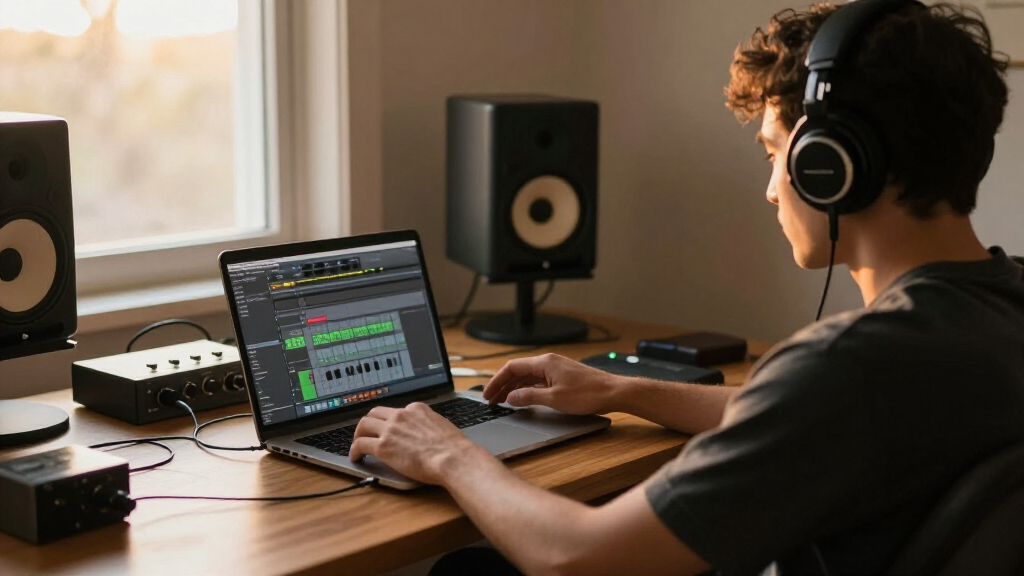
My ranking starts with one question: can you trust what you hear? For music production, that means prioritizing frequency response accuracy over the consumer-friendly bass boost found in most headphones. I evaluated each model’s tonal balance, detail retrieval in the midrange (where vocals and most instruments live), and how honestly the low end translates when a mix moves to speakers or a car stereo. Comfort and durability carried real weight too — a mixing session runs hours, and headphones that clamp painfully or use fragile plastic hinges fail producers regardless of how they sound.
From there, I separated the lineup by production stage. Closed-back models were judged primarily on isolation and bleed control for tracking, while open-back models were judged on soundstage and imaging for mixing. Practical factors broke ties: impedance and how easily each pair runs off a laptop or phone interface, cable replaceability, and parts availability. The ranking rewards models that do their specific job exceptionally well at a fair price — which is why a $99 veteran outranks several pricier competitors.
Factors to Consider When Choosing Studio Headphones For Music Production
Before picking a specific pair, it helps to understand the decisions that shape every studio headphone purchase. These six factors explain why producers disagree about the “best” headphones and which tradeoffs actually matter for your room, gear, and workflow.Closed-Back vs. Open-Back: Match the Design to the Job
This is the single biggest decision, and it depends on which stage of production you do most. Closed-back headphones seal your ears, keeping the backing track from bleeding into a vocal or drum microphone — they’re non-negotiable for recording yourself or others. The tradeoff is a smaller, more in-your-head soundstage and occasional low-end buildup that exaggerates bass. Open-back headphones leak sound freely in both directions, which disqualifies them for tracking but rewards you with a natural, speaker-like presentation that makes level and panning decisions easier. Many working producers own one of each and treat it as the cost of doing business. If you can only buy one pair, closed-back is the safer default because it handles every stage acceptably, while open-back fails badly at one of them.
Impedance and What Your Gear Can Actually Drive
Impedance, measured in ohms, determines how much power your headphones need to reach listening volume — and it’s where buyers most often go wrong. High-impedance models like the 250 Ohm DT 970 Pro sound thin and lifeless plugged straight into a laptop headphone jack; they need a dedicated headphone amp or a quality audio interface to deliver the bass weight and control they’re known for. Low-impedance models (roughly 32–80 ohms) run happily from phones, laptops, and budget interfaces, which is why the 80 Ohm DT 770 Pro became the studio standard. A common mistake is buying the 250 Ohm version because a forum called it more accurate, then wondering why it sounds weak. Check your interface’s headphone output specifications before buying — if it’s unspecified or budget-tier, stay at or below 80 ohms.
Neutral Response Beats Fun Response Every Time
Consumer headphones are tuned to sound exciting — scooped mids, boosted bass, sparkling treble — and that tuning will sabotage your mixes. When your reference exaggerates bass, you under-mix it, and your track sounds thin on every other system. Studio headphones aim for a flat, honest response, and the differences between models here are real: some lean bright (beyerdynamic), some slightly warm (Sennheiser), and some emphasize low end for DJ-adjacent work. Rather than chasing perfect neutrality, learn your headphones’ tendencies by referencing your mixes against commercial tracks you know well. Also plan to check mixes on at least one other system — earbuds, car speakers, anything — because even the flattest headphones have quirks that reference-checking exposes.
Comfort Determines How Much Work You Get Done
Spec sheets never mention it, but comfort is a production factor, not a luxury. A mixing session can run three or four hours, and clamp pressure, ear cup depth, and pad material decide whether you finish the session or reach for a break every thirty minutes. Over-ear designs with plush velour or memory-foam pads suit long sessions; smaller cups and stiffer pads suit short tracking tasks where isolation matters more. Glasses wearers should pay special attention to clamp force, which is a frequent complaint with tightly sealed closed-backs. Replaceable pads are a genuine long-term value feature — pads flatten and flake within a few years, and a model with cheap replacement pads effectively lasts forever while a sealed design may not.
Replaceable Cables and Repairability Protect Your Investment
The cable is the most common point of failure on any wired headphone, and how a manufacturer handles it says a lot about longevity. Models with detachable cables turn a break into a $15 fix; models with hardwired cables turn it into a repair job or a replacement. Coiled cables resist tangles and accidental yanks but add weight and can microphobically transmit noise. Beyerdynamic goes further than most by selling virtually every spare part — drivers, pads, headbands, hinges — which is why decades-old DT 770s still work in studios today. If you plan to keep a pair for five-plus years, repairability matters more than a few dollars saved at purchase.
When It’s Worth Paying More (and When It Isn’t)
Diminishing returns hit studio headphones hard. Between $100 and $200 you get genuinely better accuracy, comfort, and build — that range holds most of the value in this category. Above $250, improvements become subtle: a slightly cleaner treble, marginally better imaging, nicer materials. What more money almost never fixes is a badly treated room, weak monitoring habits, or an untreated workflow. Beginners should spend less on headphones and more on learning to reference mixes — a producer who knows their $99 pair inside out makes better records than one who barely knows their $400 pair. The better use of extra budget is often a second, contrasting reference pair: one open, one closed.
Frequently Asked Questions
Can I mix entirely on headphones, or do I need studio monitors?
You can absolutely produce competitive mixes on headphones — plenty of charting records are mixed on beyerdynamics and Sonys — but you have to compensate for what headphones can’t show you. Headphones exaggerate stereo width because the channels never mix in the air the way they do with speakers, and they typically add some low-end emphasis that leads to under-mixed bass. The practical solution is a hybrid workflow: make your core decisions on headphones, then verify low-end balance and overall level on whatever consumer systems you own — a car, earbuds, a Bluetooth speaker. If you later add monitors, treat your room acoustically first; an untreated room can make budget monitors less trustworthy than good headphones.
Is the 250 Ohm DT 990 Pro better than the 80 Ohm version for production?
Only if you have the power to drive it. The 250 Ohm version has slightly tighter, more controlled bass and refined treble when paired with a quality headphone amp or a strong interface — but plugged into a laptop or phone, it sounds lean, quiet, and lifeless, and you’d be better served by almost any low-impedance alternative. The 80 Ohm version runs comfortably from most audio interfaces while retaining the DT 990’s signature detail and soundstage, which is why it became the de facto studio standard. If you already own a dedicated amp, the 250 Ohm rewards that investment. If not, don’t buy headphones for a future setup you don’t have yet — or consider the 48 Ohm DT 990 Pro X, which was designed to bridge exactly this gap.
Are the ATH-M50X worth the upgrade over the ATH-M40x?
For production, probably not — and this surprises people because the M50X is the more famous headphone. The M50X has a deliberately boosted low end and slightly recessed mids, a tuning that flatters music for listening but nudges you toward under-mixing bass when you’re working. The M40x sits closer to neutral, costs meaningfully less, and handles the actual job of revealing problems in a mix more honestly. The M50X’s genuine advantages are its more robust build, foldable design, and detachable cable — real benefits if you’re also DJing or traveling. But if the question is strictly which one helps you mix better per dollar, the M40x is the smarter buy, and the savings could go toward a second reference pair.
Do I need one pair of headphones or two for a home studio?
Two pairs solve a real problem if you both record and mix. Closed-back headphones give you the isolation needed to record vocals or acoustic instruments without the backing track bleeding into the mic, while open-back headphones give you the spatial honesty that makes mixing decisions easier. Using one pair for both jobs forces compromises: a closed-back mix reference carries some low-end exaggeration, and tracking on open-backs ruins takes with bleed. If budget forces a choice, start closed-back because it fails less badly at mixing than open-back fails at tracking. The ideal starter combo in this lineup would be an 80 Ohm DT 770 Pro for tracking paired with an HD 560S or DT 990 Pro X for mixing — a complete monitoring setup for less than many single premium pairs.
How long should studio headphones last, and how do I know when to replace them?
Quality studio headphones are among the longest-lived gear you’ll own — beyerdynamic’s modular designs routinely last a decade or more because every part is replaceable, and even sealed models like the Sony MDR7506 are famous for surviving fifteen-year studio careers with occasional pad and cable swaps. Plan to replace ear pads every two to four years depending on use, since flattened pads change the acoustic seal and quietly alter the bass response you’ve learned to trust. The signs it’s time for a new pair are driver damage (rattling, one-sided distortion) or structural failure like cracked headbands on models without spare parts. Before replacing, always test with a known-good cable first — a dead channel is far more often a cable fault than a blown driver. And if your mixes suddenly sound different through familiar headphones, check the pads before blaming your ears.
Conclusion
The right pick here depends less on price and more on what stage of production you do most. For the best overall choice, the Sony MDR7506 remains unbeatable as a single do-everything reference — accurate, durable, and affordable enough to pair with a second set later. The AKG K240 Studio takes best value, delivering genuine mixing honesty at a beginner-friendly price. For best premium, the HD 560S offers the most accurate open-back presentation in this lineup without drifting into audiophile pricing. Beginners get the fastest path to good habits with the Audio-Technica ATH-M40x or FIFINE HD8 — cheap enough to learn on, honest enough to grow with. For specific needs: the DT 770 Pro (80 Ohm) is the tracking workhorse for anyone recording vocals or instruments, the DT 990 Pro X suits laptop-only producers who want open-back mixing without an amp, and the DT 270 Pro handles noisy rooms and broadcast-style isolation duties. Whatever you choose, spend a few weeks learning its tendencies against commercial reference tracks — that habit will improve your productions more than any upgrade ever will.
Halloween Picks
halloween
As an affiliate, we earn on qualifying purchases.