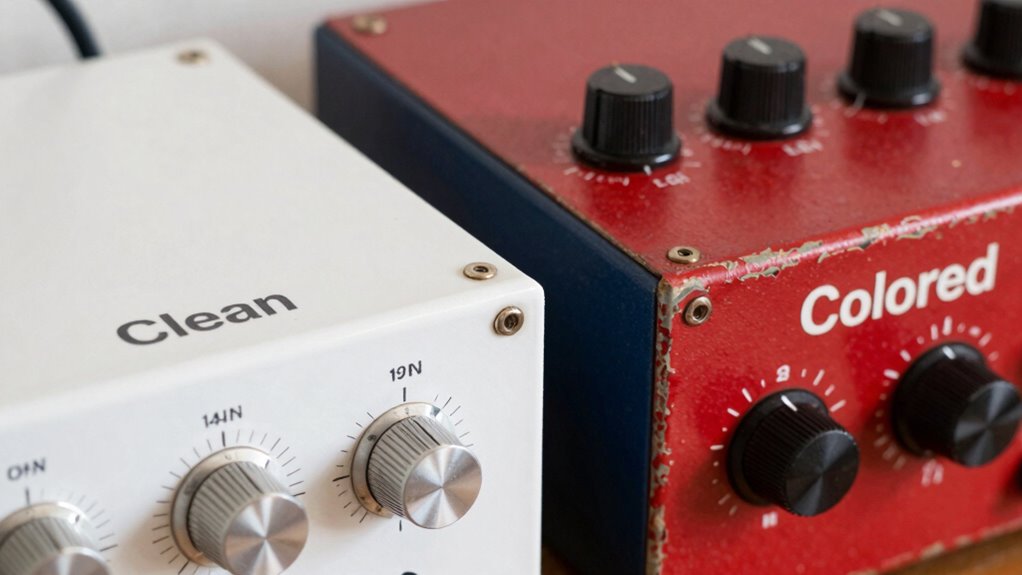

Choosing between clean and colored preamps depends on your goal for the sound. If you want clarity, transparency, and true-to-source reproduction, a clean preamp is your best choice. If you aim for warmth, character, and vintage vibes, a colored preamp can add personality right at the source. Understanding these differences helps you pick the right tool for your desired tone and mood. Keep exploring to discover how each option can shape your unique sound.
Key Takeaways
- Choose clean preamps for accurate, transparent sound, ideal for genres demanding fidelity and detailed recordings.
- Opt for colored preamps to add warmth, saturation, and character, shaping tone creatively at the source.
- Consider your artistic goals: fidelity and clarity favor clean preamps, while mood and vibe benefit from colored options.
- Clean preamps serve as neutral platforms for further processing, while colored preamps impart immediate tonal coloration.
- Selecting between them depends on whether you prioritize transparency or intentional tonal coloration for your project.
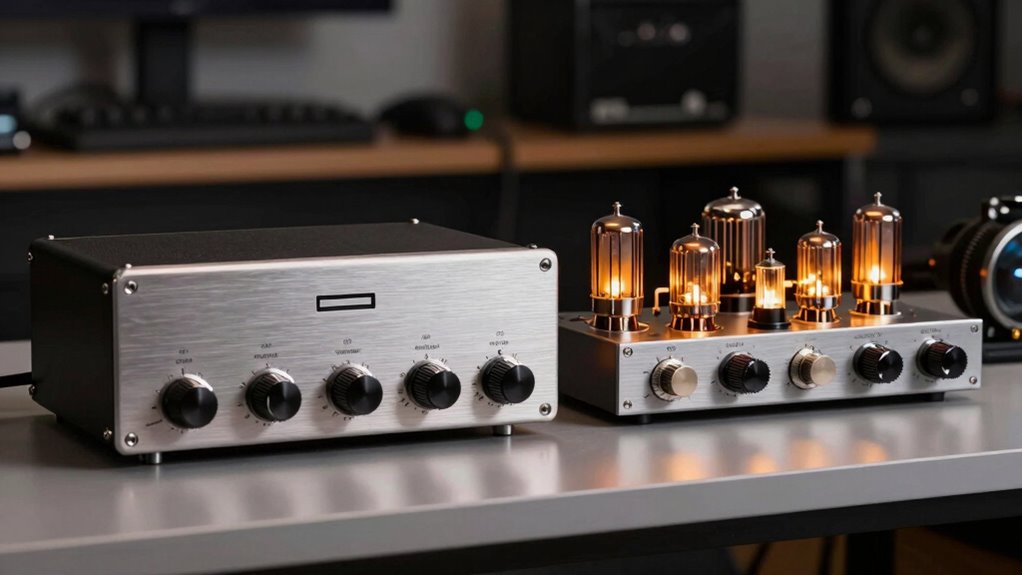
When choosing a preamp, understanding the difference between clean and colored designs is essential, as it directly impacts your sound. Clean preamps are prized for their tonal transparency, meaning they amplify your signal without adding any coloration or distortion. They preserve the original character of your instrument or microphone, allowing the natural qualities to shine through. This transparency is crucial if you want your recordings to accurately reflect what you’re playing or singing, giving you a pure, unaltered sound. On the other hand, colored preamps intentionally introduce signal coloration—adding warmth, saturation, or harmonic complexity—crafted to enhance or shape your tone. This coloration can impart a vintage vibe, add richness, or smooth out harsh frequencies, making your sound more engaging or characterful.
Choosing between clean and colored preamps affects your sound’s clarity and character.
Choosing between a clean and colored preamp depends on your creative goals. If you prefer a transparent, faithful representation of your source, a clean preamp is your best bet. It acts as an honest conduit, emphasizing clarity and detail without influencing the tone. This is especially valuable in genres where accuracy and fidelity are paramount, such as classical recordings or detailed studio work. Conversely, if you’re aiming for a specific tonal flavor or want to add personality to your sound, a colored preamp can be a powerful tool. It can impart subtle harmonic saturation or a vintage vibe that’s difficult to replicate with digital plugins alone. Many engineers and artists use colored preamps to complement certain instruments or voices, enhancing warmth or adding a pleasing saturation that makes a recording stand out.
Additionally, understanding the role of color fidelity can help you make informed choices, as it affects how accurately the preamp reproduces your source material. The key is understanding what each type offers. Signal coloration in colored preamps isn’t a flaw; it’s a creative choice. It shapes your tone in a way that can evoke emotion or character, but it also means you’re sacrificing some tonal transparency. When you opt for a clean preamp, you’re prioritizing accuracy and a neutral tonal palette, providing a transparent platform for further processing. If you’re seeking a versatile, straightforward option, a clean preamp will serve you well. But if you want your recordings to carry a certain vibe or personality straight out of the box, a colored preamp’s character can become a fundamental part of your sound palette.
Ultimately, your decision hinges on what you want to achieve. Whether you lean toward the purity of tonal transparency or the expressive power of signal coloration, knowing these differences helps you pick a preamp that aligns with your artistic vision.
Frequently Asked Questions
How Do Preamp Choices Affect Overall Mix Clarity?
Your preamp choices directly impact your mix clarity by influencing gain staging and frequency response. A clean preamp preserves the original signal, maintaining clarity, while a colored preamp adds character, which may muddy the mix if overused. Adjust gain staging carefully to prevent distortion, and select a preamp with a frequency response that complements your sound. This guarantees your mix remains transparent or creatively colored without sacrificing overall clarity.
Can Colored Preamps Cause Audio Masking Issues?
Think of colored preamps as a double-edged sword—you might gain tonal warmth but risk audio masking issues. Their harmonic distortion can hide subtle details, especially if preamp noise is high. This masking can make it harder to distinguish individual instruments or vocals, leading to a cluttered mix. Use colored preamps carefully, balancing their warmth with clarity, so your sound remains vibrant without losing important nuances.
Are Clean Preamps Suitable for All Recording Genres?
Clean preamps suit many recording genres, especially when you want modern transparency and clarity. They let the true sound shine through, making them ideal for genres like jazz, pop, and classical where detail is essential. However, if you’re aiming for vintage warmth or character, a colored preamp might serve you better. Ultimately, choose based on the mood and vibe you want to capture in your recordings.
How Does Preamp Coloration Impact Vocal Tracks?
Preamp coloration considerably impacts your vocal tracks by adding unique tonal character and warmth. You can achieve subtle saturation effects or more pronounced vocal saturation effects, shaping the emotion and presence of your vocals. The preamp’s tonal character influences how your voice blends with other elements, making it essential to choose a preamp that complements your desired sound. This choice helps you craft vocals that stand out or sit perfectly in the mix.
What Maintenance Is Needed for Different Preamp Types?
Think of your preamp as a delicate garden needing regular care. Tube warmth requires occasional tube replacement and careful biasing, while transformer saturation benefits from clean, stable power and avoiding overheating. Keep connections tight, clean inputs, and check for any corrosion. For tube preamps, replace tubes periodically; for solid-state, ensure proper cooling. Regular maintenance keeps your gear singing, just like tending a garden guarantees vibrant blooms.
Conclusion
Choosing between clean and colored preamps is like selecting a blank canvas or a vibrant palette. A clean preamp offers clarity, letting your true sound shine through—pure and unfiltered. A colored preamp adds character, like brushstrokes that tell a story. Ultimately, your choice reflects your artistic intent. Whether you seek transparency or personality, remember that your decision shapes the music’s soul, turning raw ideas into a masterpiece painted with purpose.