
To stop ear fatigue quickly, lower your device volume below 60% and take regular breaks every 15-20 minutes of sound exposure. When you notice discomfort or soreness, reduce the volume or pause to allow your ears to recover. Rest in quiet environments and avoid loud noises during breaks. Following these safe levels and break timings not only relieves fatigue fast but also helps preserve your hearing long-term—discover more tips to protect your ears effectively.
Key Takeaways
- Lower your listening volume below 60% of maximum immediately at signs of ear fatigue.
- Take a 15-20 minute break in a quiet environment to allow ear recovery.
- Avoid increasing volume or inserting objects during breaks to prevent further damage.
- Regularly monitor listening sessions and limit continuous exposure to loud sounds.
- Seek professional help if persistent fatigue, ringing, or discomfort occurs despite breaks.
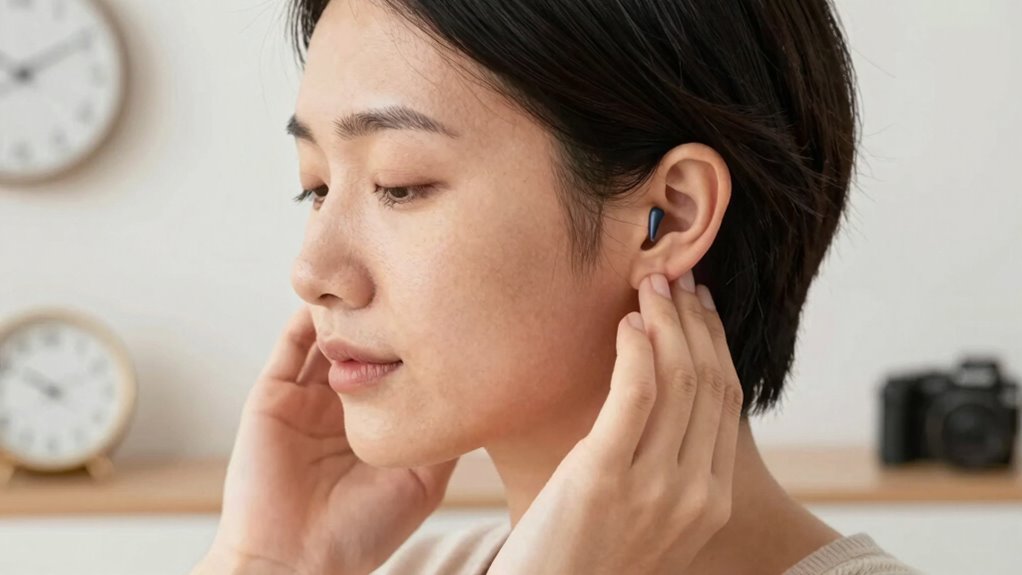
If your ears are feeling fatigued after long periods of listening, acting quickly can help prevent discomfort from worsening. Ear fatigue isn’t just temporary discomfort; it can signal that your ear health is at risk if ignored. To protect your ears, it’s essential to understand your listening habits and how they impact your hearing. Listening at high volumes or for extended periods strains your ears, leading to fatigue, soreness, or even long-term damage. Recognizing the signs early allows you to take immediate steps to restore comfort and safeguard your hearing.
Act quickly to prevent ear fatigue from worsening and protect your long-term hearing health.
First, be mindful of the volume levels you’re exposing yourself to. Common devices like earbuds, headphones, and speakers can reach dangerously loud levels without you realizing it. A good rule of thumb is to keep the volume below 60% of maximum. If you find yourself needing to turn the volume up to hear clearly, it’s a sign you should take breaks more often. Your listening habits play a fundamental role in ear health; frequent exposure to loud sounds accelerates fatigue and can cause noise-induced hearing loss over time. Limiting your listening sessions and taking regular breaks are the simplest ways to protect yourself.
When you start to feel ear fatigue, don’t wait until discomfort becomes severe. Instead, immediately lower the volume or stop listening altogether. Giving your ears a break within 15-20 minutes of continuous listening helps reduce strain. During these breaks, avoid putting anything in your ears or exposing yourself to loud environments. Instead, let your ears rest in silence or ambient noise, which allows the tiny hair cells in your inner ear to recover from overstimulation. This is especially important if you’re regularly engaged in activities like concerts, gaming, or working with headphones for long stretches. Additionally, incorporating Free Floating techniques, such as relaxing in a quiet space, can help your ears recover more effectively. It’s also beneficial to incorporate ear health into your daily routine. Staying hydrated, avoiding excessive use of earphones in noisy environments, and maintaining good hygiene support overall ear health. If you notice persistent fatigue, ringing, or discomfort, it’s wise to consult an audiologist. They can evaluate your listening habits and recommend personalized strategies to prevent further damage. Remember, protecting your ears isn’t just about avoiding pain today; it’s about preserving your hearing for years to come.
Frequently Asked Questions
Can Ear Fatigue Lead to Long-Term Hearing Loss?
Ear fatigue itself doesn’t directly cause long-term damage, but ignoring it can lead to hearing impairment over time. If you push through fatigue or don’t take breaks, you risk long-term damage to your hearing structures. To protect your hearing, recognize early signs of fatigue, limit exposure to loud sounds, and give your ears proper rest. This way, you minimize the chance of lasting hearing impairment and preserve your hearing health.
Are There Any Side Effects From Using Ear Fatigue Remedies?
Using ear fatigue remedies can sometimes cause side effects like irritation, dizziness, or hearing changes. You should always consider alternative treatments with caution and seek professional consultation before trying new methods. Avoid self-medicating or overusing remedies, and listen carefully to your body’s signals. By exploring safe options and consulting experts, you minimize risks and protect your hearing health while effectively managing ear fatigue.
How Quickly Can I Expect Relief After Stopping Ear Use?
You can expect some relief within a few hours to a couple of days after stopping ear use, depending on your symptom duration. The duration recovery varies based on your ear fatigue severity and how long you’ve been experiencing symptoms. Most people notice improvement as the ear tissue heals and inflammation decreases. If symptoms persist beyond a few days, consider consulting a healthcare professional for further guidance.
Is Ear Fatigue Common in Certain Age Groups?
You might notice ear fatigue more in certain age groups, especially if you’re experiencing age-related hearing issues or if childhood ear health wasn’t ideal. Older adults often report increased sensitivity and fatigue after prolonged ear use, while children with ongoing ear infections or hearing problems may also be more prone. Recognizing these patterns helps you take preventive breaks, ensuring your ears stay comfortable and healthy across all ages.
Can Ear Fatigue Occur From Using Earbuds or Headphones?
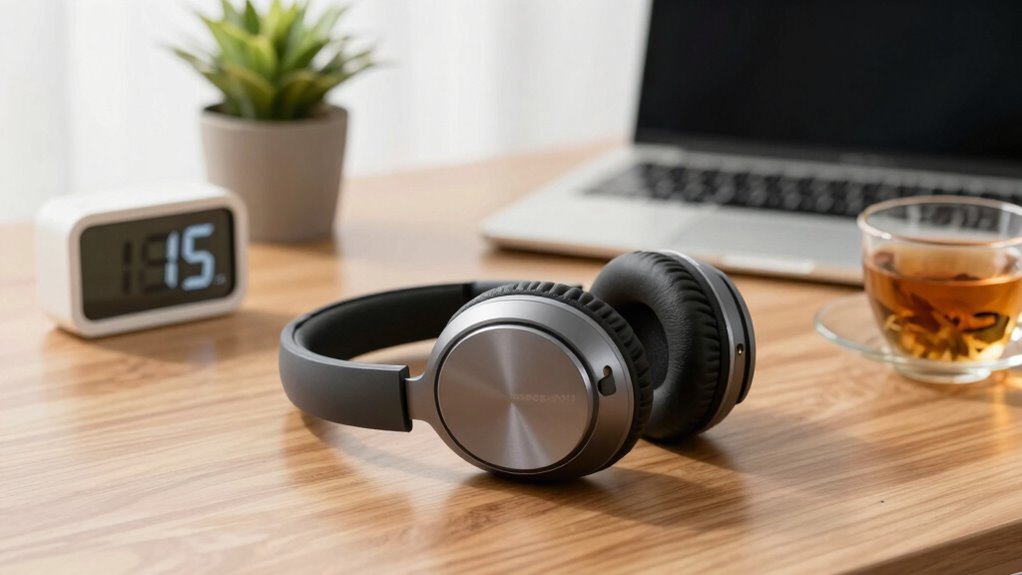
Yes, ear fatigue can happen from using earbuds or headphones. Poor earbud comfort and headphone design often cause discomfort and fatigue after prolonged use. If you keep your volume too high or wear them for long periods, your ears may become sore or tired. To prevent this, choose well-designed headphones with ergonomic earbud comfort, take regular breaks, and lower the volume to protect your ears from fatigue and potential damage.
Conclusion
Don’t let ear fatigue slow you down. By listening to your body, taking regular breaks, and keeping volume levels safe, you can protect your hearing and stay comfortable. Some might think taking breaks interrupts their flow, but actually, it boosts your focus and endurance. So, prioritize your ear health—your ears will thank you. With these simple steps, you’ll keep enjoying your favorite sounds without discomfort or risk.