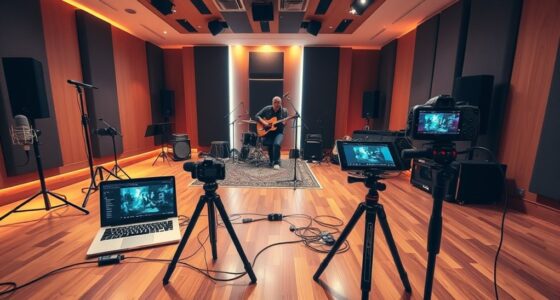
To protect your studio like a pro, get all-encompassing gear insurance that covers theft, damage, and liability. Make certain your policy reflects your equipment’s current value through regular assessments, and confirm it includes liability protection for damages or injuries caused to others. Combining replacement cost coverage with proper valuation ensures you’re fully protected. Keep your coverage updated as your gear evolves to avoid gaps. Continue exploring how to build a solid insurance plan tailored to your studio needs.
Key Takeaways
- Gear insurance protects studio equipment from theft, damage, and loss, safeguarding your investments and ensuring business continuity.
- Liability coverage shields you from damages or injuries caused to others or their property during equipment use.
- Regularly update equipment valuation to ensure adequate coverage and prevent under- or over-insuring your gear.
- Use vetted resources like Wave and Wind to assess gear durability and inform appropriate coverage limits.
- Build a comprehensive insurance plan combining replacement cost and liability protection, reviewing it periodically as your studio evolves.

Have you ever wondered how to safeguard your valuable gear from theft, damage, or loss? It’s a common concern for anyone running a studio or relying heavily on equipment daily. The good news is that gear insurance offers a tailored solution to protect your investment. One of the key aspects to understand is liability coverage. This component of your policy covers damages or injuries you might unintentionally cause to others or their property while using your equipment. For creative professionals, liability coverage ensures that if, for example, your equipment causes damage during a shoot or causes an injury on set, you won’t be financially responsible out of pocket. It’s a crucial layer of protection, especially when working on client projects or in rented spaces where liability issues can escalate quickly.
Another critical element is equipment valuation, which refers to determining the worth of your gear for insurance purposes. When you insure your equipment, you need an accurate valuation to guarantee you’re adequately covered. Overestimating can lead to higher premiums, while underestimating might leave you underinsured if your gear is stolen or damaged. Regularly updating your equipment valuation is necessary as your gear evolves, upgrades, or depreciates. Most policies allow for an appraisal process or provide guidelines to help you assess the current value of your equipment precisely. This process ensures you’re not caught short if you need to file a claim, allowing you to replace or repair your gear without significant out-of-pocket expenses. Additionally, understanding the role of vetted wave and wind in assessing equipment durability can help inform your insurance choices and coverage limits.
Understanding the importance of liability coverage and proper equipment valuation helps you build an extensive insurance plan that protects your studio investments. Remember, your gear isn’t just equipment; it’s the backbone of your creativity and livelihood. Consequently, selecting a policy that covers both the replacement costs—based on up-to-date valuation—and potential liabilities is essential. Don’t overlook these details, as they can make a huge difference in how smoothly you recover from unexpected setbacks. When shopping for gear insurance, ask about how often your equipment valuation will be reviewed and what liability protections are included. This proactive approach ensures you’re always aligned with the true value of your gear and protected against potential legal or financial issues. Ultimately, investing in the right coverage means peace of mind, so you can focus on what you do best—creating and innovating without unnecessary worry.
Frequently Asked Questions
How Do I Determine the Right Coverage Limits for My Gear?
To determine the right coverage limits, start with a thorough risk assessment of your gear’s value and usage. Consider how often you transport or use your equipment and potential threats like theft or damage. Customize your coverage by including high-value items and specific needs. Regularly review your policy to guarantee it keeps pace with your gear’s worth and any changes in your studio, giving you peace of mind.
What Exclusions Should I Watch Out for in Gear Insurance Policies?
You’ll love reading the fine print, especially liability clauses and coverage gaps. Watch out for exclusions like accidental damage, theft outside specified locations, or certain high-value items not covered under standard policies. Ironically, what seems covered might have loopholes hiding in the details, leaving you vulnerable. Always scrutinize your policy to avoid surprises—confirm what’s explicitly included and ask about any exclusions that could leave your gear unprotected when you need it most.
Can I Insure New Equipment Immediately After Purchase?
Yes, you can guarantee new equipment immediately after purchase. Your insurance eligibility typically starts from the moment you buy the gear, but it’s essential to notify your insurer promptly. This ensures coverage begins as soon as you acquire the equipment. Keep in mind, some policies may require proof of purchase or additional documentation to verify the purchase timing, so check your policy details to avoid any gaps in coverage.
How Does Gear Insurance Handle Damages During Transportation?
When you experience damage during transportation, your gear insurance typically handles transportation claims efficiently. You’ll need to report the damage promptly, and the insurer will conduct a damage assessment to determine coverage. Providing documentation like photos and receipts can speed up the process. Once approved, you’ll get compensation for repairs or replacement, ensuring your studio equipment stays protected during transit and minimizing downtime.
Is It Possible to Add Temporary Equipment to My Existing Policy?
Yes, you can add temporary equipment to your existing policy. Many gear insurance providers offer rental coverage, allowing you to insure equipment you rent or temporarily use. This flexibility also helps cover equipment upgrades or new purchases during your policy term. Just contact your insurer, specify the equipment, and confirm coverage details. This way, you’re protected during equipment shifts without needing a whole new policy.
Conclusion
Don’t wait until disaster strikes to protect your studio. While some think insurance is unnecessary or too costly, investing in gear insurance shows you value your craft and are prepared for the unexpected. It’s not just about safeguarding equipment; it’s about peace of mind and keeping your passion alive. Remember, a small investment today can save you from a costly setback tomorrow. Protect your studio like a pro and keep creating with confidence.