To make brass sit in the mix, control their natural dynamics with volume automation and avoid overpowering other elements. Use EQ to carve out space, cutting muddiness around 200-300Hz and enhancing brightness in the 3-5kHz range. Apply dynamic processing, like multiband compression, to tame peaks while preserving expressiveness. Properly managed, brass can sit confidently without overshadowing or getting lost—continue exploring these techniques for a balanced, expressive blend.
Key Takeaways
- Use volume automation to control brass peaks and maintain balanced level throughout the arrangement.
- Apply EQ to carve out space, reducing muddiness and enhancing clarity without over-boosting harsh frequencies.
- Manage the frequency overlap with other elements like vocals or strings through strategic EQ cuts.
- Employ dynamic processing, such as multiband compression, to tame sudden peaks while preserving natural expressiveness.
- Listen critically to natural brass dynamics and adjust levels and EQ to ensure they support the mix without overpowering.
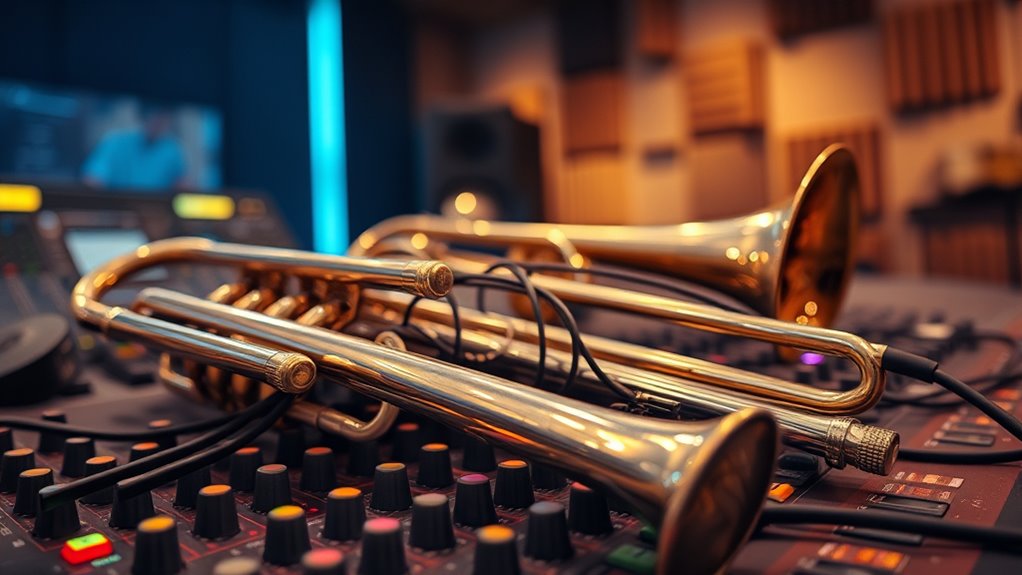
When working with brass in a mix, you need to make certain they sit well without overpowering or getting lost. Brass instruments often carry a rich, bright tone that can easily dominate or get buried depending on how you handle their placement. To achieve a balanced sound, understanding their dynamic range is essential. Brass typically have a broad dynamic range, meaning they can shift from subtle whispers to powerful blasts. Recognizing this allows you to control their levels so they complement other elements without overwhelming the mix. Start by listening carefully to their natural dynamics and use volume automation to tame any peaks that threaten to overpower other instruments. This ensures the brass maintains presence without becoming a distraction. Additionally, knowing the importance of emotional alignment can help you shape the overall mood and energy of the mix, making sure the brass supports the intended feel. EQ techniques are your best friends when sculpting brass in the mix. They help shape the tone and carve out space so these instruments fit seamlessly. Focus on reducing muddiness by cutting around 200-300Hz if the sound feels congested. This clears room for the lower midrange elements of the mix. To enhance brightness and articulation, boost slightly around 3-5kHz, but do so with subtlety—overdoing it can lead to harshness. If the brass sounds too brittle or harsh, gently cut some of the high frequencies, perhaps around 8-10kHz, to smooth out the tone. Use EQ to carve out space for other instruments that occupy similar frequency ranges, such as vocals or strings, ensuring they don’t clash. Additionally, consider using dynamic EQ or multiband compression to manage the brass’s dynamic range more precisely. Multi-band compression can tame sudden peaks without dulling the instrument’s expressive qualities. This technique allows you to control the loudest moments while preserving the instrument’s natural energy. Remember, your goal isn’t to eliminate dynamics but to shape them in a way that maintains clarity and balance. By carefully applying EQ techniques and managing the dynamic range, you ensure the brass remains lively and expressive, yet well integrated into the overall mix. When you master these approaches, your brass will sit confidently, supporting the arrangement without overpowering or getting lost in the sonic landscape.
Frequently Asked Questions
How Do I Balance Brass With Other Orchestral Instruments?
To balance brass with other orchestral instruments, focus on dynamic balance by adjusting volume levels so brass doesn’t overpower strings or woodwinds. Use stereo placement to position brass slightly apart from other sections, creating clarity and separation. Continuously listen and tweak these elements, ensuring each instrument shines without overshadowing others. This approach helps achieve a cohesive, well-balanced mix where every part contributes harmoniously.
What Are Common Mistakes When Mixing Brass in a Track?
You often overuse reverb on brass, making it sound distant or muddy, and neglect panning, which can cause the brass to clash with other instruments. To avoid these mistakes, use reverb sparingly and tailor it to fit the track’s space. Also, pan brass slightly off-center to create depth and clarity, ensuring it sits well within the mix without overpowering or getting lost among other instruments.
Which EQ Settings Work Best for Brass in a Busy Mix?
Your brass needs EQ settings that cut through the chaos like a laser beam. Use gentle high-pass filters to remove rumble, boost around 3-5 kHz for presence, and dip muddy lows. Combine these EQ techniques with subtle dynamic processing to tame peaks without losing essential energy. Keep it simple, and avoid over-EQing—less is more. This approach ensures your brass stands out, even in the busiest mixes.
How Can I Make Brass Sound More Natural in a Recording?
To make brass sound more natural in a recording, focus on good microphone placement, positioning the mic close enough to capture the instrument’s tone without harshness. Use room acoustics to your advantage by choosing a space with balanced reflections, avoiding overly live or dead environments. Experiment with placement and room treatment until you achieve a natural sound that captures the brass’s true character, ensuring it sits well in the mix.
What Techniques Help Brass Stand Out Without Overpowering?
To make brass stand out without overpowering, use careful panning strategies by placing your brass slightly off-center, creating space in the mix. Incorporate subtle reverb techniques to add depth without washing out the sound. Additionally, EQ to enhance the brass’s natural tone and avoid harsh frequencies. Balancing these elements guarantees your brass remains prominent yet integrated, giving it clarity and presence while maintaining a natural, cohesive mix.
Conclusion
Just like a master painter knows when to add the perfect stroke, you learn when to let your brass sit in the mix. Trust your ears, balance their presence, and avoid overpowering the scene. Remember, even the mightiest river flows smoothly when it finds its path. With patience and subtlety, your brass will blend seamlessly, creating a rich, dynamic tapestry—proof that sometimes, less truly is more in the symphony of the mix.