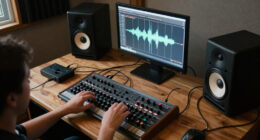

To make your melodies sound intentional, focus on the phrasing rule by shaping phrases like speech, adding natural pauses and emphasis. Listen for the melody’s contours and highlight emotionally charged moments with slight pauses or note lengthening. This guides your audience’s emotional response and makes your performance feel genuine. When you apply these phrasing techniques consistently, your musical expression becomes more heartfelt. Keep exploring, and you’ll discover how mastering this approach transforms your playing into a powerful storytelling tool.

Get audio and creator gear delivered free with Prime
- Fast, free delivery on millions of items
- Prime Video, Amazon Music and more included
- Member-only deals all year
Key Takeaways
- Break melodies into meaningful segments with strategic pauses to emphasize emotional and expressive moments.
- Use slight note lengthening or pauses at natural phrasing points to create a sense of intentionality.
- Focus on the musical contours to shape phrases that feel natural, heartfelt, and purposeful.
- Identify emotionally charged areas to highlight with deliberate timing, enhancing expressiveness.
- Consistently apply phrasing principles to guide interpretation and deepen emotional connection with the audience.

Have you ever wondered why some sentences resonate more than others? The same principle applies to melodies. When you craft a melody with intentional phrasing, it feels more genuine and impactful. This is where the phrasing rule comes into play, helping you shape musical expression and emotional dynamics to evoke a specific response from your audience. The key is understanding that music is a language, and how you “speak” it through phrasing determines how your listeners interpret and connect with your piece.
Intentional phrasing in melody creates genuine emotion and deeper connection with your audience.
The phrasing rule emphasizes breaking your melody into meaningful segments, much like pauses in speech that give weight and significance to certain words. When you apply this to music, you create natural breathing points, allowing your melody to breathe and flow with purpose. These pauses aren’t just rests—they’re strategic moments where you hold back slightly, emphasizing the emotional content of the notes before and after. This control over timing heightens musical expression and makes the emotional dynamics more palpable. You’re not just playing notes; you’re telling a story, and the phrasing guides your listeners through it.
To implement this rule, start by listening carefully to the melody’s natural contours. Notice where it feels most expressive or emotionally charged. These are your prime spots for shaping phrases. Use slight pauses or lengthen certain notes to highlight their importance. This doesn’t mean you should slow down unnecessarily; it’s about creating a sense of purpose in your timing. When you do this consistently, your melodies gain clarity and intention, making them sound less mechanical and more heartfelt.
Furthermore, the phrasing rule helps you communicate your musical ideas more effectively. Instead of rushing through notes or playing everything evenly, you give each phrase its own emotional weight. This approach enhances your musical expression and allows you to control the emotional dynamics within your performance. When your phrasing aligns with the mood and message of the piece, your audience feels more engaged and connected. They sense the intention behind every note, making your music resonate on a deeper level.
In addition, understanding musical contours and how they influence phrasing can significantly improve your expressive power. When you pay attention to these contours, you can craft melodies that feel more natural and emotionally compelling. This simple yet powerful principle helps guarantee that every phrase you play is intentional, meaningful, and capable of leaving a lasting impression.
As an affiliate, we earn on qualifying purchases.
Frequently Asked Questions
How Does Phrasing Influence Emotional Expression in Melodies?
You influence emotional expression in melodies through phrasing by emphasizing expressive dynamics and rhythmic nuances. By shaping your phrasing with deliberate pauses, accelerations, or decelerations, you create a sense of longing, joy, or sadness. Using expressive dynamics like crescendo or decrescendo enhances the emotional impact, while subtle rhythmic nuances give your melody a natural, human feel. This intentional phrasing makes your performance more compelling and emotionally resonant.
Can Phrasing Techniques Vary Across Different Musical Genres?
Yes, phrasing techniques definitely vary across genres. You’ll notice genre-specific nuances, like the quick, punchy phrasing in jazz or the elongated, soulful lines in blues. Cultural phrasing also plays a role, influencing how melodies are shaped and feel. When you adapt your phrasing to different genres, you capture their unique emotional and stylistic essence, making your performance more authentic and engaging.
What Are Common Mistakes Beginners Make With Phrasing?
You might think beginners perfectly grasp rhythmic phrasing, but ironically, they often ignore melodic emphasis. Common mistakes include rushing or dragging phrases, which disrupts flow, and failing to highlight key notes, making melodies sound flat. Instead, focus on shaping each phrase with intentional pauses and accents. This guarantees your phrasing feels natural and expressive, helping your melodies resonate with listeners and sound truly intentional.
How Do Phrasing Rules Apply to Improvisation?
In improvisation, phrasing rules guide your musical syntax, helping your solos sound more intentional. You should listen for and incorporate improvisation cues, like pauses or accents, to shape your phrases naturally. Use these cues to create dynamic contrasts and emotional flow, making your improvisation feel cohesive and purposeful. Applying phrasing rules guarantees your spontaneous lines communicate your musical ideas clearly and convincingly, enhancing your overall performance.
Are There Specific Tools to Help Improve Melodic Phrasing?
Yes, you can improve melodic phrasing with specific tools like melodic dynamics and phrasing exercises. Melodic dynamics help you emphasize certain notes, adding expressiveness, while phrasing exercises train you to shape phrases naturally. Practice these tools regularly to develop a more intentional, musical feel in your improvisation. Focus on dynamics and phrasing patterns to make your melodies sound more deliberate and engaging, enhancing your overall musicality.
Conclusion
By applying the phrasing rule, you can make your melodies feel more intentional and compelling. It guides your notes and pauses, creating a natural flow that resonates with listeners. When you master this rule, your music will sound more deliberate and expressive. So, next time you compose, ask yourself—are your melodies truly telling a story? Embrace these phrasing techniques, and watch your music come alive with purpose and emotion.
Halloween Picks
halloween
As an affiliate, we earn on qualifying purchases.