
To master melodic dictation, start by actively listening to simple melodies and focusing on recognizing small intervals like steps and seconds. Break down the melody into manageable parts, analyze the rhythmic and melodic patterns, and then attempt to write them using standard notation. Gradually challenge yourself with more complex phrases, including syncopation and accidentals. Consistent practice will improve your skills in both ear training and notation—so keep exploring to refine your technique further.
Key Takeaways
- Start with simple melodies, focusing on small intervals like seconds and thirds for easier recognition.
- Listen actively multiple times, then analyze and mentally internalize the melodic structure before notating.
- Transcribe rhythms carefully by noting note durations and accents to capture the melody’s timing accurately.
- Gradually progress to complex melodies with syncopation, accidentals, and varied rhythms to enhance your skills.
- Review and compare your notation with the original, making corrections to improve accuracy and internalization.
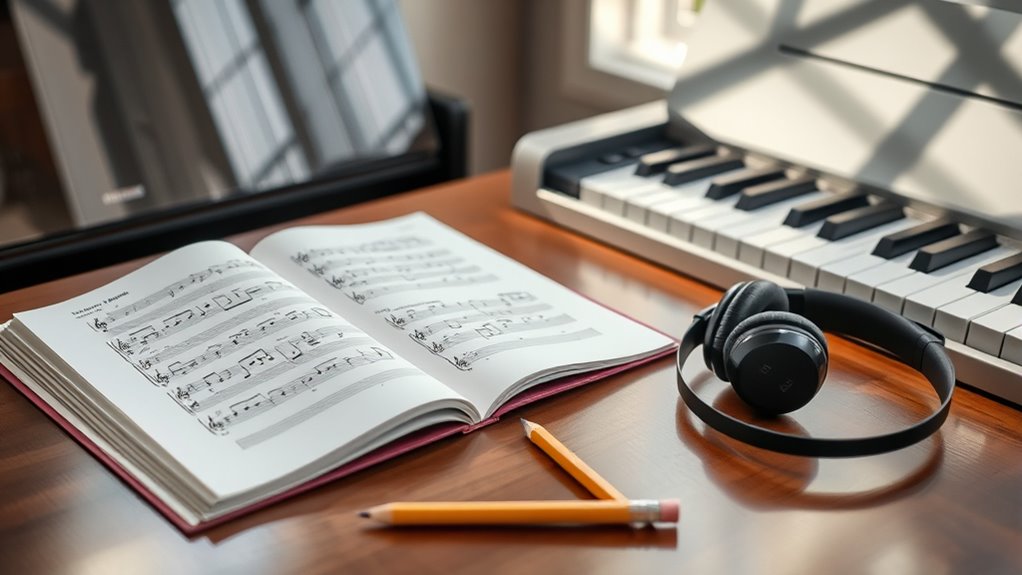
Have you ever wondered how musicians develop their ear for melodies? It all begins with understanding musical notation and honing your ear training skills. When you learn to read musical notation, you start to connect what you see on the page with the sounds in your mind and voice. This process isn’t just about memorizing symbols; it’s about internalizing the relationships between notes, intervals, and rhythms. As you practice, your brain begins to recognize patterns, making it easier to predict and recreate melodies. Ear training, which involves active listening and singing, complements this by sharpening your ability to identify pitch, intervals, and harmonic structures. Together, these foundational skills create a solid base for melodic dictation.
The first step in melodic dictation is to strengthen your sense of pitch and interval recognition. Start by listening to simple melodies and trying to reproduce them on your instrument or voice. Focus on small intervals like seconds and thirds, gradually progressing to larger ones. As you do this, pay close attention to the relationship between notes—how they move up or down, leap or step. Regularly practicing ear training exercises helps your brain become more attuned to the nuances of melody, making it easier to transcribe what you hear. Remember, it’s not about speed at first but accuracy and internalization. The more you practice, the more natural it will feel to identify and replicate melodies.
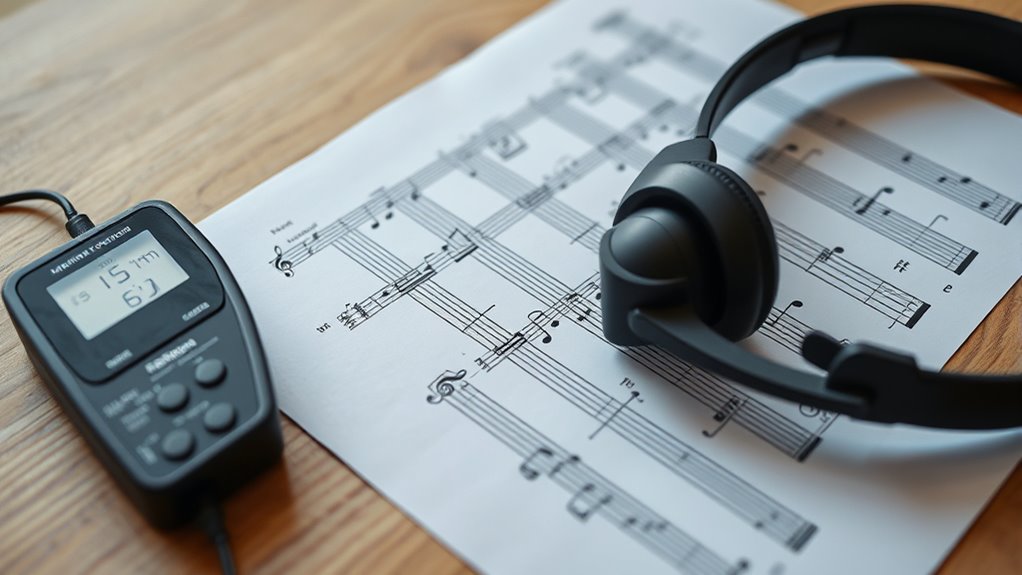
Next, incorporate musical notation into your practice. Listen to a melody, then attempt to write it down using standard notation. Don’t rush this process; take your time to analyze each phrase and note the rhythm before writing it out. Use your knowledge of rhythmic values and note durations to capture the timing accurately. If you get stuck, replay the melody multiple times, focusing on small sections. Over time, this will improve your ability to decipher complex melodies and notate them swiftly. Combining ear training with reading skills enhances your overall musicianship, making melodic dictation a more intuitive process.
Finally, challenge yourself with increasingly complex melodies. Start with simple tunes, then gradually move to more intricate phrases involving syncopation, accidentals, and varied rhythms. Record and listen to your transcriptions to identify mistakes and reinforce correct recognition. Consistent practice, patience, and attention to detail are key. Over time, your ability to listen, interpret, and notate melodies will become more precise. Remember, melodic dictation isn’t just about copying sounds; it’s about developing a deeper understanding of music’s structure and improving your aural skills. With dedication to ear training and mastery of musical notation, you’ll find yourself transcribing melodies more confidently and accurately than ever before.
Frequently Asked Questions
How Long Does It Typically Take to Master Melodic Dictation?
It typically takes several months of consistent practice to master melodic dictation. Your progress depends on how diligently you apply ear training techniques and practice regularly. If you stay consistent, you’ll notice improvement in your ability to transcribe melodies accurately. Remember, everyone’s learning pace varies, but with focused effort and daily practice, you’ll become more confident and skilled in melodic dictation over time.
What Are Common Mistakes Beginners Make in Melodic Dictation?
You often make common pitfalls like trying to write down every note immediately or ignoring rhythm cues. Beginner errors include not listening carefully enough, missing key changes, or rushing through the process. You might also get overwhelmed by complex melodies or struggle with identifying intervals accurately. To improve, slow down, focus on small sections, and develop your ear gradually. Consistent practice helps you avoid these beginner errors and build confidence.
Which Instruments Are Best Suited for Practicing Melodic Dictation?
You should choose instruments suited for precise pitch recognition, like piano or digital keyboard, as instrument selection impacts your practice. These instruments have clear, consistent sound, helping you focus on melodic accuracy. Technical considerations, such as the instrument’s tuning stability and sound clarity, are essential. Avoid noisy or unreliable instruments. By selecting the right instrument, you improve your melodic dictation skills faster and develop better pitch memory.
Can Melodic Dictation Improve Overall Musical Sight-Reading Skills?
Absolutely, melodic dictation can revolutionize your sight-reading skills, making them skyrocket to levels you never imagined! By sharpening your ear training and improvisation skills simultaneously, you develop an almost superhuman ability to recognize and interpret melodies instantly. This practice trains your brain to anticipate notes and rhythms, transforming your sight-reading from a formidable chore into a seamless, intuitive process. It’s a game-changer for any serious musician!
Are There Specific Genres That Benefit More From Melodic Dictation Practice?
Certain genres, like jazz or folk, benefit more from melodic dictation practice because of their distinctive stylistic applications. You’ll notice genre-specific benefits as you develop the ability to recognize unique phrasing, scales, and ornamentation. Focusing on these styles helps you internalize their nuances, making your sight-reading and improvisation more authentic. So, tailor your melodic dictation practice to the genres you want to master for more effective results.
Conclusion
Now that you’ve mastered melodic dictation, you can transcribe melodies faster than lightning strikes! Imagine your musical skills soaring to heights so incredible, even the stars will envy your ear for detail. With this method, you’ll conquer melodies with the ease of a superhero saving the day. Keep practicing, and soon you’ll be dictating melodies so perfect, they’ll make the universe dance in awe. Get ready to impress everyone with your unstoppable musical superpowers!