To conduct effectively in studio string sessions, you should use clear, intentional gestures to direct bow direction, speed, and dynamics. Maintain steady movements to keep tempo and phrasing aligned, while shaping each phrase with precise cues for crescendos and decrescendos. Foster a comfortable environment where musicians feel relaxed and confident, and communicate musical ideas with clarity and consistency. Mastering these basics will help you achieve cohesive recordings—if you look closer, you’ll find more ways to refine your conducting skills.
Key Takeaways
- Use clear, consistent gestures to communicate bowing, dynamics, and tempo effectively.
- Establish a positive environment to keep musicians relaxed and focused during recording.
- Share specific instructions on tuning and bowing to ensure a cohesive, uniform sound.
- Maintain mindful, deliberate movements to shape musical phrasing and expressiveness.
- Collaborate openly with players, providing concise cues and listening carefully to their feedback.
Preparing the String Ensemble for Success
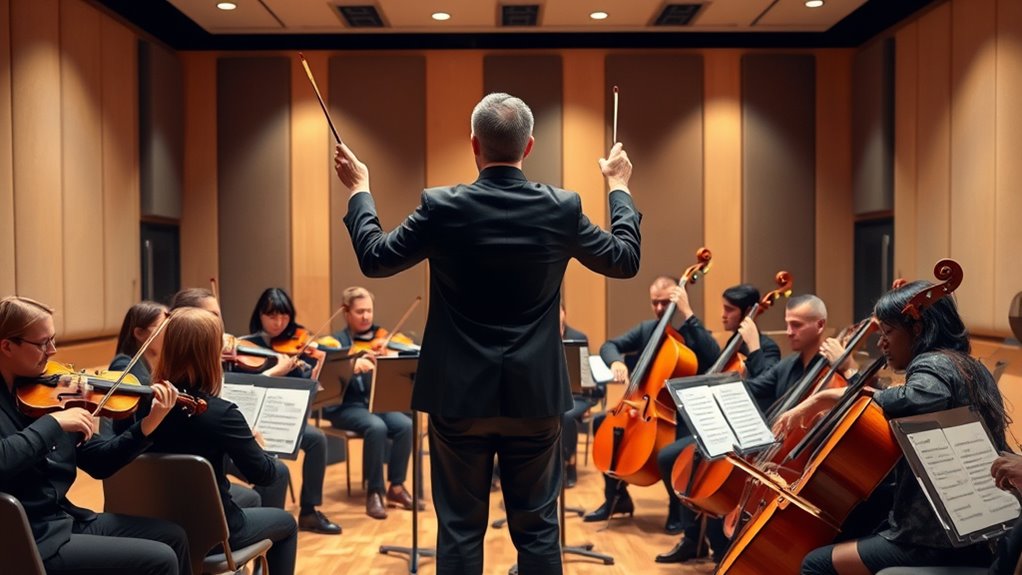
To guarantee a smooth recording session, you need to prepare the string ensemble thoroughly. Start by reviewing their tuning procedures to ensure all instruments are perfectly in pitch, avoiding retakes and delays. Clear, consistent communication about tuning expectations helps everyone stay on the same page. Next, focus on bowing techniques; share specific instructions to achieve uniformity in attack and tone quality. Proper bowing ensures balanced sound and reduces unwanted noise. Encourage the players to practice their parts beforehand, emphasizing clean, controlled bowing. Additionally, paying attention to color accuracy can help the ensemble achieve a more cohesive and vibrant sound during recording. By fine-tuning their instruments and aligning their techniques, you create a cohesive ensemble ready to perform at its best. This preparation minimizes technical issues and maximizes the quality of the recording.
Essential Conducting Techniques for String Sessions

Once the string ensemble is well-prepared and tuned, your conducting technique can directly influence the overall performance. Focus on mastering essential conducting techniques to guide players effectively. Key areas include:
- Bowing Techniques – Use clear, consistent gestures to indicate bow direction, speed, and pressure, ensuring uniformity across the ensemble.
- Dynamic Control – Shape the music with precise cues for volume changes, guiding players through crescendos and decrescendos seamlessly.
- Gesture Precision – Maintain steady, intentional movements to communicate tempo, articulation, and phrasing clearly, avoiding ambiguity or over-exertion.
- Spiritual Awareness – Cultivating mindfulness during rehearsals can help conductors remain present and attuned to the ensemble’s energy, enhancing overall cohesion.
Practicing these techniques enhances cohesion, allowing players to interpret your musical intentions with confidence and clarity. Your physical cues become the bridge connecting your vision and their execution.
Communicating Musical Intent Clearly
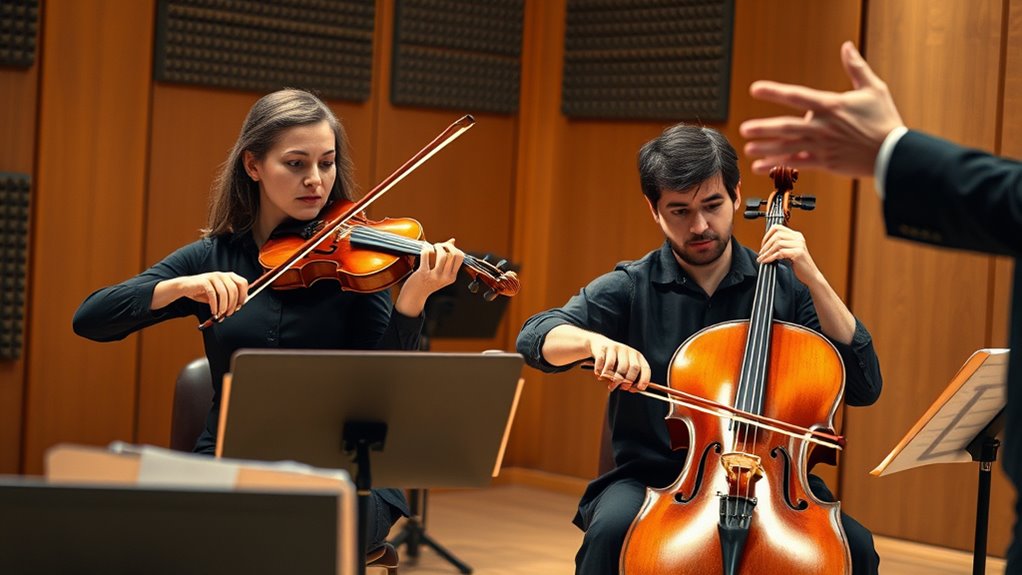
Effective communication of musical intent is essential for ensuring that your ensemble interprets your direction accurately. To achieve this, focus on maintaining gestural clarity; your movements should be precise and easily understood. Use clear, deliberate gestures to convey dynamics, entrances, and phrasing. When guiding expressive phrasing, avoid ambiguity—let your gestures reflect the shape and emotion of the music. Be mindful of your body language, ensuring it aligns with the musical nuances you want to emphasize. Consistent, concise cues help players interpret your intentions quickly and confidently. Remember, your physical communication is a direct reflection of the music’s character, so stay expressive yet controlled, and always aim for clarity to foster a unified, emotionally compelling performance. Incorporating multifunctional gear into your conducting toolkit can enhance your ability to communicate complex musical ideas efficiently.
Creating a Comfortable and Focused Environment
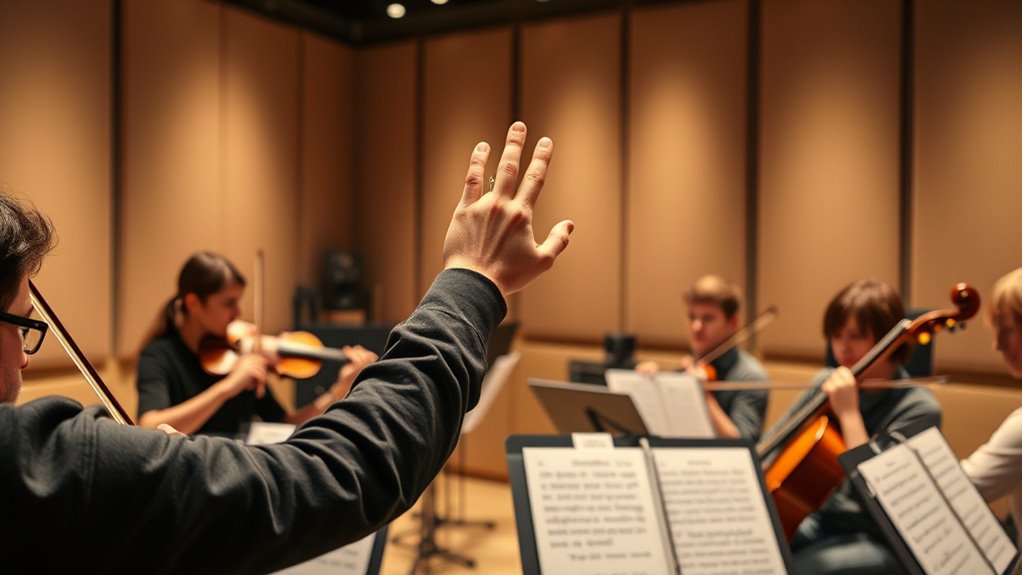
Creating a comfortable and focused environment begins with establishing a positive atmosphere where musicians feel valued and relaxed. Proper studio ergonomics ensure players can perform comfortably for extended periods, reducing fatigue and tension. Attention to ambient acoustics helps control sound reflections, creating clear, balanced audio that allows musicians to concentrate fully. To foster this environment, consider incorporating soundproofing techniques to further minimize external noise and improve overall sound quality. Keep the environment calm and organized to promote focus and confidence.
Collaborating Effectively With String Players
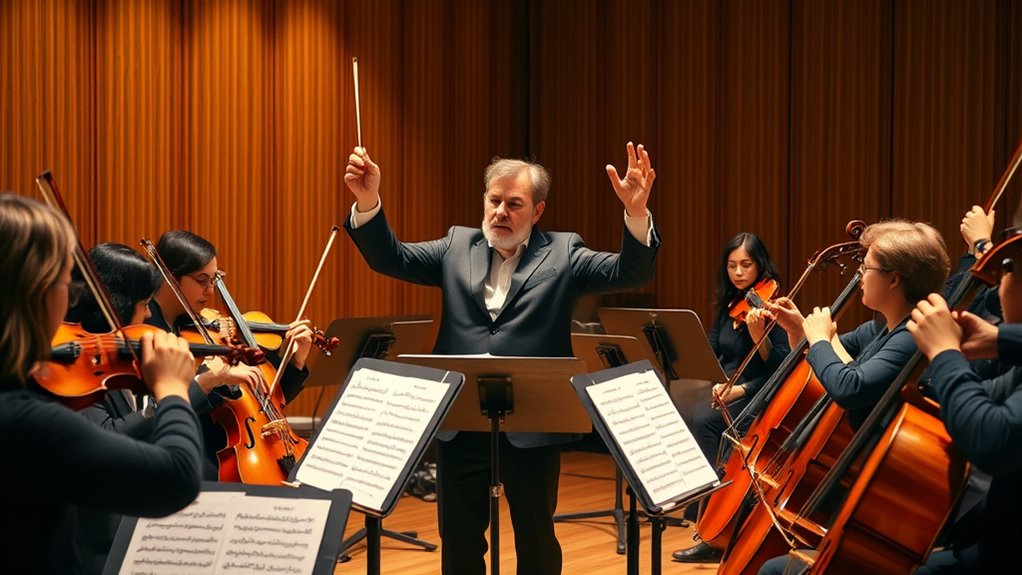
Building a strong working relationship with string players starts with clear communication and mutual respect. To achieve this, discuss bowing techniques upfront, so players understand your desired sound and articulation. Encourage them to share tuning strategies they’re comfortable with, ensuring everyone is on the same page before recording. Be specific about the style and tempo, and listen carefully to their feedback. During sessions, observe their bowing and tuning adjustments, offering guidance when necessary but respecting their expertise. Maintaining open dialogue fosters trust and helps resolve issues quickly. Remember, effective collaboration depends on understanding their technical approaches and working together to produce the best sound. Clear, respectful communication creates a productive environment where both you and the musicians thrive.
Frequently Asked Questions
How Do I Choose the Right Baton for String Conducting?
When choosing the right baton for string conducting, consider the baton material—wood, fiberglass, or carbon fiber—based on your weight preference and durability needs. Focus on grip techniques to make certain of comfort and control, which help you communicate clearly with musicians. The baton’s length and balance also matter; a lightweight, well-balanced baton allows for precise, expressive gestures. Ultimately, pick a baton that feels natural and suits your conducting style.
What Are Common Mistakes to Avoid During String Sessions?
During string sessions, you wanna avoid common mistakes like overlooking tuning errors and poor communication. Always double-check instrument tuning before recording, as even minor errors can affect the entire session. Keep clear, consistent cues to ensure players understand your intent, and encourage open dialogue. By staying attentive to tuning and maintaining good communication, you help create a smooth, productive environment that delivers the best possible sound.
How Can I Improve My Conducting Gestures for Better Clarity?
Think of your gestures like a lighthouse beam guiding ships safely home. To improve your conducting gestures, focus on gesture precision and expressive movements that clearly communicate your intentions. Keep movements deliberate, smooth, and consistent, avoiding unnecessary flair. Practice in front of a mirror or record yourself to analyze clarity. Over time, your gestures will become more intuitive, helping musicians follow your direction effortlessly and creating a more cohesive performance.
What Microphone Techniques Best Capture String Ensemble Sound?
To capture a string ensemble sound effectively, focus on microphone techniques that enhance stereo imaging and ideal placement. Use a pair of microphones in a spaced or XY configuration to create a natural stereo image, ensuring clarity and depth. Position them slightly above and in front of the ensemble, aiming for a balanced pickup of individual instruments. Adjust placement to avoid phase issues, resulting in a warm, detailed recording that truly represents the group’s sound.
How Do I Handle Difficult or Uncooperative String Players?
When dealing with difficult or uncooperative string players, you should focus on understanding player psychology and building rapport. Stay calm, listen to their concerns, and use conflict resolution techniques to address issues. By showing respect and maintaining clear communication, you’ll foster a positive environment. This approach helps resolve conflicts quickly, enabling the session to run smoothly and ensuring the best possible performance from your players.
Conclusion
Just like Mozart conducted with clarity and purpose, your leadership in the studio sets the tone for greatness. By preparing thoroughly, communicating clearly, and fostering a supportive vibe, you unleash the full potential of your string ensemble. Remember, every session is an opportunity to craft a masterpiece—your baton guides the way. Embrace these basics, and you’ll turn each session into a symphonic journey, leaving a lasting impression much like the timeless music of the masters.