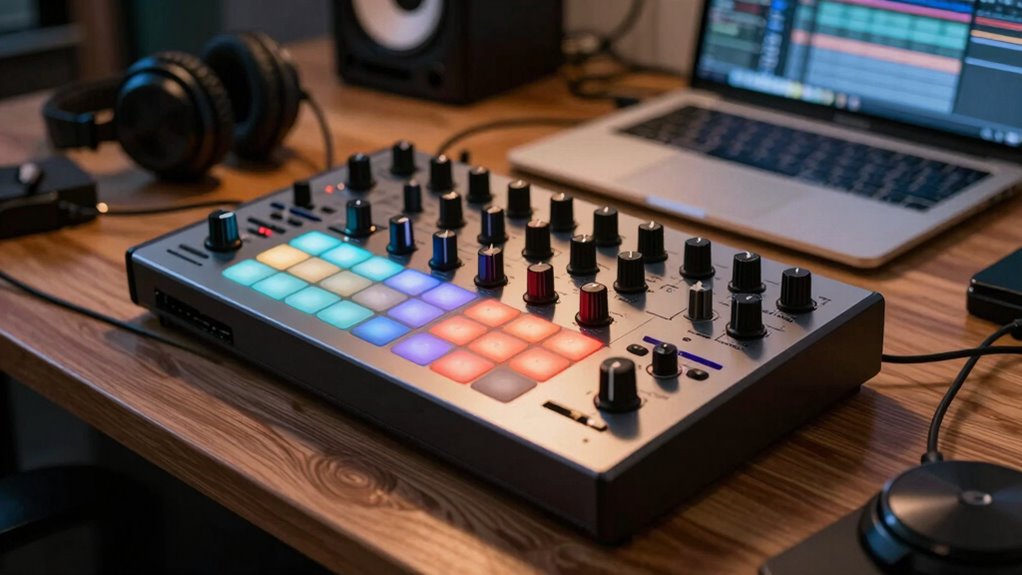
A groovebox streamlines your music process by combining hardware controls and sound design features, helping you finish full tracks instead of just loops. Its intuitive layout allows you to tweak sounds, add effects, and layer parts easily, keeping your workflow smooth and creative. With everything integrated, you can quickly develop ideas into polished songs without switching devices. Keep exploring how to maximize your groovebox’s potential and turn ideas into complete productions.
Key Takeaways
- Use hardware controls to manipulate sounds in real-time, transforming loops into dynamic, complete tracks.
- Leverage built-in synthesis and effects to develop unique sonic textures and rich arrangements.
- Integrate external gear via MIDI and audio outputs for expanded sound design and seamless workflow.
- Layer multiple sounds and experiment with parameters to build complexity and develop your track’s structure.
- Utilize the groovebox’s all-in-one features to streamline the production process from idea to finished song.
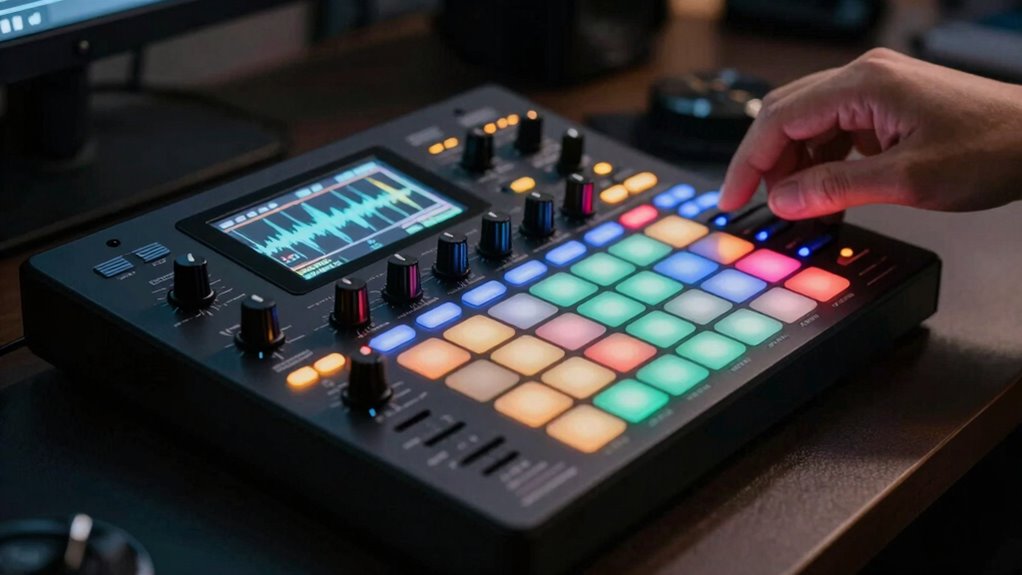
Have you ever wondered how electronic music producers create complex beats and melodies with just one device? The secret often lies in the way they harness a groovebox’s capabilities. These all-in-one machines are designed to streamline your workflow, allowing you to produce full tracks instead of just loops. The key to mastering a groovebox is understanding hardware integration. You’ll find that seamlessly connecting pads, knobs, and buttons makes a huge difference. When all components work together smoothly, you can focus more on your creativity rather than troubleshooting technical issues. Many grooveboxes feature MIDI and audio inputs and outputs, so you can easily sync external gear or software, expanding your sonic possibilities. This integration lets you incorporate external synthesizers, samplers, or effects, giving you more control over your sound. As you get comfortable with how everything connects, you’ll realize that hardware integration isn’t just about convenience—it’s an essential part of your creative process. Additionally, understanding the role of contrast ratio can help you optimize your sound design for clarity and depth within your tracks.
Once you’ve set up your gear, the real fun begins with creative sound design. A groovebox isn’t just about pressing play; it’s about shaping sounds to match your artistic vision. Many units come with a variety of filters, envelopes, and modulation options. You can tweak parameters in real time, transforming simple waveforms into rich textures or aggressive leads. By experimenting with the internal synthesis engines and effects, you craft unique sounds that set your tracks apart. Creative sound design encourages you to push boundaries—layering sounds, modulating parameters, and applying effects until your desired sonic character emerges. This process is highly interactive, meaning you don’t have to wait until the end of a session to hear the results. Instead, you’re constantly sculpting sounds, which helps you develop your signature style. The hands-on nature of a groovebox makes it easier to stay inspired and keep your ideas flowing.
Ultimately, mastering a groovebox involves understanding how hardware integration supports your creative sound design. When you leverage these tools effectively, you can move beyond simple loops and craft full, dynamic tracks. The combination of intuitive hardware controls and powerful sound-shaping features allows you to develop a workflow that’s both efficient and inspiring. As you become more familiar with your device, you’ll discover new ways to layer sounds, experiment with arrangements, and keep your creative juices flowing. The result is a production process that feels natural, fun, and deeply rewarding—turning your ideas into finished tracks instead of just fragments. With the right approach, your groovebox becomes your ultimate studio partner, helping you finish tracks with confidence and style.
Frequently Asked Questions
Can Grooveboxes Be Integrated With DAWS Effectively?
Yes, grooveboxes can be integrated effectively with DAWs by leveraging hardware integration and software compatibility. You can connect your groovebox via MIDI or USB, allowing seamless control and synchronization. Many grooveboxes work well with popular DAWs, enabling you to record, edit, and arrange your beats directly. This integration streamlines your workflow, making it easier to incorporate hardware sounds into your digital projects without hassle.
What Are the Limitations of Grooveboxes for Professional Production?
Imagine you’re finishing a professional track with a groovebox, but hardware limitations prevent detailed editing, like precise pitch or timing adjustments. These constraints hinder editing flexibility, making it tough to refine complex arrangements. For example, a producer might struggle with parameter automation or multi-track editing, which are more seamless in DAWs. So, grooveboxes often fall short for professional production when you need extensive editing capabilities and advanced customization.
How Do I Choose the Best Groovebox for Beginners?
To choose the best groovebox for beginners, focus on hardware versatility and interface simplicity. Look for a device that offers a wide range of sounds and functions, so you can explore different styles without feeling limited. An intuitive, user-friendly interface helps you learn quickly and stay inspired. Try out different models in stores or watch tutorials to see which feels most comfortable and inspiring for your creative flow.
Are Grooveboxes Suitable for Live Performance Setups?
Imagine a modern jukebox—grooveboxes are perfect for live performances. You can seamlessly integrate hardware, allowing real-time control and improvisation. With MIDI synchronization, your groovebox syncs effortlessly with other gear, creating a cohesive set. Its intuitive interface lets you tweak sounds on the fly, making it ideal for live setups. So, yes, grooveboxes are highly suitable for live performances, giving you flexibility, control, and a dynamic stage presence.
What Accessories or Additional Gear Enhance Groovebox Workflow?
You can enhance your groovebox workflow by adding MIDI controllers, which give you hands-on control over parameters and simplify live adjustments. Good headphones are essential for accurate monitoring, helping you catch imperfections early. Consider a sustain pedal for expressive playing and external effects for creative sound shaping. These accessories make your setup more versatile, intuitive, and professional, allowing you to focus on your music without interruptions or technical distractions.
Conclusion
Now that you’ve revealed the secret to transforming simple loops into epic tracks, there’s no stopping you. With grooveboxes, you hold the power to conquer entire genres and make your listeners lose their minds. Imagine your beats shaking every corner of the dancefloor, your sounds echoing into eternity. So, plunge in, experiment wildly, and turn your music dreams into unstoppable, chart-topping reality. The stage is yours—go make history!