To track your studio inventory like a pro, keep detailed records of each item’s serial number, purchase date, and receipts, organizing them digitally and physically for quick access. Use spreadsheets or specialized software to update information regularly after purchases, repairs, or replacements. Store receipts in labeled folders or binders and link serial numbers with corresponding documents. Staying organized guarantees smooth asset management; continue exploring how you can perfect your system for maximum efficiency.
Key Takeaways
- Use a dedicated spreadsheet or inventory software to record serial numbers, purchase dates, and receipt details for each item.
- Organize physical receipts and manuals in labeled folders or binders for quick access and verification.
- Regularly update digital records whenever new equipment is acquired, repaired, or replaced to maintain accuracy.
- Link serial numbers with corresponding receipts and warranty information for streamlined asset management.
- Conduct periodic audits to verify inventory accuracy, identify outdated gear, and ensure all records are current.
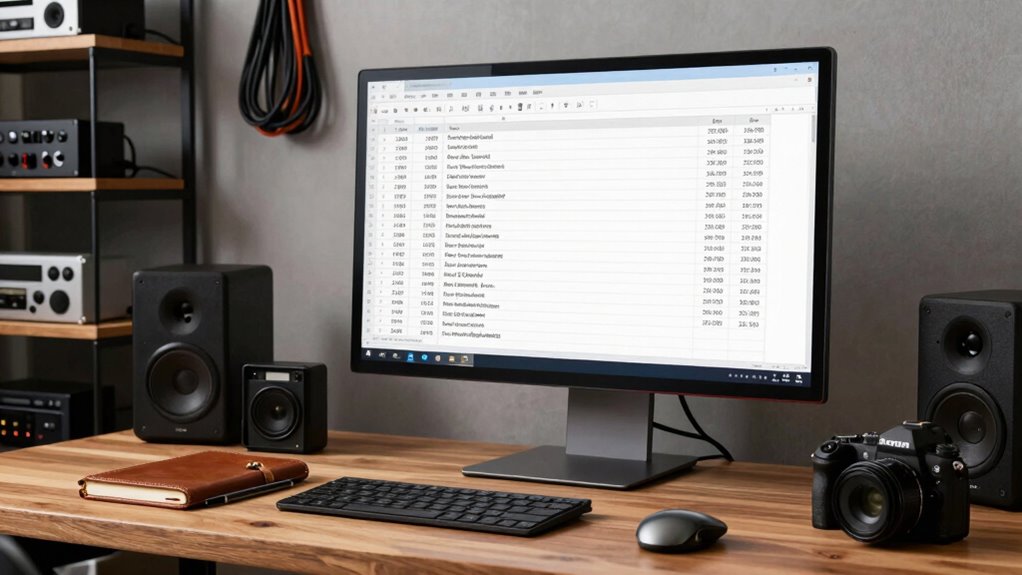
Keeping an organized studio inventory is vital for streamlining your creative process and guaranteeing you know exactly what equipment and supplies you have on hand. When you manage your inventory effectively, you’re not just avoiding clutter—you’re optimizing your entire workflow. Equipment management becomes more straightforward, and you can quickly locate what you need without wasting time searching through piles of gear. An organized inventory also minimizes the risk of losing valuable items or forgetting what’s in stock, which is essential when planning projects or budgeting for replacements.
An organized studio inventory streamlines workflow and prevents loss or confusion over equipment and supplies.
To achieve inventory optimization, start by systematically tracking each piece of gear, including serial numbers, purchase dates, and receipts. Serial numbers act as unique identifiers, helping you distinguish between similar items and providing vital information for warranty claims or repairs. Recording receipts is equally important; it offers proof of purchase, original costs, and helps verify warranty periods. When you keep this information organized—whether digitally or physically—you create a reliable reference point that simplifies asset management and reduces confusion during audits or insurance claims. Record-keeping practices are crucial for maintaining an accurate and accessible inventory.
Using tools like spreadsheets, dedicated inventory software, or even cloud-based apps can make managing serial numbers and receipts more efficient. Update your records regularly, especially after acquiring new equipment or making repairs. That way, your system stays current, and you can easily track the lifecycle of each item. This proactive approach enhances inventory management, ensuring your studio remains well-stocked and ready for any project. It also assists in identifying items that are outdated, underused, or need replacement, further refining your equipment management strategy.
In addition to digital records, consider organizing physical receipts and manuals in labeled folders or binders. Keep a master list of serial numbers alongside corresponding receipts for quick reference. This dual approach of digital and physical records guarantees you’re prepared for insurance claims, warranty repairs, or potential theft reports. By integrating these practices, you’re effectively optimizing your inventory, saving time, and reducing stress when managing your studio assets.
Ultimately, tracking serial numbers and receipts isn’t just about record-keeping—it’s about creating a smarter, more efficient studio environment. When you implement a disciplined system for inventory management, you gain peace of mind and more control over your creative space. This level of organization allows you to focus on your craft rather than administrative hassles, making your entire process smoother and more productive. Remember, the key to successful equipment management is consistency; keep your records updated and review them regularly to maintain an optimized, well-functioning studio.
Frequently Asked Questions
How Often Should I Update My Inventory List?
You should update your inventory list at least monthly to maintain high inventory accuracy. Regular updates help you catch discrepancies early and guarantee serial numbers and receipts are current. If you handle high-value or frequently used items, consider updating more often, like weekly. Consistent update frequency minimizes errors and keeps your inventory reliable, giving you better control and confidence in managing your studio assets effectively.
Can I Track Multiple Locations With One Inventory System?
Yes, you can track multiple locations with one inventory system by using centralized inventory tracking. This setup allows you to manage multi-location management efficiently, giving you real-time updates across all sites. You’ll be able to monitor stock levels, serial numbers, and receipts in one place, reducing errors and saving time. Implementing a centralized system guarantees seamless coordination and better control over your studio assets, no matter how many locations you oversee.
What Are Best Practices for Backing up Inventory Data?
Oh, the irony of ignoring backups! You should regularly back up your inventory data to guarantee inventory security and prevent data loss. Use data redundancy by saving copies in multiple locations—cloud storage, external drives, or off-site servers. Automate backups to avoid forgetting. This way, you protect your valuable serial numbers and receipts, keeping your inventory safe and accessible no matter what happens.
How Do I Handle Lost or Stolen Equipment Entries?
When equipment gets lost or stolen, you should promptly update your inventory list to reflect the change. Report thefts immediately to authorities and document the incident for loss prevention. Keep detailed records of serial numbers and receipts for insurance claims or future reference. Regularly review your inventory to identify discrepancies early, helping you prevent theft and maintain accurate tracking. Active monitoring helps protect your studio assets effectively.
Is There Software That Automates Serial Number Tracking?
Imagine a magic wand that instantly catalogs every serial number with a simple scan—that’s what software with barcode scanning and cloud synchronization offers. It automates serial number tracking, so you spend less time on manual logs and more on your creative work. With real-time updates across devices, you never lose track of your equipment again. This tech makes managing your studio’s inventory effortless, efficient, and virtually foolproof.
Conclusion
So, with your impeccable system tracking serial numbers and receipts, you’ll wonder how you ever managed without it. Ironically, what once felt like a chore now feels like second nature—leaving you free to focus on your art. Just remember, even the best inventory list can’t prevent a surprise missing item, but at least you’ll have fun pretending it will. Keep perfecting your system, and maybe, just maybe, you’ll stay one step ahead of chaos.