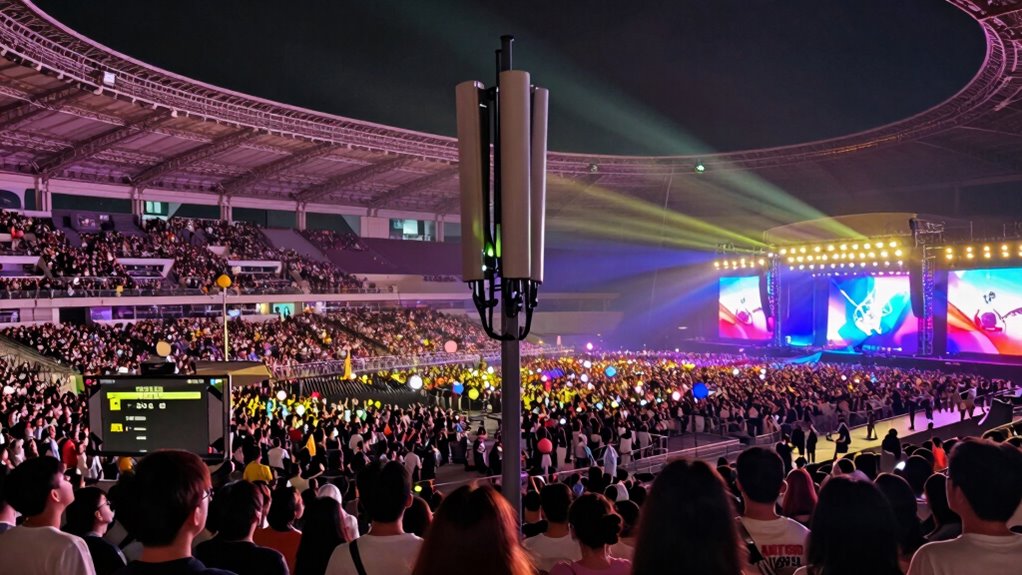
To avoid dropouts in crowded venues, you should focus on strategic wireless frequency planning. Analyze the environment to identify potential interference sources and assign frequencies carefully to minimize conflicts. Use spectrum analyzers to find free segments and allocate channels based on area density. Implement dynamic spectrum access and coordinate with other operators to adapt to changing conditions. Continuing will reveal how these strategies can guarantee stable, high-quality connections even during peak crowds.
Key Takeaways
- Conduct thorough spectrum analysis to identify optimal, interference-free channels for crowded venue environments.
- Strategically assign different frequencies to various zones or seating sections to prevent cross-talk.
- Implement dynamic spectrum management techniques to adapt to real-time congestion and user demand.
- Coordinate with other network providers to avoid frequency conflicts and ensure seamless connectivity.
- Regularly monitor network performance and adjust frequency allocations to minimize drops and maintain stability.
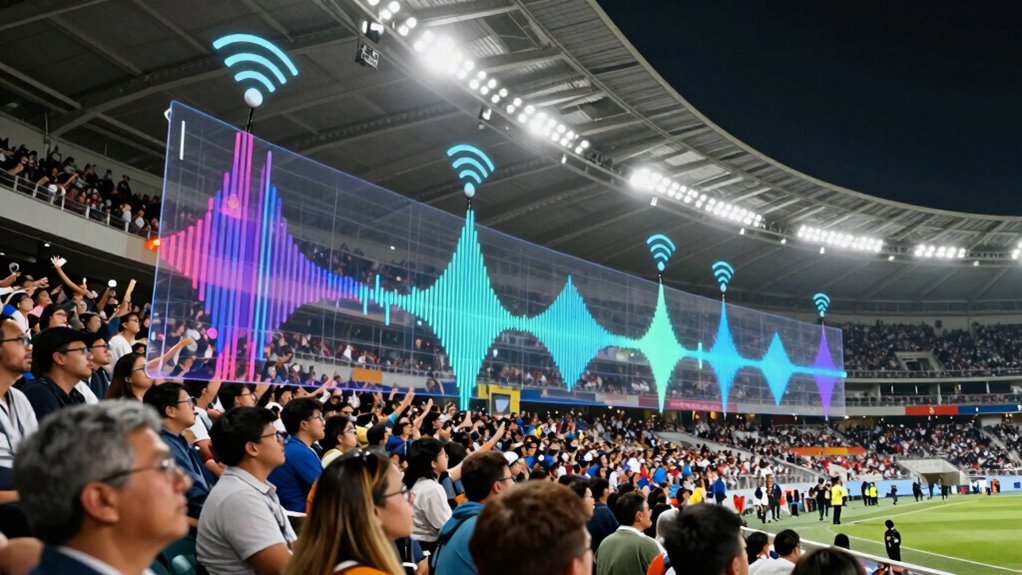
Wireless frequency planning is a critical step in designing reliable and efficient communication networks. When you’re managing a crowded venue, like a stadium or conference center, the challenge lies in ensuring that everyone maintains a strong, consistent connection. To achieve this, you need to carefully consider interference mitigation and spectrum allocation. Interference occurs when multiple devices or networks operate on overlapping frequencies, causing dropped signals or slow data transfer. Effective interference mitigation involves analyzing the environment and strategically assigning frequencies to minimize these conflicts. By understanding which parts of the spectrum are congested and which are underutilized, you can design a plan that reduces signal interference and enhances network stability.
Spectrum allocation is the process of distributing available frequency bands among different users or services to optimize network performance. In crowded venues, spectrum management becomes critical because the demand for wireless connections spikes dramatically. You must allocate frequencies thoughtfully, ensuring that high-density areas get enough bandwidth while avoiding overlap with other channels. Proper spectrum allocation prevents devices from competing for the same frequencies, which can lead to congestion and dropped connections. It’s essential to analyze the venue’s layout, anticipated user density, and device types to allocate frequencies efficiently. Using tools like spectrum analyzers, you can identify which parts of the spectrum are free and assign them to different zones, ensuring minimal interference and maximum capacity.
Additionally, implementing policies for dynamic spectrum access allows networks to adapt in real-time to changing conditions, further optimizing performance during peak times. Implementing a well-planned frequency scheme involves considering both the environment and user behavior. For example, in a stadium, you might assign different frequency channels to different seating sections or tiers to prevent cross-talk. Additionally, employing dynamic spectrum access methods allows the network to adapt in real-time to changes in traffic, reallocating frequencies as needed to prevent overloads. This proactive approach helps maintain service quality, even during peak usage times. It’s also vital to coordinate with other network operators and services in the area to avoid spectrum conflicts that could cause interference. Regular monitoring and adjustments are necessary to keep the network performing smoothly, especially as new devices join the network or usage patterns change.
Frequently Asked Questions
How Can I Detect Interference Sources in Crowded Venues?
To detect interference sources in crowded venues, you should monitor your wireless signals for sudden drops or fluctuations, which indicate signal interference. Use spectrum analyzers to scan for unexpected signals or noise that disrupt your network. Regularly calibrate your equipment to guarantee accurate detection, and identify sources like overlapping frequencies or electronic devices. By actively analyzing your environment, you can pinpoint interference sources and adjust your frequency plan accordingly.
What Are the Best Tools for Real-Time Frequency Monitoring?
You should use spectrum analysis tools like Wi-Spy or AirMagnet for real-time frequency monitoring. These tools help you detect signal interference by providing detailed insights into spectrum activity, allowing you to identify crowded channels and interference sources instantly. They give you a clear view of radio frequency usage, enabling you to adjust your wireless settings proactively and prevent dropouts in crowded venues.
How Often Should Frequency Plans Be Updated?
You should update your frequency plan regularly, considering venue environment assessments and ongoing network performance. Typically, frequency plan updates are needed when there’s a significant change in the venue layout, increased user density, or new interference sources. Conducting periodic evaluations guarantees your network adapts to shifting conditions, maintains ideal performance, and minimizes dropouts. Staying proactive with these updates helps you deliver seamless connectivity, even in the most crowded, dynamic environments.
Can User Capacity Impact Frequency Planning Strategies?
Yes, user capacity substantially impacts your frequency planning strategies. As user capacity increases, you need to optimize your network for scalability, ensuring it can handle higher loads without dropouts. You should adjust frequency allocations and consider additional access points to maintain performance. Planning for growth helps prevent congestion, so regularly reassess your network’s capacity and adapt your frequency plan accordingly to support more users smoothly.
What Legal Regulations Affect Wireless Frequency Use in Events?
Legal laws limit your wireless landscape, demanding diligent dedication to spectrum licensing and legal compliance. You must navigate nuanced regulations, ensuring your frequency use doesn’t breach boundaries, avoid interference, and adhere to authorities’ directives. By respecting these regulations, you guarantee a glitch-free gathering, safeguarding your signals and securing smooth service. Stay savvy and compliant, and your event’s wireless wonder will work wonders without worry or legal warnings.
Conclusion
By mastering wireless frequency planning, you’re the conductor of a seamless symphony, ensuring every note plays in harmony. With the right strategies, you’ll dance through crowded venues without missing a beat, keeping dropouts at bay like shadows fleeing the dawn. Embrace these techniques, and your network will flow smoothly, a steady heartbeat amidst the chaos. Stay alert, adapt quickly, and turn potential disruptions into a well-orchestrated performance that keeps everyone connected and satisfied.