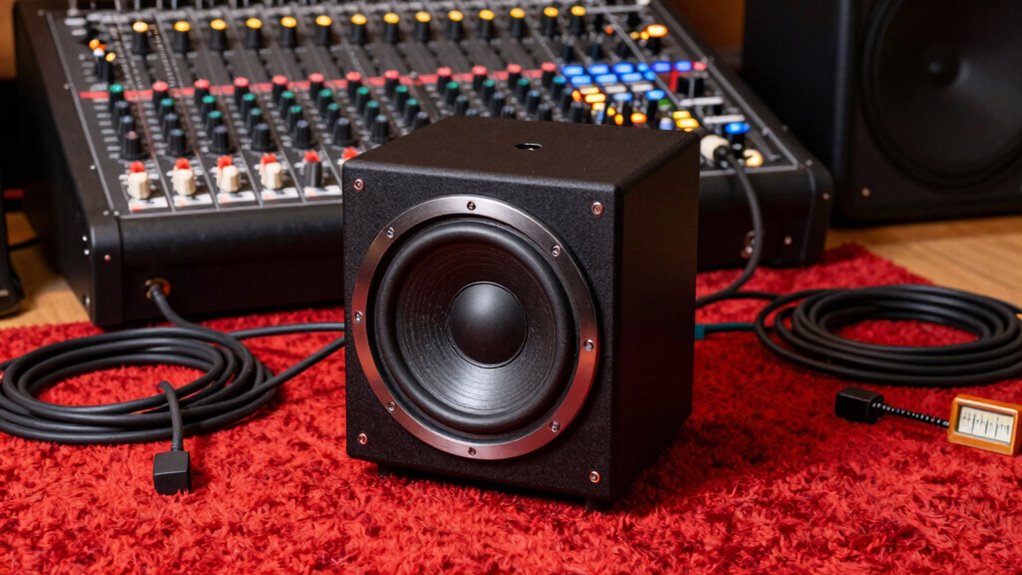
To set up your live subwoofer easily, start by placing it near a wall or corner to boost bass and experiment with different spots for the best sound. Set your crossover around 80Hz, adjusting based on your main speakers’ capabilities. Play a bass-heavy track and toggle the polarity switch to find where bass sounds tightest. Fine-tune volume and phase for smooth integration, and you’ll enjoy deep, powerful bass—continue on to master the details.
Key Takeaways
- Place the sub near a wall or corner to enhance bass response, then adjust position for best sound integration.
- Set the crossover frequency around 80Hz, tuning it based on your main speakers’ capabilities.
- Experiment with polarity (phase switch) by playing bass-heavy sounds to find the most impactful setting.
- Calibrate the sub’s volume and phase using test tones or a calibration microphone for seamless blending.
- Fine-tune placement, crossover, and polarity gradually to achieve balanced, deep, and immersive bass.
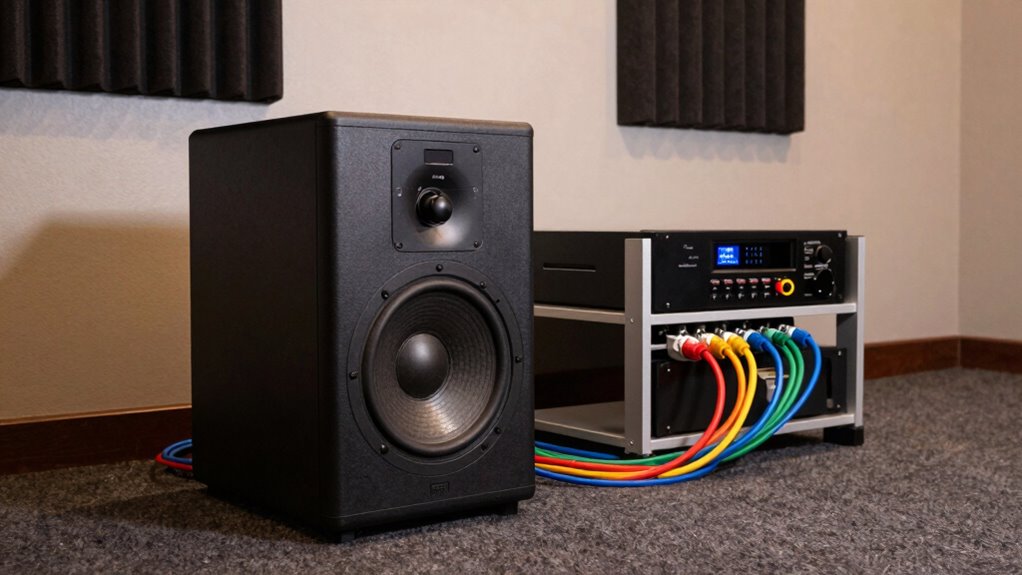
Setting up a subwoofer might seem intimidating, but with simple steps, you can enjoy deep, rich bass in no time. The key is to focus on proper woofer calibration and effective room integration. When you start, take a moment to understand how your subwoofer interacts with your main speakers and the room itself. Correct woofer calibration ensures that the sub blends seamlessly, avoiding sound gaps or boomy overlaps. It’s all about balancing the bass so it feels natural and immersive, not overpowering or disconnected.
Begin by placing your subwoofer in a spot that maximizes room integration. Many people start near a wall or corner because these placements can boost bass response, but experiment with positions. You might find that moving the sub just a few inches can dramatically improve sound quality. Once you’ve chosen a placement, turn on your system and set your crossover frequency. This controls where the bass transitions from your main speakers to the sub. A good rule of thumb is to set the crossover around 80Hz, but you can adjust based on your speakers’ capabilities and your listening preferences. Remember, a proper crossover setup prevents frequency overlap and ensures a smooth bass response.
Next, focus on polarity, which refers to the phase of the subwoofer’s sound wave. If your subwoofer’s polarity is out of sync with your main speakers, the bass can sound weak or canceled out. To check this, play a bass-heavy track and listen carefully. If the bass feels hollow or less impactful, try flipping the polarity switch on your subwoofer. Experimenting with polarity adjustments may take a few tries, but it’s worth it to achieve tight, punchy bass that complements your entire sound system.
Finally, don’t forget about room integration. No matter how perfect your subwoofer calibration is, room acoustics can affect sound. Use a test tone or a calibration microphone if you have one, and fine-tune your sub’s volume and phase settings. Adjusting these settings helps your subwoofer work harmoniously with your main speakers, filling the room with balanced, impactful bass. Small tweaks can make a big difference, so take your time. You can also optimize room acoustics by adding rugs, curtains, or acoustic panels to improve sound quality. Once everything sounds cohesive and deep, you’ve successfully integrated your subwoofer into your setup. With patience and a few adjustments, you’ll enjoy a powerful, immersive listening experience that truly brings your music and movies to life.
Frequently Asked Questions
How Do I Choose the Right Subwoofer for My Space?
To choose the right subwoofer for your space, consider the size and your desired bass impact. Match the subwoofer’s power ratings to your needs—higher ratings handle larger areas with more bass. Also, pick the right enclosure type, like sealed or ported, for your sound preference and space. Smaller rooms benefit from compact enclosures, while larger areas might need more powerful subwoofers for deep, even bass.
What Safety Precautions Should I Take During Setup?
During setup, prioritize electrical safety by unplugging equipment before handling wires or connections. Always handle the subwoofer and cables carefully, avoiding sharp edges or heavy lifting that could cause injury. Keep liquids away from electronic parts to prevent short circuits. Use proper grounding and avoid overloading outlets. Double-check all connections, and wear protective gear if needed. These handling precautions make certain your safety throughout the setup process.
Can I Use Multiple Subwoofers Together?
Imagine you’re setting up a concert; using multiple subwoofers can boost bass clarity. Yes, you can use subwoofer pairing, but focus on phase alignment to prevent sound cancellation. Properly aligning their phases guarantees a seamless bass response, avoiding muddy or uneven sound. Always match crossover points and adjust phase controls for each subwoofer. This way, you get richer, more powerful bass that covers the entire venue evenly.
How Often Should I Calibrate My Subwoofer System?
You should calibrate your subwoofer system at least once every six months, or more often if you notice changes in room acoustics or sound quality. Use calibration tools like a sound level meter or room correction software to guarantee peak performance. Regular calibration helps maintain a balanced bass response, especially as furniture or room conditions shift, ensuring your system sounds its best consistently.
What Are Common Troubleshooting Steps for Subwoofer Issues?
When troubleshooting your subwoofer, start by checking phase alignment to confirm it’s in sync with your main speakers, preventing cancellation issues. Verify that your subwoofer isn’t exceeding its power handling capacity to avoid distortion or damage. If you notice no sound or poor bass, test the power connection and settings. Adjust phase and reduce input levels if needed, and inspect for loose cables or damaged components.
Conclusion
Now that you’ve got the basics down, your subwoofer setup is like tuning a fine instrument—every adjustment brings your soundscape to life. With the right crossover, polarity, and placement, you’ll craft a bass foundation that rumbles like thunder and whispers like a breeze. Think of it as painting with sound, each tweak adding depth and richness. So, go ahead—set your subwoofer free, and let your music fill every corner with vibrant, soul-stirring energy.