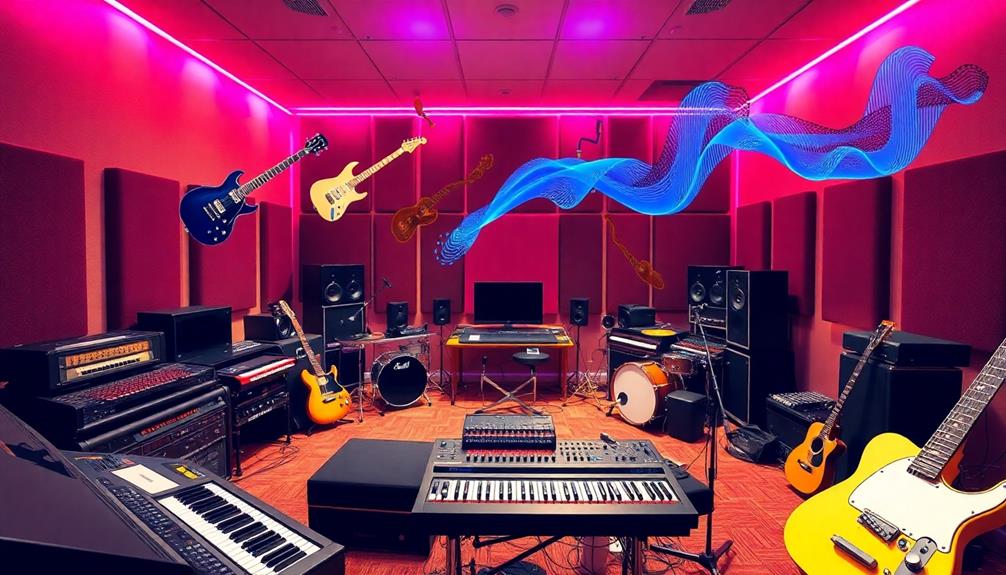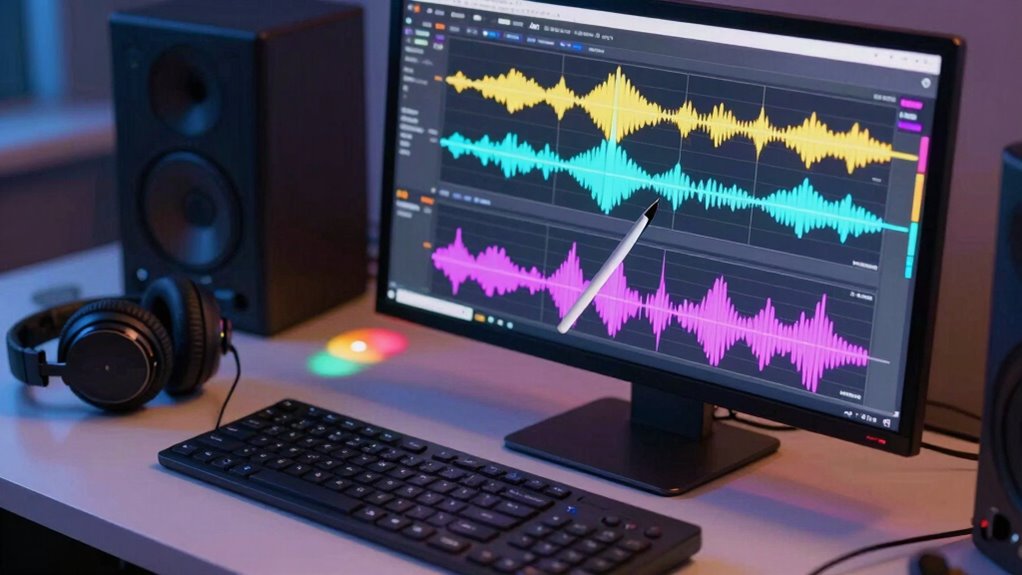

To resample sounds into something new and useful, start by experimenting with different sample rates, pitch shifts, and bit depths to create unique textures. Layer multiple resampled sounds to build complex soundscapes, and try distorting or stretching your samples to add character or chaos. Adjusting these parameters lets you craft vintage, lo-fi, or digital effects that fit your project. Keep exploring different settings—there’s plenty more to discover on how resampling can unleash new sonic potential.

Get audio and creator gear delivered free with Prime
- Fast, free delivery on millions of items
- Prime Video, Amazon Music and more included
- Member-only deals all year
Key Takeaways
- Experiment with changing sample rates and bit depths to create unique textures and sonic character.
- Layer multiple resampled sounds with different settings to build complex, rich soundscapes.
- Use distortion and pitch shifts during resampling to transform sounds into new, expressive elements.
- Balance sound quality and character to maintain clarity while adding creative effects.
- Continuously explore and tweak resampling parameters to discover innovative and useful sonic results.
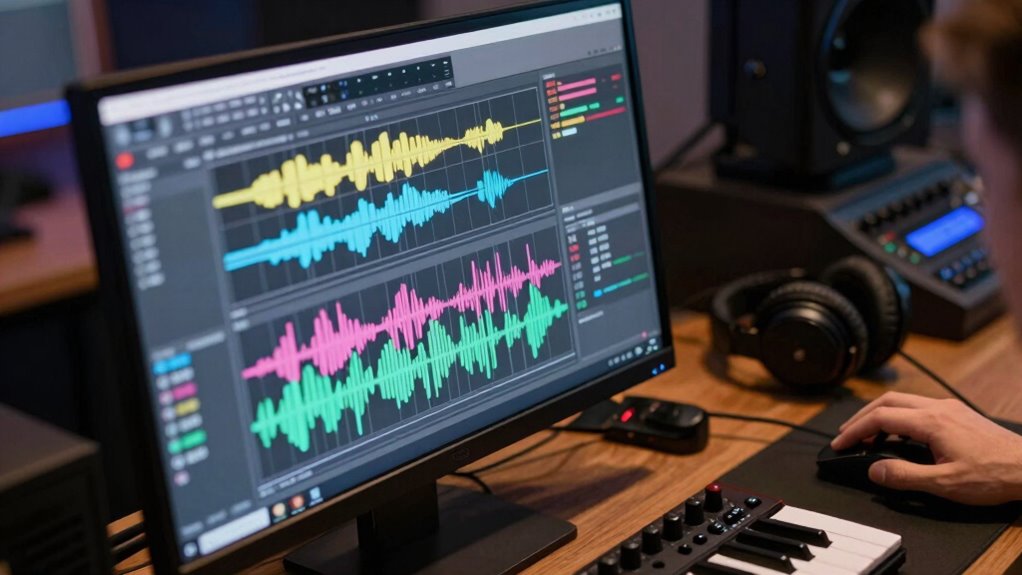
Ever wondered how you can change the pitch, speed, or quality of a sound without losing its core fundamental? Resampling sounds gives you that power, allowing you to manipulate audio in ways that open up new creative possibilities. When you resample, you basically take an existing sound and reprocess it at a different rate or with different settings, transforming it into something fresh and useful. This process isn’t just about changing speed or pitch—it’s also about exploring sound distortion creatively. Instead of seeing distortion as a flaw, you can intentionally introduce it to add character or uniqueness to your audio. For example, by resampling a clean vocal and intentionally distorting it, you create a gritty, textured effect that stands out. It’s all about experimenting and pushing the boundaries of what’s possible.
One of the most exciting aspects of resampling is creative layering. You can take multiple sounds, resample them differently, and then layer them to craft complex textures. Think of it as building a sonic collage—each layer adding depth and dimension to your track. Resampling allows you to stretch, shrink, or warp sounds before layering, giving you control over how elements interact. You might resample a drum hit at a slower rate, then layer it over a faster one to produce a rhythmic interplay that’s both dynamic and unpredictable. This approach enriches your sound palette, turning simple samples into intricate soundscapes. Additionally, understanding sound manipulation techniques can help you further refine your resampling process and achieve your desired sonic results. Exploring sound distortion can unlock new creative avenues, enabling you to craft unique and compelling audio textures. Recognizing the importance of sound quality adjustments can also help you achieve the perfect balance between clarity and character. Furthermore, mastering the concept of sample rate manipulation can allow for more precise control over the sonic outcome. Being aware of different digital audio formats can also impact how your resampled sounds translate across various playback systems.
Resampling also offers a way to manipulate the quality of a sound in subtle or dramatic ways. By adjusting sample rates or bit depths, you can create vintage, lo-fi effects or crystal-clear digital textures. The key is knowing when to push the boundaries—sometimes, deliberately introducing sound distortion through resampling can add emotional grit, warmth, or chaos to your mix. Be mindful of preserving the core essence of the original sound, though; the goal is to enhance or transform, not to completely lose the original character. With practice, you’ll learn how to balance these elements, using resampling as a powerful tool for sonic innovation.
In short, resampling sounds isn’t just technical; it’s a creative act. It allows you to reinvent sounds, craft unique textures, and develop your signature style. Whether you want to add subtle character or make a bold statement with sound distortion, resampling provides the flexibility to do so. Embrace experimentation, play with different settings, and let your ears guide you toward new, exciting sonic territories.
As an affiliate, we earn on qualifying purchases.
Frequently Asked Questions
Can Resampling Degrade Sound Quality?
Yes, resampling can degrade sound quality if you’re not careful. When you resample audio, you risk introducing audio distortion and sampling artifacts, which can make the sound muddy or fuzzy. These issues happen especially when you drastically change the sample rate or use poor-quality algorithms. To minimize degradation, use high-quality resampling tools, and avoid excessive resampling, ensuring your audio remains clear and true to the original.
What Are the Best Tools for Resampling?
Did you know that over 80% of music producers rely on digital tools for creative sound manipulation? For resampling in music production, top tools include Ableton Live, FL Studio, and Logic Pro X, which offer intuitive interfaces and powerful features. These tools allow you to easily manipulate and transform sounds, making resampling a versatile technique for creating unique textures and new sonic ideas in your music projects.
How Does Resampling Affect File Size?
Resampling changes your audio file’s sample rate, which can directly impact its file size. When you perform sample rate conversion, lowering the sample rate usually reduces file size because fewer data points are stored, aided by audio compression techniques. Conversely, increasing the sample rate can slightly enlarge the file, as more data is added. Overall, understanding how resampling and audio compression work helps you control file size while maintaining sound quality.
Can Resampling Fix Pitch Issues?
Think of resampling as a musical magic wand, capable of fixing pitch issues when you apply creative techniques. You actively manipulate the sound, adjusting its sample rate to correct or intentionally alter pitch, creating artistic effects. Resampling gives you control, allowing you to refine your audio with precision. It’s a versatile tool, helping you achieve a polished, professional sound or explore unique sonic textures in your projects.
Is Resampling Suitable for All Audio Formats?
Resampling isn’t suitable for all audio formats because of audio format compatibility issues. Some formats, like MP3 or AAC, may lose quality during resampling, while others, like WAV or AIFF, handle it better. You should check the specific resampling algorithms used, as high-quality algorithms preserve audio fidelity. Always verify your software’s compatibility with your audio formats before resampling to avoid unwanted data loss or quality degradation.
Conclusion
Now that you know how to resample sounds into something fresh and useful, aren’t you excited to experiment and open new creative possibilities? With just a few techniques, you can transform ordinary sounds into unique audio treasures that stand out. So, why settle for the same old when you have the power to reshape and redefine your soundscape? Plunge in, get creative, and let your imagination lead the way to innovative audio creations!
Columbus Day / Indigenous Peoples' Day Picks
long weekend sales
As an affiliate, we earn on qualifying purchases.