
When starting with Eurorack, choose a case size like 6U or 9U based on your space and future plans, and make certain it has enough power to support all your modules. Check power requirements carefully and match them with a reliable power supply to prevent issues. Plan your setup gradually, focusing on core modules first and expanding as you learn and grow. Keep exploring to uncover more tips for building a functional, flexible system.
Key Takeaways
- Choose a case size (6U or 9U) based on current needs and future expansion plans.
- Ensure your power supply can support all modules’ total current draw safely.
- Verify module compatibility with your case size and power standards before purchase.
- Start with essential modules and expand gradually to fit your budget and musical goals.
- Plan for system growth by selecting a case with enough space and a reliable power setup.
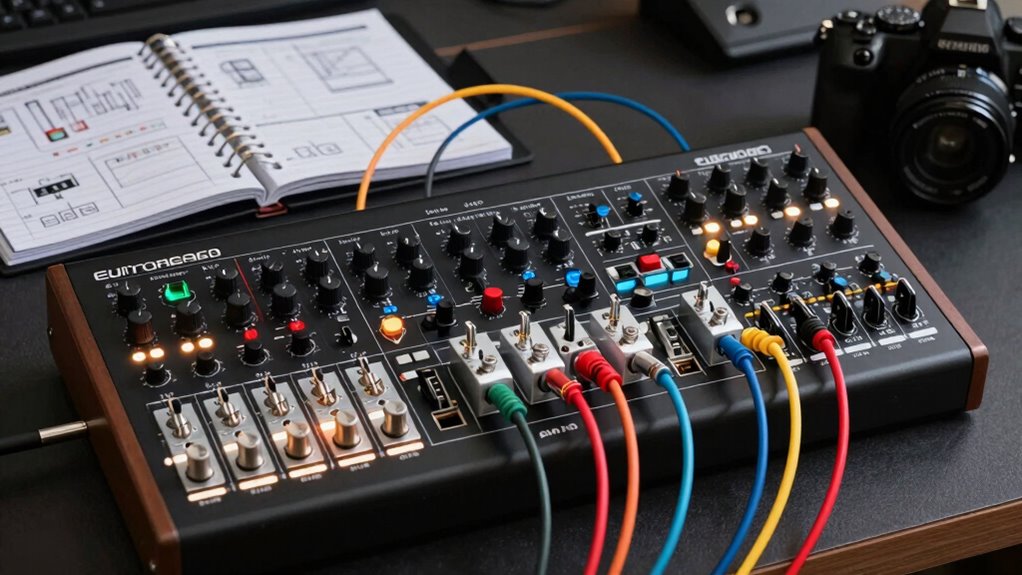
Are you curious about diving into Eurorack synthesizers but unsure where to start? One of the first things to consider is how your modules will fit together, which boils down to module compatibility. Eurorack modules come from various manufacturers, each with their own features and patching styles, but they all adhere to a standard size and power protocol. Ensuring compatibility isn’t just about physical fit; you also need to verify that your power supply can handle the total current draw of all your modules. If you overload your power supply, it can lead to instability or damage. So, when selecting modules, check their power requirements and compare them against your case’s power capabilities. This way, you avoid surprises down the line and build a system that functions reliably. Budget considerations also play a pivotal role here. Eurorack modules vary widely in price—from affordable beginner options to high-end, feature-rich modules. Setting a clear budget helps you prioritize which modules to buy first, focusing on essentials before expanding your system. Remember, it’s better to start small with a few versatile modules and gradually add more as your skills grow and your budget allows. This approach prevents overspending and ensures you’re investing in modules that truly inspire your sound. When planning your case size, think about the space you’ll need for future expansion. Beginners often choose a 6U or 9U case, which provides ample room for a core setup plus some room to grow. Larger cases give you more flexibility but also come with increased costs and setup complexity. Consider how much space you have available and how portable you want your rig to be. Power supply choices should match your case size and planned system: bigger cases typically require more robust power supplies to support additional modules. It’s wise to invest in a reliable power system from the start to prevent issues as your system expands. Planning your case size, power, and modules together ensures compatibility and a smooth workflow. Additionally, power distribution is a critical aspect of system stability, as it ensures consistent power delivery to all modules. Keep in mind that your initial setup doesn’t need to be complex; focus on getting a few core modules that inspire you. As you learn more about synthesis and your musical preferences, you can gradually expand, always keeping in mind module compatibility and your budget. Starting with a clear plan helps you create a cohesive system that’s both functional and inspiring, making your Eurorack journey enjoyable from the outset.
Frequently Asked Questions
How Do I Choose the Right Eurorack Modules for Beginners?
To choose the right eurorack modules for beginners, start by considering your budget and what sounds or functions excite you. Look for modules with good compatibility, ensuring they work well together within your case. Focus on essential types like oscillators, filters, and envelopes first. Don’t overspend initially—building your system gradually helps you learn and prevents overwhelm. Prioritize versatile modules that inspire experimentation and fit your creative goals.
What Are Common Troubleshooting Tips for Power Issues?
You should first check your power supply to guarantee it’s providing consistent, correct voltage. If modules aren’t functioning properly, verify proper grounding techniques—poor grounding can cause noise or power issues. Inspect cables for secure connections, and avoid mixing incompatible modules. If problems persist, test with a different power supply or reconfigure your setup. Regularly updating your system and consulting your module manuals can also prevent and resolve power-related issues efficiently.
Can I Expand My Case Later as My Setup Grows?
Yes, you can expand your case later, but keep modular rackability in mind. Your initial setup might limit future expansion due to size or power constraints. Choose a case with enough headroom and consider modular cases designed for easy adding modules. Be aware of expansion limitations, like power capacity or physical space, to ensure smooth growth without needing a complete overhaul later. Planning ahead helps your setup evolve seamlessly.
How Do I Ensure Proper Grounding and Static Protection?
Think of grounding like the invisible shield protecting your modular system. To guarantee proper grounding techniques, connect your case to Earth ground using a grounding wire or a grounded power strip. Always prevent static discharge by touching a grounded metal object before handling modules. Using anti-static mats and wrist straps further shields your gear. These steps keep your setup safe, reliable, and ready for creative explorations without unexpected interruptions.
What Are the Best Resources for Learning Eurorack Patching Techniques?
You should start with video tutorials that demonstrate eurorack patching techniques step-by-step, making complex concepts easier to grasp. Additionally, join online forums where enthusiasts share tips, tricks, and troubleshooting advice. These resources give you practical insights and real-world examples, helping you develop your skills. By actively engaging with video content and community discussions, you’ll quickly improve your patching techniques and unleash new creative possibilities in your setup.
Conclusion
Now that you know the essentials of case size, power, and planning, you’re ready to start building your Eurorack setup. Remember, a journey of a thousand miles begins with a single step—so don’t overthink it. Focus on your current needs, expand as you grow, and enjoy the creative process. With patience and curiosity, you’ll craft a unique sonic landscape. Happy patching!