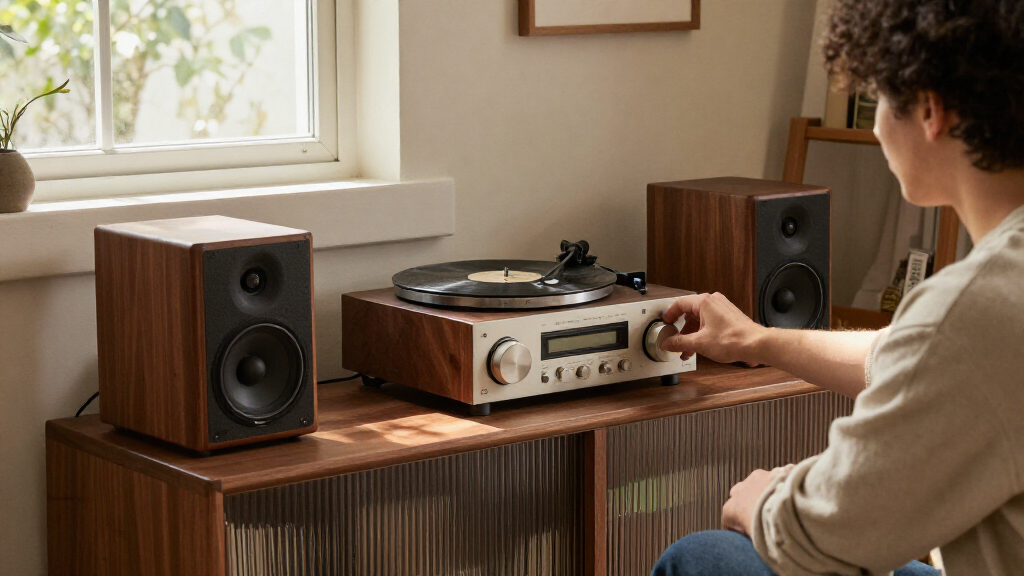
The best home sound systems balance room-filling sound with a setup you can live with every day. My best overall pick is the Klipsch Reference 5.2 system with Onkyo TX-NR7100 for buyers who want a full speaker-and-receiver theater, while the Bose Lifestyle Ultra set stands out as a polished premium package and the JBL Bar 800 offers an easier route to surround effects with detachable rear speakers. The main tradeoff is between a compact, convenient soundbar system and a more expandable receiver setup that needs extra space and wiring. I also weigh channel layout, connection options, room fit, and setup demands rather than treating channel counts as a guarantee of better sound. Read on for the full breakdown and guidance on which system matches your home.

Get audio and creator gear delivered free with Prime
- Fast, free delivery on millions of items
- Prime Video, Amazon Music and more included
- Member-only deals all year
Complete the kit


Key Takeaways
- The Klipsch Reference 5.2 with Onkyo receiver leads for traditional home theater. Its separate speakers and receiver offer a more flexible foundation than the all-in-one soundbar packages, at the cost of more components and setup work.
- The Bose Lifestyle Ultra set is the premium convenience choice. It packages a soundbar, subwoofer, and two speakers, while Bose’s other systems in this roundup target buyers who want different combinations of surround components and expansion.
- Detachable or wireless rear speakers are the practical middle ground. The JBL Bar 800 and ULTIMEA Skywave X50 aim to deliver surround sound without committing to the full receiver-and-speaker installation.
- More advertised channels do not automatically mean a better match. Room shape, speaker placement, and whether the system can create convincing height effects matter as much as channel count.
- Yamaha receiver bundles suit buyers who value inputs and system flexibility. The YHT-4970U and YHT-4950U take a different path from soundbars, but both require space for separate speakers and careful placement.
| Bose Lifestyle Ultra Home Theater Set with Soundbar, 2 Speakers and Subwoofer, White |  | Best Premium Wireless-Streaming Set | Audio channels: 5.1 | Included components: Soundbar, 2 speakers, subwoofer, auxiliary cable | Maximum output power: 180 watts | VIEW LATEST PRICE | See Our Full Breakdown |
| Bose Smart Soundbar Dolby Atmos with Bass Module 500, Wireless Surround Speakers and TV Mount |  | Best for Clear Dialogue | Included components: Soundbar, Bass Module 500, pair of wireless surround speakers, L-shaped mounting brackets | Supported audio formats: Dolby Atmos, Bose TrueSpace | Dialogue feature: AI Dialogue Mode | VIEW LATEST PRICE | See Our Full Breakdown |
| Klipsch Reference 5.2 Home Theater System with Onkyo TX-NR7100 |  | Best for a Full Receiver-Based Theater | Included components: 2 R-625FA floorstanding speakers, R-52C center speaker, 2 R-41M bookshelf speakers, 2 R-12SW subwoofers, Onkyo TX-NR7100 receiver | Receiver channels: 9.2 | Receiver power output: 220W per channel at 6 ohms | VIEW LATEST PRICE | See Our Full Breakdown |
| ULTIMEA 5.1.2ch Sound Bar with Dolby Atmos and Subwoofer |  | Best for Sound Customization | Channel configuration: 5.1.2 | Audio format support: Dolby Atmos; DTS not supported | Subwoofer: 5.25-inch, wired | VIEW LATEST PRICE | See Our Full Breakdown |
| JBL Bar 800 5.1.2-Channel Soundbar with Detachable Surround Speakers and Wireless Subwoofer |  | Best for Flexible Surround Placement | Audio channels: 5.1.2 | Total output power: 720W | Subwoofer: 10-inch, wireless | VIEW LATEST PRICE | See Our Full Breakdown |
| ULTIMEA Skywave X50 5.1.4-Channel Wireless Surround Sound System |  | Best for Height Effects | Audio channels: 5.1.4 | Peak power: 760 W | Wireless transmission: Dual 5 GHz | VIEW LATEST PRICE | See Our Full Breakdown |
| Sony HT-S40R 5.1-Channel Home Theater Soundbar System |  | Best for Simple 5.1 Setup | Model: HT-S40R | Audio channels: 5.1 | Total power output: 600 W | VIEW LATEST PRICE | See Our Full Breakdown |
| Yamaha YHT-4970U 5.1-Channel Home Theater System with Dolby Atmos, 4K/120 and 8K/60 HDMI |  | Best for Gaming and System Flexibility | Receiver: RX300A AV receiver | Audio channels: 5.1 | Included speakers: Two front, one center, and two surround speakers | VIEW LATEST PRICE | See Our Full Breakdown |
| LG S80TR 5.1.3-Channel Soundbar with Rear Surround Speakers and Wireless Subwoofer |  | Best for Streaming and Smart-TV Integration | Audio channels: 5.1.3 | Audio formats: Dolby Atmos, DTS:X | Wireless speakers: Rear speakers and subwoofer | VIEW LATEST PRICE | See Our Full Breakdown |
| Bose SoundTouch 520 Home Theater System |  | Best for Preset-Based Music and Device Control | Speaker configuration: Five Direct/Reflecting Series II speakers and wireless bass module | Audio output mode: Surround | Connectivity: Wi-Fi, Bluetooth, four HDMI inputs | VIEW LATEST PRICE | See Our Full Breakdown |
| Sony BRAVIA Theater System 6 5.1-Channel Soundbar with Subwoofer and Rear Speakers |  | Best for BRAVIA TV Owners | Channels: 5.1 | Speaker configuration: Soundbar, wired subwoofer, and two rear speakers | Audio formats: Dolby Atmos and DTS:X | VIEW LATEST PRICE | See Our Full Breakdown |
| Klipsch Reference Theater Pack 5.1 Bundle with Onkyo TX-NR7100 Receiver |  | Best for System Expansion | Receiver: Onkyo TX-NR7100 | Receiver channels: 9.2 | Speaker configuration: 5.1: four satellites, one center speaker, and one subwoofer | VIEW LATEST PRICE | See Our Full Breakdown |
| Yamaha YHT-4950U 4K 5.1-Channel Home Theater System with Bluetooth |  | Best Traditional 5.1 Starter System | System configuration: 5.1 channels | Included components: AV receiver, five speakers, subwoofer, and speaker wire | HDMI ports: 4 | VIEW LATEST PRICE | See Our Full Breakdown |
| ULTIMEA 7.1-Channel Surround Soundbar System with Subwoofer |  | Best for App-Based Sound Tuning | Audio channels: 7.1 | Speaker configuration: Soundbar, subwoofer, and four surround speakers | Bass response: Down to 45 Hz | VIEW LATEST PRICE | See Our Full Breakdown |
| ULTIMEA Aura A60 Pro 7.1-Channel Dolby Atmos Soundbar System |  | Best Compact Dolby Atmos System | Audio channels: 7.1 | Audio format: Dolby Atmos | Surround speakers: Four: two front wired and two rear wired | VIEW LATEST PRICE | See Our Full Breakdown |
| home sound system | Connectivity | Audio channels |
|---|---|---|
| Bose Lifestyle Ultra Home Thea | HDMI ARC/eARC, Wi-Fi, Bluetooth | 5.1 |
| Bose Smart Soundbar Dolby Atmo | Bluetooth, Wi-Fi, HDMI eARC/ARC, optical audio | — |
| Klipsch Reference 5.2 Home The | — | — |
| ULTIMEA 5.1.2ch Sound Bar with | HDMI eARC, Bluetooth 5.4 | — |
| JBL Bar 800 5.1.2-Channel Soun | Bluetooth, Ethernet, HDMI, USB, Wi-Fi | 5.1.2 |
| ULTIMEA Skywave X50 5.1.4-Chan | — | 5.1.4 |
| Sony HT-S40R 5.1-Channel Home | HDMI, optical, analog, Bluetooth, USB | 5.1 |
| Yamaha YHT-4970U 5.1-Channel H | — | 5.1 |
| LG S80TR 5.1.3-Channel Soundba | Bluetooth, HDMI, Wi-Fi | 5.1.3 |
| Bose SoundTouch 520 Home Theat | Wi-Fi, Bluetooth, four HDMI inputs | — |
| Sony BRAVIA Theater System 6 5 | Bluetooth | — |
| Klipsch Reference Theater Pack | HDMI, optical, coaxial, RCA, Wi-Fi, Bluetooth, AirPlay 2, and Chromecast | — |
| Yamaha YHT-4950U 4K 5.1-Channe | HDMI, Ethernet, coaxial, optical, USB, auxiliary, and Bluetooth | — |
| ULTIMEA 7.1-Channel Surround S | — | 7.1 |
| ULTIMEA Aura A60 Pro 7.1-Chann | — | 7.1 |
More Details on Our Top Picks
Bose Lifestyle Ultra Home Theater Set with Soundbar, 2 Speakers and Subwoofer, White
This Bose bundle is the premium pick for buyers who want a coordinated surround setup without moving to a separate AV receiver. Its soundbar, two speakers and subwoofer form a stated 5.1-channel system, while Dolby Atmos, TrueSpatial and PhaseGuide are designed to add a more enveloping presentation. CustomTune adjusts audio to the room, and CleanBass targets controlled low-end rather than bass alone. Wi-Fi, Bluetooth, AirPlay and Google Cast give it broader streaming flexibility than the wired Klipsch Reference 5.2 system.
The tradeoff is the footprint: the bundle weighs 48.5 pounds, and the listed 43.3-inch dimension calls for careful placement planning. It also offers less visible receiver-level flexibility than the Klipsch package. Compared with the JBL Bar 800, this Bose set emphasizes room adjustment and app, touch and voice control, while JBL has detachable battery-powered surrounds that are easier to place without speaker cables.
Pros:- Includes a soundbar, two speakers and a subwoofer for a complete surround setup.
- Dolby Atmos, TrueSpatial and PhaseGuide support an immersive presentation.
- CustomTune is designed to adapt audio to the room and listening position.
- Supports Wi-Fi, Bluetooth, AirPlay, Google Cast and Spotify.
Cons:- The 48.5-pound bundle and listed 43.3-inch dimension make placement planning important.
- The package does not list a separate AV receiver, unlike the Klipsch Reference 5.2 system.
- The subwoofer and speakers add more setup pieces than a soundbar-only solution.
Best for: Buyers seeking a premium, multi-speaker TV setup with room adjustment and several built-in streaming options.
Not ideal for: People with limited space or shoppers who want a conventional receiver-based system with more separate components to configure.
- Audio channels:5.1
- Included components:Soundbar, 2 speakers, subwoofer, auxiliary cable
- Maximum output power:180 watts
- Audio technologies:Dolby Atmos, TrueSpatial, PhaseGuide, CleanBass, CustomTune
- Connectivity:HDMI ARC/eARC, Wi-Fi, Bluetooth
- Streaming compatibility:AirPlay, Google Cast, Spotify
- Control methods:App, touch, voice
- Color and weight:White; 48.5 pounds
Our verdict“Choose this Bose set if you want room-adjusted surround sound and broad streaming support and have space for its full component bundle.”
Bose Smart Soundbar Dolby Atmos with Bass Module 500, Wireless Surround Speakers and TV Mount
AI Dialogue Mode gives this Bose bundle a clear role for viewers who often struggle to follow speech over effects or music. The soundbar is paired with a Bass Module 500 and two wireless surround speakers, so it offers a fuller setup than a standalone bar. Dolby Atmos and Bose TrueSpace aim to expand the presentation, while AirPlay 2, Spotify Connect and Chromecast built-in cover a useful range of streaming choices.
Compared with the JBL Bar 800, this system adds dedicated rear speakers but does not have JBL’s detachable battery-powered design. Bose’s surrounds still need power sources and speaker cables, so “wireless” does not mean placement without wires. The included L-shaped brackets also depend on a compatible TV mount and support up to 33 pounds. I’d favor it over the ULTIMEA 5.1.2 when speech enhancement and familiar streaming services matter more than extensive app EQ controls.
Pros:- AI Dialogue Mode is designed to improve vocal clarity.
- Dolby Atmos and TrueSpace support a more immersive sound field.
- Bass Module 500 and a pair of dedicated wireless surround speakers are included.
- Offers AirPlay 2, Spotify Connect, Chromecast built-in, Bluetooth and Wi-Fi.
Cons:- Each surround speaker still needs a power source and speaker cable.
- The included brackets require a compatible TV mount and support up to 33 pounds.
- The listed bundle does not specify output power or channel count.
Best for: TV viewers who prioritize intelligible dialogue and want a soundbar, bass module and dedicated rear speakers in one bundle.
Not ideal for: Buyers who need truly cable-free rear speakers or cannot use a compatible TV mount and power the surrounds.
- Included components:Soundbar, Bass Module 500, pair of wireless surround speakers, L-shaped mounting brackets
- Supported audio formats:Dolby Atmos, Bose TrueSpace
- Dialogue feature:AI Dialogue Mode
- Connectivity:Bluetooth, Wi-Fi, HDMI eARC/ARC, optical audio
- Streaming:Apple AirPlay 2, Spotify Connect, Chromecast built-in
- Mount capacity:Up to 33 pounds
Our verdict“Pick this Bose bundle if clearer TV dialogue and dedicated rear effects matter more than minimizing wires around the room.”
Klipsch Reference 5.2 Home Theater System with Onkyo TX-NR7100
This is the most component-heavy system in this group, pairing floorstanding speakers, a center channel, bookshelf surrounds, two powered subwoofers and an Onkyo receiver. That layout suits a dedicated listening room better than the Bose or JBL soundbar bundles: the separate center speaker handles the dialogue channel, while two 12-inch subwoofers give bass its own substantial hardware. The receiver’s 9.2-channel capability and 8K/4K video support also leave room for a more involved home theater setup.
The payoff comes with real space and setup demands. This is not a compact system you can place under a TV, and its corded components require planning for speaker and power connections. Compared with the ULTIMEA 5.1.2 soundbar, the Klipsch package offers a conventional receiver-and-speaker arrangement rather than app-led EQ and a simpler bar format. Choose it for separate components and a larger theater layout; skip it if minimal wiring and quick installation are priorities.
Pros:- Includes floorstanding, center and bookshelf speakers, two powered subwoofers and an AV receiver.
- Onkyo receiver supports 9.2-channel audio and 8K/4K video.
- Two subwoofers each have a 12-inch driver and a specified 400W all-digital powered configuration.
- Separate components allow a traditional multi-speaker theater layout.
Cons:- The many speakers and receiver need substantial room and placement planning.
- A component-based installation involves more wiring than the Bose and JBL soundbar bundles.
- The listed package is not water resistant and is intended for indoor use.
Best for: Home theater builders with a dedicated room who want separate floorstanding, center and surround speakers plus an AV receiver.
Not ideal for: Apartment dwellers or casual TV listeners who need a compact setup, simple installation or minimal wiring.
- Included components:2 R-625FA floorstanding speakers, R-52C center speaker, 2 R-41M bookshelf speakers, 2 R-12SW subwoofers, Onkyo TX-NR7100 receiver
- Receiver channels:9.2
- Receiver power output:220W per channel at 6 ohms
- Receiver video support:8K/4K
- Subwoofer driver size:12 inches
- Subwoofer configuration:400W all-digital powered
- Enclosure materials:Wood and plastic
- Dimensions:17.3 x 9.4 x 40 inches (D x W x H)
Our verdict“Choose the Klipsch package if you have room for a full receiver-based theater and want separate speakers and dual subwoofers.”
ULTIMEA 5.1.2ch Sound Bar with Dolby Atmos and Subwoofer
Extensive sound adjustment is this ULTIMEA system’s main distinction: its app offers a 10-band graphic EQ and 121 preset sound settings. That gives listeners more ways to tailor the presentation than the Bose Lifestyle Ultra set’s listed room-adjustment feature, which is designed to tune sound automatically. The 5.1.2-channel configuration combines Dolby Atmos and up-firing drivers with dual rear speakers, while HDMI eARC supports lossless audio transmission from compatible sources.
The practical tradeoff is a wired 5.25-inch subwoofer, which limits placement flexibility compared with the JBL Bar 800’s wireless subwoofer. This model also does not support DTS, making format compatibility a point to check against the content and devices you use. I’d choose it over a simpler soundbar if hands-on EQ control is a priority; shoppers who want less setup or broader format support should look elsewhere.
Pros:- 5.1.2-channel configuration combines Dolby Atmos, up-firing drivers and dual rear speakers.
- App includes a 10-band graphic EQ and 121 preset sound settings.
- HDMI eARC supports lossless audio transmission.
- Includes a 5.25-inch subwoofer.
Cons:- Does not support DTS audio formats.
- The subwoofer uses a wired connection, limiting placement options.
- The listed specifications do not include total output power.
Best for: Listeners who want detailed app-based EQ control and an Atmos-capable surround setup for compatible sources.
Not ideal for: Buyers with DTS-dependent equipment or anyone who needs to place the subwoofer away from the soundbar without a cable.
- Channel configuration:5.1.2
- Audio format support:Dolby Atmos; DTS not supported
- Subwoofer:5.25-inch, wired
- Connectivity:HDMI eARC, Bluetooth 5.4
- App customization:10-band graphic EQ, 121 preset sound settings
- Mounting options:Tabletop, wall mount
- Control methods:App, remote
- Color and enclosure:Black and gold; metal
Our verdict“Choose this ULTIMEA if you want extensive EQ control and Atmos surround, and your source devices do not depend on DTS.”
JBL Bar 800 5.1.2-Channel Soundbar with Detachable Surround Speakers and Wireless Subwoofer
Detachable, battery-powered surround speakers make the JBL Bar 800 the easiest fit for changing room layouts among these soundbar bundles. They can be placed behind the listening area without running speaker cables to each rear position, unlike the Bose Smart Soundbar bundle, whose surrounds still need power and speaker cables. Dolby Atmos, two up-firing drivers and a 10-inch wireless subwoofer round out the system, while PureVoice is intended to make dialogue easier to hear.
Its listed 720W total output and 4K Dolby Vision pass-through add useful headline capabilities, and Wi-Fi streaming works alongside Bluetooth, AirPlay, Alexa Multi-Room Music and Chromecast built-in. There are tradeoffs: the main soundbar still needs corded power, the bundle requires three nonstandard batteries, and the surrounds need charging. Compared with the Klipsch Reference 5.2, it is much simpler to place, but it is not a receiver-based collection of separate speakers.
Pros:- Detachable battery-powered surrounds avoid speaker cables to rear positions.
- Dolby Atmos and up-firing drivers support immersive audio.
- Includes a 10-inch wireless subwoofer.
- PureVoice dialogue enhancement and broad Wi-Fi streaming support are included.
Cons:- The main soundbar still requires corded power.
- The system requires three nonstandard batteries for the detachable surrounds.
- Battery-powered surrounds require charging and may be less convenient for continuous use.
Best for: Listeners who want rear surround effects but need to place the speakers flexibly without running cables across the room.
Not ideal for: Buyers seeking a traditional receiver-based system or those who would rather avoid charging and sourcing nonstandard batteries.
- Audio channels:5.1.2
- Total output power:720W
- Subwoofer:10-inch, wireless
- Surround speakers:Detachable, battery-powered
- Audio format:Dolby Atmos
- Connectivity:Bluetooth, Ethernet, HDMI, USB, Wi-Fi
- Streaming services:AirPlay, Alexa Multi-Room Music, Chromecast built-in
- HDMI features:eARC, 4K Dolby Vision pass-through
Our verdict“Pick the JBL Bar 800 if flexible rear-speaker placement matters more than a traditional receiver setup or permanently wired surrounds.”
ULTIMEA Skywave X50 5.1.4-Channel Wireless Surround Sound System
The Skywave X50 earns its place for buyers who want dedicated height channels without assembling a receiver-and-speaker package. Its 5.1.4 layout pairs wireless rear speakers with an 8-inch subwoofer rated down to 28 Hz, giving movies both overhead effects and substantial low-end impact. Compared with the LG S80TR, which has three height channels, the X50 provides four; the LG counters with Wi-Fi streaming, AirPlay 2, Chromecast, and room calibration. The X50’s dual 5 GHz link is intended to keep its surround speakers connected without running audio cables across the room, though the speakers still need power. It also offers 4K HDR pass-through, but it lacks the Yamaha YHT-4970U’s broad receiver-based connection and gaming setup. Choose it for immersive movie sound, not a cable-free room.
Pros:- 5.1.4-channel layout adds four height channels for overhead effects.
- Dual 5 GHz wireless transmission connects the surround speakers without audio cables.
- 8-inch subwoofer is rated for bass response down to 28 Hz.
- 4K HDR pass-through accommodates compatible video sources.
Cons:- Surround speakers and the system still require corded power.
- No Wi-Fi, AirPlay, or Chromecast streaming is listed.
- Not water resistant, so it is intended for indoor use.
Best for: Movie watchers who want four height channels, wireless rear-speaker audio links, and a compact soundbar-based setup.
Not ideal for: Buyers seeking an all-in-one unit with no separately powered speakers, or those who need the Yamaha YHT-4970U’s receiver connections and gaming features.
- Audio channels:5.1.4
- Peak power:760 W
- Wireless transmission:Dual 5 GHz
- Subwoofer:8 inches
- Bass response:Down to 28 Hz
- Audio processing:24-bit/192 kHz
- HDMI video support:4K HDR pass-through
- Dimensions:43.31 × 2.76 × 3.94 inches
Our verdict“Pick the Skywave X50 if overhead movie effects and wireless rear-speaker audio links matter more than receiver-style flexibility or broad streaming support.”
Sony HT-S40R 5.1-Channel Home Theater Soundbar System
The Sony HT-S40R suits buyers who want real rear speakers and straightforward TV connections without moving to a separate AV receiver. Its 5.1-channel arrangement includes a wireless subwoofer connection, Bluetooth, and HDMI, optical, and analog inputs; sound modes and dialogue enhancement provide useful ways to tailor everyday viewing. Compared with the more elaborate Yamaha YHT-4970U, Sony is a soundbar-centered route with fewer setup demands, but it does not offer the Yamaha’s receiver, 4K/120 and 8K/60 support, or Dolby Atmos and DTS Virtual:X formats. It also has no dedicated height channels, unlike the ULTIMEA Skywave X50. The tradeoff is a less ambitious surround presentation in exchange for a simpler path to rear-channel sound. It makes the most sense for TV rooms where ease matters more than advanced formats.
Pros:- 5.1-channel setup includes rear speakers for surround sound.
- 600 watts of stated total power output.
- HDMI, optical, analog, USB, and Bluetooth connectivity.
- Dialogue enhancement and sound modes offer basic listening adjustments.
Cons:- No dedicated height channels or listed Dolby Atmos support.
- Requires corded electric power and is not water resistant.
- Less suited to advanced gaming and video setups than the Yamaha YHT-4970U.
Best for: TV owners who want a conventional 5.1 system with rear speakers, Bluetooth music playback, and several ways to connect older or newer sources.
Not ideal for: Home theater enthusiasts seeking height effects, extensive receiver-based expansion, or the Yamaha YHT-4970U’s advanced gaming video support.
- Model:HT-S40R
- Audio channels:5.1
- Total power output:600 W
- Connectivity:HDMI, optical, analog, Bluetooth, USB
- Subwoofer connection:Wireless
- Power source:Corded electric
- Dimensions:13.66 × 33.22 × 9.76 inches (D × W × H)
Our verdict“Choose the HT-S40R for a straightforward rear-speaker 5.1 setup, but look to the Yamaha YHT-4970U or Skywave X50 for more advanced surround formats.”
Yamaha YHT-4970U 5.1-Channel Home Theater System with Dolby Atmos, 4K/120 and 8K/60 HDMI
The Yamaha YHT-4970U is the strongest fit here for buyers who want a receiver-based system that can handle both movie nights and current gaming hardware. It includes an AV receiver, five speakers, and a powered subwoofer, with HDMI 2.1, eARC, 4K/120, 8K/60, ALLM, and VRR support. That connection range gives it a clear advantage over the soundbar-centered Sony HT-S40R for multi-device setups and high-refresh-rate gaming. Automatic room correction and an included setup microphone can help tune the package to its placement, while Bluetooth Multipoint adds convenient wireless streaming. The tradeoff is physical setup: speaker wire and a subwoofer cable mean more routing and placement work than with the LG S80TR. Despite Atmos and DTS Virtual:X support, this is a 5.1 package without dedicated height speakers, unlike the Skywave X50’s 5.1.4 layout.
Pros:- Includes an AV receiver, five speakers, and a powered subwoofer.
- HDMI 2.1 supports 4K/120, 8K/60, eARC, ALLM, and VRR.
- Dolby Atmos and DTS Virtual:X processing are supported.
- Automatic room correction includes a setup microphone.
Cons:- The included 5.1 package has no dedicated height speakers.
- Multiple speakers and included cables require more setup and placement work than a soundbar.
- At 50.4 pounds, it is a substantial package to position and install.
Best for: Gamers and home theater builders who need a receiver, multiple HDMI sources, high-refresh-rate video support, and separate surround speakers.
Not ideal for: Buyers who want a minimal-cable soundbar setup or dedicated height speakers without adding more speakers.
- Receiver:RX300A AV receiver
- Audio channels:5.1
- Included speakers:Two front, one center, and two surround speakers
- Audio formats:Dolby Atmos, DTS Virtual:X
- Video support:4K/120, 8K/60
- HDMI:HDMI 2.1, 4-in/1-out, eARC/ARC
- Gaming features:ALLM, VRR
- Room correction:Automatic, with included setup microphone
- Item weight:50.4 pounds
Our verdict“Choose the Yamaha if gaming connections and receiver flexibility outrank the Skywave X50’s dedicated height channels and the LG S80TR’s simpler soundbar format.”
LG S80TR 5.1.3-Channel Soundbar with Rear Surround Speakers and Wireless Subwoofer
The LG S80TR stands out for pairing 5.1.3-channel sound with a broad set of streaming options. Wireless rear speakers and a wireless subwoofer reduce audio-cable runs, while Wi-Fi, AirPlay 2, Chromecast, Bluetooth, and voice-assistant support make it a more connected choice than the Sony HT-S40R. Its up-firing center speaker is designed to help dialogue stand out, and built-in room calibration can adapt the sound to the room. The ULTIMEA Skywave X50 offers one additional height channel and a subwoofer rated down to 28 Hz, so it may appeal more to buyers focused on overhead effects and stated bass response. The LG instead brings DTS:X support and richer streaming choices. Some functions are limited to select LG TVs and soundbars, and certain features may require an account or subscription, so its full appeal depends on the rest of your setup.
Pros:- 5.1.3-channel audio supports Dolby Atmos and DTS:X.
- Wireless rear speakers and subwoofer reduce audio-cable runs.
- Wi-Fi, AirPlay 2, Chromecast, and Bluetooth support a wide range of streaming options.
- Up-firing center speaker and room calibration are designed to support dialogue clarity and room fit.
Cons:- Some features are limited to select LG TVs and soundbar models.
- Some features may require a third-party account or subscription.
- Not water resistant.
Best for: Streaming-focused households, especially LG TV owners who want rear surround speakers, Atmos support, and built-in network audio features.
Not ideal for: Buyers who want an open, receiver-based system or who do not want features tied to select LG devices, accounts, or subscriptions.
- Audio channels:5.1.3
- Audio formats:Dolby Atmos, DTS:X
- Wireless speakers:Rear speakers and subwoofer
- Connectivity:Bluetooth, HDMI, Wi-Fi
- Wireless technologies:AirPlay, Bluetooth, Wi-Fi
- Control:Remote, voice control
- Gaming passthrough refresh rate:Up to 120 Hz
- Mounting type:Wall mount
Our verdict“Pick the LG S80TR for streaming breadth and smart-TV integration, while the Skywave X50 is a better fit if an extra height channel is your priority.”
Bose SoundTouch 520 Home Theater System
The Bose SoundTouch 520 is a fit for buyers who value compact surround speakers and a dedicated control console as much as movie sound. Five Direct/Reflecting Series II speakers and a wireless bass module provide a separate-speaker layout, while Wi-Fi, Bluetooth, six personalized presets, and a universal remote support a familiar mix of music and TV use. Four HDMI inputs also let several sources connect to the console. Compared with the LG S80TR, Bose emphasizes preset-based control and wired HDMI inputs rather than Atmos, DTS:X, or the LG’s AirPlay 2 and Chromecast support. The package is also less convenient to place than a soundbar: its included speaker cables and control console mean more components to arrange. No dedicated height-channel support is listed, so buyers seeking overhead effects should look at the Skywave X50 or LG instead.
Pros:- Five compact speakers deliver a separate-speaker surround layout.
- Wireless bass module can be placed apart from the main speakers.
- Wi-Fi and Bluetooth support music streaming.
- Four HDMI inputs and a universal remote centralize source connections and control.
Cons:- No dedicated height channels or Atmos support is listed.
- Speaker cables and a separate control console add setup and placement work.
- Requires corded electric power and is not water resistant.
Best for: Households who want five separate compact speakers, several HDMI-connected sources, and quick access to saved music presets.
Not ideal for: Buyers prioritizing Dolby Atmos height effects, newer HDMI gaming features, or a system with fewer speakers and cables to position.
- Speaker configuration:Five Direct/Reflecting Series II speakers and wireless bass module
- Audio output mode:Surround
- Connectivity:Wi-Fi, Bluetooth, four HDMI inputs
- Control:SoundTouch app, touch controls, universal remote
- Personalized presets:Six
- Included components:Control console, wireless SoundTouch adapter II, HDMI cable, speaker cables, power cords, USB cable, ADAPTiQ headset
- Item weight:18 kg
- Power source:Corded electric
Our verdict“Choose the SoundTouch 520 for preset-based music control and multiple HDMI sources, but choose the LG S80TR or Skywave X50 for height effects and newer surround formats.”
Sony BRAVIA Theater System 6 5.1-Channel Soundbar with Subwoofer and Rear Speakers
The Sony BRAVIA Theater System 6 is a straightforward way to add physical rear speakers and a dedicated subwoofer without assembling a receiver-based setup. Its 5.1-channel layout supports Dolby Atmos and DTS:X, while the center channel is designed to keep dialogue clearer when action gets busy. Compared with the receiver-led Yamaha YHT-4950U, this Sony has a simpler soundbar-style installation, but it offers less flexibility for swapping or expanding components. BRAVIA TV owners also get access to Voice Zoom 3 and TV-menu soundbar controls; those extras do not apply to every television. The main placement compromise is the wired subwoofer, which needs a nearby power outlet and limits where it can sit. I’d choose it for a tidy TV-focused surround setup, not for a highly customizable speaker system.
Pros:- Includes a subwoofer and two rear speakers for a full 5.1-channel layout.
- Supports Dolby Atmos and DTS:X for compatible content.
- Dedicated center channel is designed to make dialogue easier to hear.
- Bluetooth streaming and BRAVIA TV integration add convenient control options.
Cons:- The wired subwoofer limits placement and requires a cable run.
- Voice Zoom 3 and TV-menu controls require a compatible BRAVIA TV.
- The soundbar-based system offers less component flexibility than a receiver package.
Best for: BRAVIA TV owners who want a surround soundbar with dedicated rear speakers and TV-integrated controls.
Not ideal for: Listeners who want freely positioned wireless bass or the upgrade flexibility of a separate AV receiver.
- Channels:5.1
- Speaker configuration:Soundbar, wired subwoofer, and two rear speakers
- Audio formats:Dolby Atmos and DTS:X
- Maximum output power:1000 watts
- Connectivity:Bluetooth
- Dimensions:3.6 × 35.7 × 2.6 inches (D × W × H)
- Mounting:Tabletop or wall mount
- Included accessories:AC cord, remote batteries, HDMI cable, and remote
Our verdict“Choose this Sony if you own a compatible BRAVIA TV and want an easier route to 5.1-channel surround than a receiver-and-speaker package.”
Klipsch Reference Theater Pack 5.1 Bundle with Onkyo TX-NR7100 Receiver
This Klipsch and Onkyo bundle suits buyers who want a traditional receiver at the center of a home theater, rather than a soundbar doing most of the work. The four satellites and center speaker form a 5.1 setup, while the TX-NR7100’s 9.2-channel capacity leaves room to add speakers later. Dirac Live room correction can help tune playback to the room, and the receiver’s 4K/120Hz and 8K/60Hz support makes it a stronger fit for newer gaming and video gear than the simpler Sony BRAVIA Theater System 6. The tradeoff is a more involved installation: the satellite and center speakers need wires, and full height-channel Atmos requires separately purchased speakers. Its wireless subwoofer eases one placement problem, but does not make the whole system cable-free.
Pros:- Onkyo receiver offers 9.2-channel capacity for future system expansion.
- Dirac Live room correction can tailor sound to the listening space.
- Wireless subwoofer allows more flexible bass placement.
- Supports 4K/120Hz, 8K/60Hz, Dolby Atmos, and DTS:X.
Cons:- Satellite and center speakers require wired connections.
- Height speakers for full Dolby Atmos immersion are sold separately.
- Receiver-based setup takes more space and installation effort than a soundbar system.
Best for: Home theater builders who want receiver-based connections, room correction, and a clear path to add speakers later.
Not ideal for: Buyers seeking a quick, minimal-cable setup or a complete height-speaker Dolby Atmos configuration straight out of the box.
- Receiver:Onkyo TX-NR7100
- Receiver channels:9.2
- Speaker configuration:5.1: four satellites, one center speaker, and one subwoofer
- Subwoofer:8 inches; wireless 2.4GHz connection
- Receiver power:100W per channel at 8 ohms
- Video support:8K/60Hz and 4K/120Hz
- Audio formats:Dolby Atmos and DTS:X
- Connectivity:HDMI, optical, coaxial, RCA, Wi-Fi, Bluetooth, AirPlay 2, and Chromecast
Our verdict“Pick this bundle if you want a configurable receiver-based theater and are prepared to wire speakers and add height channels separately.”
Yamaha YHT-4950U 4K 5.1-Channel Home Theater System with Bluetooth
The Yamaha YHT-4950U is a practical entry into a separate-receiver 5.1 setup: the receiver, five speakers, subwoofer, and speaker wire are included, so buyers do not have to piece together the basic system. Its YPAO room optimization helps adapt speaker playback to the room, while four HDMI ports and 4K pass-through cover common TV and video connections. Compared with the Klipsch Reference Theater Pack with Onkyo, Yamaha is less geared toward expansion and high-refresh gaming formats, but its defined 5.1 package keeps the setup simpler. Bluetooth handles music and podcasts; the system does not offer wireless speaker connections, so wiring is part of the installation. This is a sensible pick for buyers who value a conventional, complete surround package over Atmos, wireless convenience, or advanced gaming support.
Pros:- Includes an AV receiver, five speakers, subwoofer, and speaker wire.
- YPAO room optimization helps tune the system to the listening space.
- Four HDMI ports and 4K pass-through support several connected devices.
- Bluetooth enables music and podcast streaming.
Cons:- No wireless speaker functionality, so placement requires speaker wiring.
- The listed formats do not include Dolby Atmos or DTS:X.
- Video pass-through is limited to 4K at 60 frames per second.
Best for: First-time home theater buyers who want a complete receiver-and-speaker 5.1 kit for movies, television, and games.
Not ideal for: Listeners who want Dolby Atmos, wireless speaker connections, or 4K/120Hz and 8K video pass-through.
- System configuration:5.1 channels
- Included components:AV receiver, five speakers, subwoofer, and speaker wire
- HDMI ports:4
- Video support:4K pass-through at 60 frames per second; HDR, Dolby Vision, and Hybrid Log-Gamma
- Connectivity:HDMI, Ethernet, coaxial, optical, USB, auxiliary, and Bluetooth
- Output wattage:150 watts
- Frequency response:28 Hz–25 kHz
- AV receiver dimensions:17 × 6 × 12 inches
Our verdict“Choose Yamaha for a complete, conventional 5.1 starter system if you do not need Atmos or newer high-refresh video support.”
ULTIMEA 7.1-Channel Surround Soundbar System with Subwoofer
The ULTIMEA 7.1-Channel Surround Soundbar System is aimed at listeners who want several surround speakers and plenty of sound adjustments without moving to a separate AV receiver. Its app provides a 10-band equalizer, 121 presets, and adjustable surround levels, giving it more hands-on tuning options than the straightforward Sony BRAVIA Theater System 6. VoiceMX is designed to bring dialogue frequencies forward, while the subwoofer is specified to reach down to 45 Hz for added low-frequency weight. The unusual speaker connections matter: two front speakers are wired, and one rear speaker connects wirelessly to the soundbar, but the other rear speaker still wires to it. That cuts some cable runs, not all. I’d favor it for app-minded buyers who want a multi-speaker layout; skip it if clean, fully wireless placement is the priority.
Pros:- Four surround speakers support a 7.1-channel layout.
- App includes a 10-band EQ, 121 sound presets, and adjustable surround levels.
- VoiceMX is designed to improve dialogue audibility.
- Subwoofer is specified for bass response down to 45 Hz.
Cons:- One rear speaker connects by wire to the other rear speaker.
- Two front speakers are wired, so the setup still needs careful cable placement.
- The system is not water resistant.
Best for: Listeners who want app-controlled EQ and surround-level adjustments in a multi-speaker soundbar setup.
Not ideal for: Buyers who want fully wireless rear speakers, a receiver-based system, or equipment suited to damp or outdoor spaces.
- Audio channels:7.1
- Speaker configuration:Soundbar, subwoofer, and four surround speakers
- Bass response:Down to 45 Hz
- Subwoofer cabinet:6.1 L tuned cabinet
- Bluetooth:Version 6.0; range up to 15 meters
- App features:10-band graphic EQ, 121 presets, 13 adjustable surround levels, and OTA updates
- Speaker connections:Two wired front speakers; one rear speaker connects wirelessly to the soundbar, and the other connects by wire to that rear speaker
- Dimensions:15.75 × 2.76 × 3.54 inches
Our verdict“Choose this ULTIMEA if app-based sound shaping and a multi-speaker layout matter more than minimizing every cable.”
ULTIMEA Aura A60 Pro 7.1-Channel Dolby Atmos Soundbar System
The ULTIMEA Aura A60 Pro combines a soundbar, four surround speakers, and a wired subwoofer in a package recommended for rooms of 108–270 square feet. Dolby Atmos support and its 7.1-channel layout make it a more feature-focused small-room pick than the Yamaha YHT-4950U, which uses a conventional 5.1 receiver system. The Ultimea app adds 121 EQ presets, a 10-band equalizer, and six listening modes, so buyers can adjust the sound without adding a receiver. Its rear speakers connect wirelessly to the soundbar, reducing the long run back to the front of the room, though the listed rear speakers are wired and the subwoofer still needs a cable. This system makes sense when a room fits its recommended range and Atmos is a priority; it is less suited to larger spaces or buyers seeking a fully wireless installation.
Pros:- Supports Dolby Atmos with a 7.1-channel speaker arrangement.
- Four surround speakers provide more physical speaker coverage than a soundbar alone.
- App offers 121 EQ presets, a 10-band equalizer, and six listening modes.
- Rear speakers connect wirelessly to the soundbar, reducing cable runs across the room.
Cons:- The 5.25-inch subwoofer is wired and needs a nearby connection.
- The stated recommended room range is limited to 108–270 square feet.
- Rear speakers are listed as wired, despite their wireless connection to the soundbar.
Best for: Apartment and smaller living-room listeners seeking Dolby Atmos, rear surround speakers, and app-based sound customization.
Not ideal for: Owners of larger rooms or anyone who wants a wireless subwoofer and minimal speaker wiring.
- Audio channels:7.1
- Audio format:Dolby Atmos
- Surround speakers:Four: two front wired and two rear wired
- Rear speaker connection:Wireless connection to the soundbar
- Subwoofer:5.25-inch wired
- Equalizer and listening modes:10-band equalizer, 121 presets, and six modes
- Recommended room size:108–270 square feet
- Mounting:Tabletop or wall mount
Our verdict“Pick the Aura A60 Pro for Atmos and app tuning in a room within its recommended size range, provided a wired subwoofer suits your layout.”
How We Picked
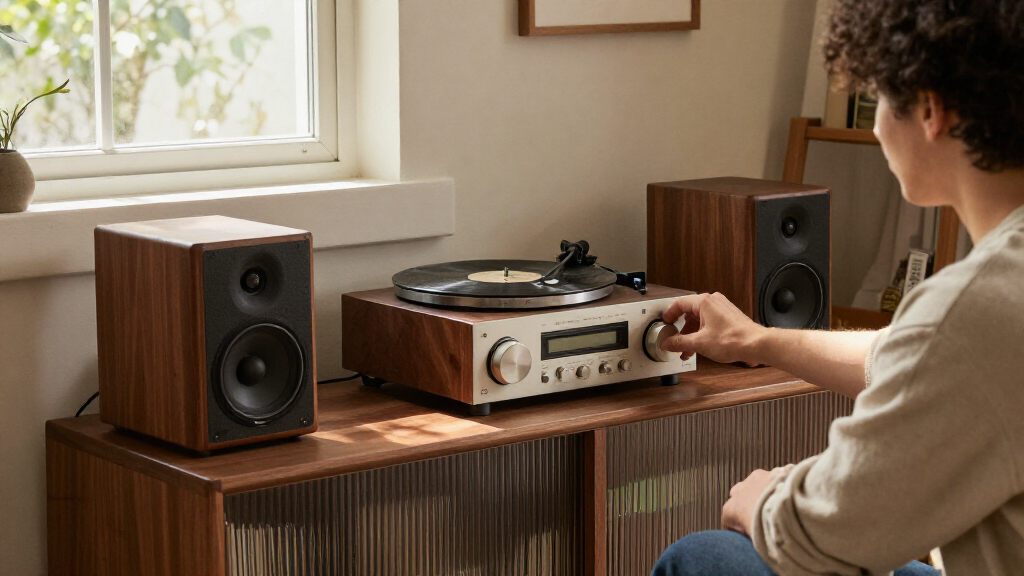
I compared these systems on how well their designs serve common home listening needs: movie immersion, clear dialogue, music playback, and the ability to fit a real living room. I weighed the speaker layout and whether the system uses separate components, wireless or detachable surrounds, or a soundbar-centered design. I also considered the practical side of ownership, including installation demands, connection flexibility, and how much control a buyer gets over future upgrades. Product names and channel counts alone were not treated as proof of performance.
The ranking favors systems with a clear balance of capability, usability, and flexibility. The Klipsch receiver-based package ranks highly for buyers who want a conventional theater foundation; the Bose Lifestyle Ultra and JBL Bar 800 place convenience and cohesive packages higher. More specialized or simpler systems rank below those picks when their layout, setup demands, or narrower use case makes them a better fit for a particular buyer than a broad recommendation. I flag tradeoffs so the ranking does not suggest that one format suits every room.
Factors to Consider When Choosing Best Home Sound Systems
Before choosing a model, decide what kind of system you can realistically place and connect in your home. The biggest differences are often not headline channel counts but installation, room layout, sources, and how much flexibility you want later.
Choose Between a Soundbar Package and a Receiver System
A soundbar package keeps the main speakers together and can reduce the amount of cable running across the room. Receiver systems separate the speakers, giving you more freedom to position them and often more options for sources or later changes. That flexibility only helps if you have room for the speakers and are comfortable routing cables. A common mistake is choosing a receiver bundle for its upgrade potential, then placing every speaker close to the TV because the room layout is awkward. If simplicity matters more than customization, a soundbar with included surrounds may be the better long-term fit. Pay more for a receiver-based setup when you will use its flexibility, not just because it has more separate components.
Match Surround and Height Effects to Your Room
Surround formats depend on speaker placement and room acoustics, so a 5.1.4 label cannot promise the same result in every space. Height effects may rely on speakers that aim sound upward, and low or angled ceilings can limit how well those effects reach the listening area. Rear speakers need positions behind or beside the main seats; putting them at the front can weaken the sense of envelopment. Measure the room and mark likely speaker positions before choosing a system with many channels. In an open-plan space, a well-placed simpler setup may sound more cohesive than a complex layout forced into poor positions. Treat channel count as a starting point, not a substitute for a placement plan.
Check Connections Against Your Actual Sources
List the devices you plan to connect, such as a game console, streaming box, disc player, and television, then check which component will handle each connection. A receiver can centralize several sources, while a soundbar package may rely more heavily on the TV’s available ports and audio return connection. Buyers can overlook this until they discover that a preferred device must be connected in a less convenient way. For gaming, verify the system’s supported video pass-through and refresh-rate needs rather than assuming every HDMI feature works across every input. Also check how music playback fits your routine, including whether you expect to stream directly or play audio through the TV. A connection list can prevent an expensive mismatch more effectively than comparing feature labels alone.
Plan for Dialogue, Bass, and Shared Listening
Movie impact is only one part of daily use; dialogue clarity and sensible volume control matter during ordinary viewing. A separate subwoofer can add weight to effects and music, but it also needs a suitable location and may bother other people in the home if bass is hard to contain. A center speaker or dialogue-focused controls can help speech stand out, though room reflections and listening position still affect clarity. If you watch late at night, check whether the system offers useful low-volume modes or independent adjustment of bass and surrounds. For a household with several listeners, favor a setup that stays balanced across more than one seat. Think about who shares the room before prioritizing maximum impact.
Decide How Much Setup and Future Change You Want
Wireless surrounds can reduce long cable runs, but wireless does not mean every speaker is free of power cords or placement limits. Detachable speakers add flexibility for temporary viewing arrangements, though they need a routine for charging or returning to their dock if the design calls for it. Receiver systems ask more of the owner during initial setup, but their separate components can make future adjustments more straightforward. Avoid paying extra for upgrade paths you do not expect to use, especially if the system will stay in one room with the same sources. On the other hand, buyers who regularly change their TV, game console, or speaker layout may value connections and component flexibility. Pick the amount of setup work you are willing to live with after installation day.
Use the Whole-System Fit, Not One Specification, to Judge Value
A bundle can look attractive on paper while including components you cannot place or features your room cannot use. Compare what is actually supplied—subwoofer, rear speakers, receiver, mounts, and required cables—before deciding which package gives you the right fit. A dedicated speaker system may offer more placement freedom but require extra stands or cable management, while a soundbar package can save space yet limit later changes. Do not equate a bigger channel number or larger product list with better value. The sensible choice is the system that covers your needs without leaving you to buy missing essentials or work around unused features. Include installation effort and room footprint in your value judgment.
Frequently Asked Questions
Should I choose a receiver-based system or a soundbar package for a living room?
Choose a receiver system if you have room for separate speakers, want flexible source connections, and are willing to plan speaker placement and cable routing. A soundbar package makes more sense when you want fewer components and a simpler installation, especially in a room where rear speaker positions are difficult. The Klipsch and Yamaha bundles represent the receiver route, while the Bose, JBL, Sony, and ULTIMEA options center on soundbar-style setups. Before buying, map where the speakers and subwoofer could go rather than judging only by the TV stand. The room layout should decide the format before the feature list does.
Do I need a system with Dolby Atmos for movies?
Atmos can add a sense of height to compatible movies, but it is not a requirement for enjoyable home theater sound. The effect depends on the system’s speaker design, content, ceiling shape, and placement, so a larger Atmos channel count may not help if the room cannot support it. A conventional 5.1 setup can be a better choice when you have clear positions for front, center, and rear speakers but limited ceiling or upward-reflecting conditions. Check whether the content you watch regularly includes Atmos sound and whether your TV or other source can pass it through. Choose the format for your room and habits, not as a label alone.
Are wireless rear speakers completely cable-free?
Usually, wireless refers to the audio signal rather than every part of the speaker installation. Rear units may still need power outlets, and some detachable designs have charging or docking routines. This can still reduce long speaker-wire runs across a room, but it does not remove the need to plan speaker positions and power access. Check the placement requirements for the exact system, especially if the sofa is far from a wall outlet. If you cannot power speakers near the listening area, a conventional receiver layout or a soundbar without separate rears may be easier to place.
Will a 5.1 system work well in an open-plan room?
It can, but open spaces make speaker placement and consistent surround effects harder because sound has fewer nearby walls to reflect from. Measure the distance between the TV, main seat, and likely rear speaker positions, then check whether those positions remain practical without blocking walkways. A soundbar-centered system may be easier to fit, while separate speakers can provide more direct placement control if the room allows it. Subwoofer placement also matters because bass can carry into adjoining spaces. If the listening area is very wide or asymmetrical, prioritize clear front sound and workable placement over a high channel count.
Which type of home sound system is easiest to expand later?
A receiver-based system generally gives buyers more freedom to change or add compatible components, though the exact limits depend on the receiver and included speakers. Soundbar packages are often more contained, and expansion may be limited to specific matching speakers or subwoofers. The Klipsch and Yamaha receiver bundles are the more natural starting points for people who expect to adjust a traditional speaker setup. Before choosing, identify what you might want to add and confirm compatibility rather than assuming every speaker can be mixed freely. If you plan to keep the system unchanged, paying extra for expandability may bring little benefit.
Conclusion
For the broadest home-theater foundation, I recommend the Klipsch Reference 5.2 with Onkyo TX-NR7100 as the best overall pick, provided you have space and are comfortable setting up separate speakers. The JBL Bar 800 is my best value-style choice for buyers who want surround effects with a less involved installation, while the Bose Lifestyle Ultra set is the best premium package for a cohesive soundbar-and-speaker arrangement. Beginners should look first at soundbar-centered systems such as the Sony BRAVIA Theater System 6 or JBL Bar 800, then confirm the rear-speaker and power requirements fit their room. For buyers who prioritize receiver flexibility, compare the Yamaha YHT-4970U and Klipsch bundles; for a compact setup or a specific channel layout, weigh the ULTIMEA and Sony options against your placement constraints. The right choice is the system whose speaker layout, connection needs, and setup demands suit your room—not simply the one with the biggest feature count.