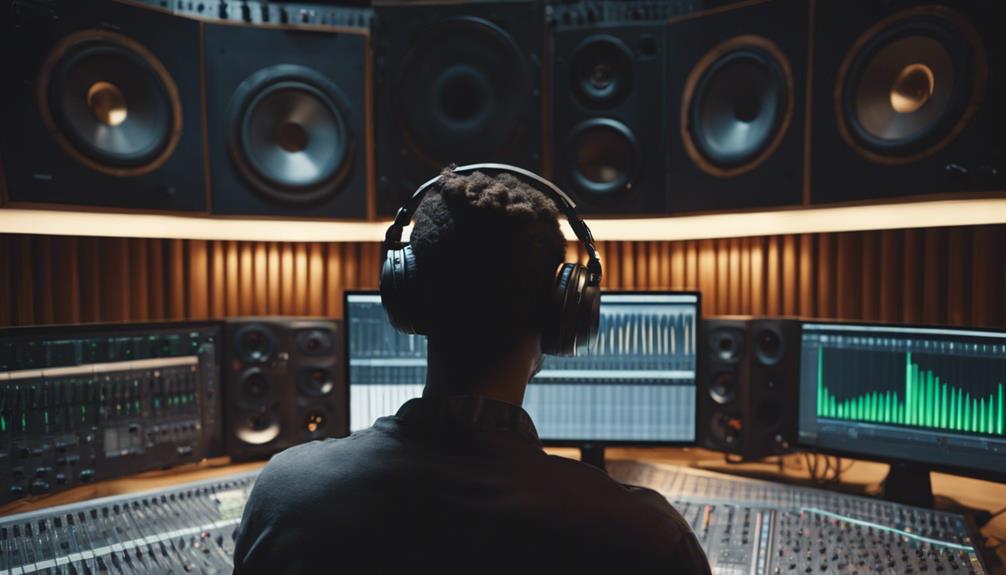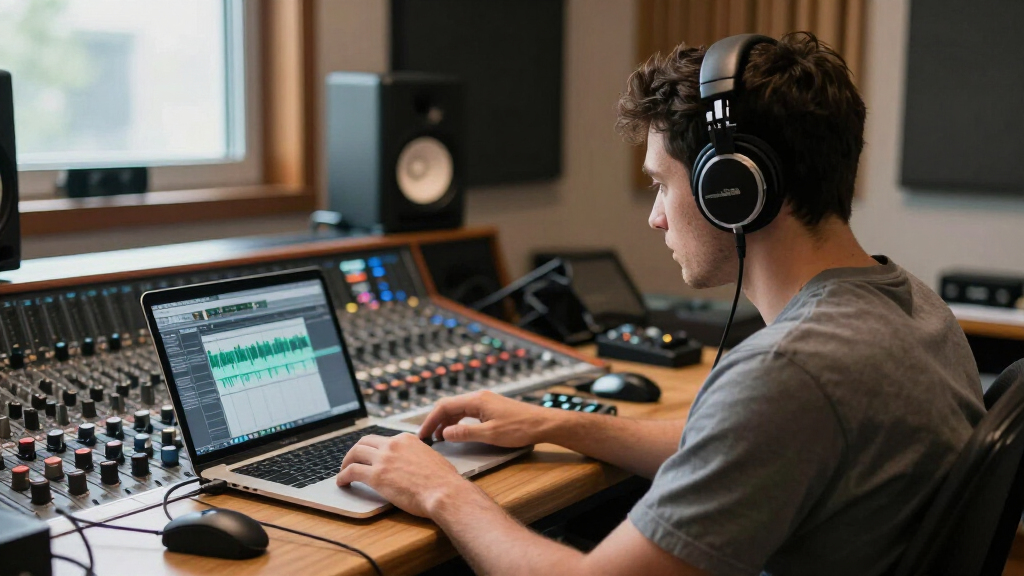
Closed-back studio headphones help contain sound during recording while limiting what leaks into a microphone. I rate the beyerdynamic DT 770 Pro X (48 Ohm) as the best overall choice here for its flexible everyday setup, while the Audio-Technica ATH-M40x stands out for a practical balance of monitoring features and portability, and the Sennheiser HD 280 Pro suits buyers who prioritize isolation. The main tradeoffs are fit and isolation versus long-session comfort, along with whether a headphone’s impedance suits your audio source. Read on for the full breakdown of all 15 options and guidance on choosing a pair for your recording setup.

Get audio and creator gear delivered free with Prime
- Fast, free delivery on millions of items
- Prime Video, Amazon Music and more included
- Member-only deals all year
Complete the kit


Key Takeaways
- The DT 770 Pro X (48 Ohm) ranks first because its lower impedance is easier to pair with a wider range of sources than the 80-ohm DT 770 models, while retaining the closed-back studio focus.
- ATH-M40x and ATH-M50x serve different priorities: the M40x is a sensible monitoring pick, while the M50x is better suited to buyers who want a more versatile, general-purpose pair.
- The HD 280 Pro puts isolation ahead of compactness. Its closed fit makes it a strong tracking candidate, though buyers should weigh clamp and long-session comfort.
- Several entries are close alternatives rather than distinct categories. The black and white ATH-M20x models are the same basic pick in different finishes, and the two listed DT 770 Pro 80-ohm options overlap heavily.
- Entry-level models make the most sense when the setup is simple. The ATH-M20x, TASCAM TH-02, and PreSonus HD5 can suit basic monitoring, while buyers with more demanding sessions may prefer the stronger feature sets higher in the ranking.




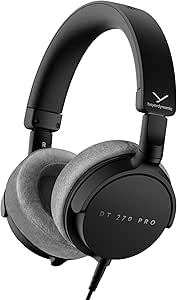

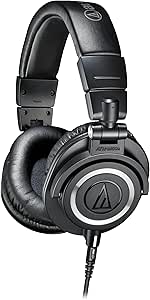


| closed-back studio headphone | Impedance | Driver size | Frequency response | Weight |
|---|---|---|---|---|
| beyerdynamic DT 770 Pro X | 48 ohms | 45 mm | 5 Hz–35,000 Hz | 10.8 oz |
| Audio-Technica ATH-M40x Profes | 35 ohms | 40 mm | 15 Hz–24 kHz | 0.24 kg |
| Sennheiser HD 280 Pro Headphon | 64 ohms | — | 8–25,000 Hz | 7.8 oz (220 g) |
| Audio-Technica ATH-M20x Profes | 47 ohms | 40 mm | — | 261 g |
| Sony MDR7506 Professional Larg | — | 40 mm | 10 Hz–20 kHz | 8 oz |
| FIFINE HD8 Wired Studio Monito | — | 50mm | — | 265g |
| PreSonus HD5 Professional Moni | 32 ohm | 50mm | — | 0.41kg |
| beyerdynamic DT 770 Pro Studio | 80 ohm | — | — | 9.5 ounces |
| Audio-Technica ATH-M20x Profes | 47 ohm | 40mm | 15–20,000Hz | — |
| beyerdynamic DT 270 Pro Closed | 45 ohm | — | 5Hz (range endpoint not provided) | 6.8 ounces |
| TASCAM TH-02 Professional Stud | 32 ohm | 50 mm | 18 Hz–22 kHz | — |
| Audio-Technica ATH-M50x Profes | 38 ohm | 45 mm | 20 Hz–28,000 Hz | — |
| OneOdio Wired DJ Over-Ear Head | 32 ohm | 50 mm | 40 kHz (as listed) | 415 g |
| Beyerdynamic DT 770 Pro | 80 ohm | — | 5 Hz–35,000 Hz | 9.5 ounces |
| Audio-Technica ATH-M30x Profes | 38 ohm | 40 mm | 20 Hz–20,000 Hz | — |
More Details on Our Top Picks
beyerdynamic DT 770 Pro X (48 Ohm), Closed-Back Studio Headphones, Black
The DT 770 Pro X is my strongest all-around pick for closed-back studio work because its 48-ohm impedance is suited to direct connection with common sources, while its stated noise isolation helps keep recording sessions focused. Compared with the Sennheiser HD 280 Pro, it has a detachable mini-XLR cable, making replacement easier if a cable wears out. The HD 280 Pro, by contrast, provides a stated noise-attenuation figure and a more compact folding design. The beyerdynamic pairs a 45 mm driver with velour pads, a combination aimed at monitoring comfort over longer sessions. Its tradeoffs are straightforward: it is wired only, and its studio-oriented presentation may be less appealing for casual listening. I would choose it for a flexible recording and mixing setup, not for wireless convenience or rugged outdoor use.
Pros:- 48-ohm impedance supports direct use with a range of sources without requiring a dedicated headphone amp in many setups.
- Noise isolation is suited to recording and monitoring around microphones.
- Detachable mini-XLR cable can be replaced rather than forcing a cable-related replacement of the headphones.
- Velour ear pads support comfort during longer listening sessions.
Cons:- Wired-only design offers no wireless listening option.
- Not water resistant, limiting suitability for use around moisture or outdoors.
- Studio-focused design may be less appealing for casual listening.
Best for: Home recordists and mixers who want closed-back isolation, a replaceable cable, and a headphone that can connect directly to many everyday audio sources.
Not ideal for: Listeners who need wireless use, water resistance, or a headphone mainly tuned and styled for casual everyday listening.
- Impedance:48 ohms
- Driver size:45 mm
- Frequency response:5 Hz–35,000 Hz
- Sensitivity:97 dB
- Cable:Detachable mini-XLR
- Ear pads:Velour
- Weight:10.8 oz
- Color:Black
Our verdict“Choose the DT 770 Pro X if you want a versatile closed-back studio headphone with a detachable cable and an impedance suited to common sources.”
Audio-Technica ATH-M40x Professional Studio Monitor Headphones, Black
The ATH-M40x earns its place for workflows where monitoring needs to be quick and adaptable: its swiveling earcups let a DJ or recording operator listen with one ear while keeping the other free. That makes it a more flexible cueing tool than the Sennheiser HD 280 Pro, whose stated strengths lean toward isolation and a folding design. Audio-Technica also supplies detachable cable options, so the connection can better suit a desk or booth setup. Its 35-ohm impedance is relatively easy to pair with many sources, though the product information notes an amplifier can help it perform at its best. The tradeoff is fit: comfort may vary during long sessions, and the supplied information does not list a carrying case. I’d pick it for active monitoring, rather than for buyers prioritizing plush long-wear comfort or travel accessories.
Pros:- Swiveling earcups make one-ear monitoring practical for DJ and recording workflows.
- Flat-tuning design is intended for accurate sound monitoring.
- Detachable coiled and straight cable options suit different studio layouts.
- Durable pro-grade construction is aimed at regular studio use.
Cons:- Comfort may vary during extended sessions.
- No carrying case is listed in the supplied product information.
- An amplifier may help achieve optimal performance, adding a potential component to the setup.
Best for: DJs, tracking engineers, and home-studio users who need swiveling earcups for one-ear cueing and want detachable cable options.
Not ideal for: Buyers who need a confirmed carrying case or whose priority is predictable comfort through very long monitoring sessions.
- Driver size:40 mm
- Impedance:35 ohms
- Frequency response:15 Hz–24 kHz
- Sensitivity:98 dB
- Weight:0.24 kg
- Cable:Detachable; coiled and straight options
- Color:Black
Our verdict“Pick the ATH-M40x if swiveling earcups and flexible cable choices matter more to your monitoring workflow than all-day comfort or included travel storage.”
Sennheiser HD 280 Pro Headphones, Black
The HD 280 Pro is the isolation-first choice here: its stated noise attenuation of up to 32 dB gives recording users a concrete reason to favor it when headphone spill is a concern. Compared with the beyerdynamic DT 770 Pro X, it also folds for easier transport and lists replaceable parts, but its 64-ohm impedance may be less convenient with some portable sources. Its linear sound reproduction and closed-back construction suit monitoring and critical listening, while the coiled cable can keep slack under control at a studio desk. The compromise is that the cable is not described as detachable in the same way as the DT 770 Pro X’s mini-XLR connection, and the wired design limits mobility. I’d choose the HD 280 Pro for controlled tracking and isolation, not for buyers who want the easiest direct-source pairing.
Pros:- Noise attenuation is specified at up to 32 dB, useful for reducing headphone spill during recording.
- Closed-back design and linear sound reproduction suit professional monitoring.
- Collapsible construction helps with storage and transport.
- Replaceable ear pads and other parts can extend service life.
Cons:- The 64-ohm impedance may require an amplifier with some devices.
- Wired connection limits mobility.
- The coiled cable is less convenient for listeners who prefer a light, straight cable.
Best for: Recording engineers and vocalists working near open microphones who prioritize stated noise attenuation and replaceable wear parts.
Not ideal for: Mobile listeners who want a particularly easy-to-drive headphone, wireless freedom, or the detachable mini-XLR cable offered by the DT 770 Pro X.
- Type:Closed-back, dynamic stereo headphones
- Frequency response:8–25,000 Hz
- Impedance:64 ohms
- Sound pressure level:102 dB (IEC 268-7)
- Total harmonic distortion:0.1%
- Weight:7.8 oz (220 g)
- Cable:Coiled, 3.3–9.8 ft
- Noise attenuation:Up to 32 dB
Our verdict“Choose the HD 280 Pro when isolation and replaceable parts matter more than easy portable-source pairing or a detachable mini-XLR cable.”
Audio-Technica ATH-M20x Professional Studio Monitor Headphones, White
The ATH-M20x is the straightforward pick for someone building a basic closed-back tracking setup and who wants a circumaural fit with stated sound isolation. Its 40 mm drivers and enhanced low-frequency emphasis make it a different proposition from the more monitoring-focused ATH-M40x: the M40x adds swiveling earcups and detachable cable options, while this model keeps the feature set simpler. That simplicity can suit a first studio station, but buyers should check the cable detail before ordering: the supplied description calls it detachable, while the specs list a wired 3.5 mm connection and a 9.8-foot cable without confirming detachment. The white finish also distinguishes it from the black ATH-M40x, though it does not change the core studio use. I’d choose it for basic tracking, not for advanced cueing or a feature-rich monitoring setup.
Pros:- Circumaural design and stated isolation suit tracking in louder environments.
- 40 mm drivers and enhanced low-frequency performance support monitoring with added bass presence.
- A 9.8-foot cable gives room to move around a recording desk.
- White color offers an alternative to the black ATH-M20x listed elsewhere in the roundup.
Cons:- Wired-only connectivity provides no wireless option.
- Basic feature set lacks advanced monitoring controls such as swiveling earcups.
- Cable detachability is unclear in the supplied specs, despite being mentioned in the description.
Best for: New home-studio users who need closed-back headphones for basic tracking and prefer a circumaural fit with a long cable.
Not ideal for: DJs and monitoring users who need swiveling earcups, or buyers who require clearly specified detachable-cable hardware and advanced controls.
- Driver size:40 mm
- Impedance:47 ohms
- Sensitivity:96 dB
- Cable length:9.8 ft
- Connectivity:Wired, 3.5 mm jack
- Weight:261 g
- Color:White
- Water resistance:Not water resistant
Our verdict“Choose the white ATH-M20x for simple wired tracking with a circumaural fit, but select the ATH-M40x if one-ear monitoring and clearly listed detachable cable options matter.”
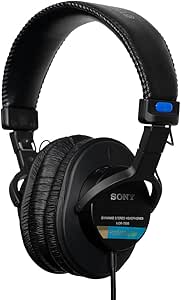
Sony MDR7506 Professional Large Diaphragm Headphones
The MDR7506 suits buyers who move between recording, broadcast, and production spaces and value a foldable closed-ear design with an included soft storage case. Its 8-ounce weight is lighter than the listed beyerdynamic DT 770 Pro X, though the Sony’s fixed cord gives up the cable replacement flexibility that makes the beyerdynamic appealing for long-term studio use. The 9.8-foot cord and included 1/4-inch and 1/8-inch adapters make it ready for different audio connections without relying on a detachable lead. A 40 mm driver and 10 Hz–20 kHz response describe the core monitoring hardware, but the provided specs do not state impedance or isolation attenuation, so buyers seeking those figures may prefer the more fully specified HD 280 Pro. Its main compromise is the non-detachable cord, which can complicate repair or storage.
Pros:- Foldable closed-ear construction is practical for transport and storage.
- At 8 ounces, it is lighter than the listed DT 770 Pro X.
- Includes 1/4-inch and 1/8-inch connector adapters for compatibility with different audio jacks.
- Soft storage case is included according to the supplied product information.
Cons:- Non-detachable cord is harder to replace if it is damaged.
- Wired-only connectivity limits mobility.
- Supplied specs do not state impedance or a quantified isolation figure.
Best for: Broadcast and studio workers who need foldable wired headphones, a long cord, included connector adapters, and a storage case.
Not ideal for: Buyers who want a replaceable cable, wireless listening, or stated isolation and impedance figures for matching a specific studio source.
- Driver size:40 mm
- Frequency response:10 Hz–20 kHz
- Cord length:9.8 ft
- Connector:Gold-plated 1/4-inch and 1/8-inch adapters included
- Design:Over-ear, foldable, closed-ear
- Weight:8 oz
- Connectivity:Wired
- Storage:Soft storage case included
Our verdict“Choose the MDR7506 for a foldable, adapter-equipped studio headphone with a storage case, but favor the DT 770 Pro X if a detachable cable is a priority.”
FIFINE HD8 Wired Studio Monitor Headphones with Detachable Cables
The FIFINE HD8 is a practical pick for home creators who want a closed-back headphone that can connect to more than one kind of studio output. Its detachable 3.5mm and 6.35mm coiled cables make switching between compatible devices easier than with the fixed cable on the Audio-Technica ATH-M20x. The 50mm drivers are described as delivering balanced sound with prominent bass, clear mids, and crisp treble, while the closed earcups provide passive isolation for recording and focused listening. At 265g, it is lighter than the listed PreSonus HD5, though its over-ear form is still more studio-oriented than compact. The tradeoff is a fully wired design and no active noise cancellation; buyers seeking a more established critical-monitoring option may prefer the beyerdynamic DT 770 Pro.
Pros:- Detachable coiled cables include 3.5mm and 6.35mm connections
- Closed-back design provides passive isolation for recording and focused listening
- 50mm drivers are described as balancing bass, mids, and treble
- 265g weight is lower than the listed PreSonus HD5
Cons:- No wireless connection or active noise cancellation
- Over-ear studio design is relatively bulky for portable use
Best for: Home recording musicians and creators who need detachable cables for switching between 3.5mm and 6.35mm studio connections.
Not ideal for: Commuters or anyone who needs wireless listening, active noise cancellation, or a compact headphone for everyday travel.
- Design:Over-ear, closed-back
- Driver size:50mm
- Frequency range:20Hz–20kHz
- Weight:265g
- Cable length:9.8ft
- Cable types:Detachable 3.5mm and 6.35mm coiled cables
- Isolation:Passive noise isolation
Our verdict“Choose the HD8 if you want a versatile wired studio pair with interchangeable connectors, but skip it if portability or wireless listening matters most.”
PreSonus HD5 Professional Monitoring Headphones – Wired, Closed-Back, Over-Ear Studio Headphones
The PreSonus HD5 suits recording sessions where a comfortable over-ear fit and a long lead matter more than easy packing. Its 10-foot cable gives a little more reach than the 9.8-foot leads on the FIFINE HD8 and Audio-Technica ATH-M20x, useful when a performer needs room to move near a recording setup. The 50mm drivers and stated 15Hz–25kHz range provide a broad monitoring specification, while the included 1/4-inch adapter helps connect it to common studio gear. Compared with the lighter HD8, however, the HD5 weighs 0.41kg, which may feel less appealing for long wear or travel. It also relies on a wired connection and has no active noise cancellation, and the supplied data does not establish build durability.
Pros:- 10-foot cable offers useful reach around a recording station
- Includes a 1/4-inch adapter alongside the 3.5mm connector
- 50mm drivers and a stated 15Hz–25kHz frequency range
- Closed-back over-ear design is suited to recording and monitoring
Cons:- At 0.41kg, it is heavier than the FIFINE HD8 listed here
- Wired-only design limits movement away from the audio source
- Durability details are not specified in the supplied product data
Best for: Vocalists, podcasters, and home-studio users who want a long cable and an included 1/4-inch adapter for stationary recording setups.
Not ideal for: Mobile listeners or people prioritizing a lighter pair for extended wear, since the listed weight is 0.41kg and the cable is fixed.
- Design:Over-ear, closed-back
- Driver size:50mm
- Impedance:32 ohm
- Frequency range:15Hz–25kHz
- Cable length:10 feet
- Connector:3.5mm jack with included 1/4-inch adapter
- Weight:0.41kg
Our verdict“The HD5 is a sensible fit for stationary recording sessions that benefit from its long cable and adapter, but not for buyers focused on low weight or portability.”
beyerdynamic DT 770 Pro Studio Headphones (80 Ohm, Black)
The beyerdynamic DT 770 Pro (80 Ohm) is the most studio-focused choice in this group for buyers prioritizing critical monitoring, recording, and a repairable design. Its replaceable parts and durable construction give it a stronger long-term studio case than the PreSonus HD5, whose durability details are not specified. Velour ear pads and a 3-meter cable support extended sessions at a desk, while the included 1/4-inch adapter serves common studio connections. The tradeoff is the 80-ohm impedance: output level and performance depend on the connected interface or headphone output, so it is less straightforward for weak portable sources than the 32-ohm HD5. It is also bulky and wired, making it a less convenient everyday carry than a smaller listening-focused option.
Pros:- Closed-back design is intended for critical monitoring, mixing, and recording
- Replaceable parts support longer-term studio ownership
- Velour ear pads are suited to extended listening sessions
- 3-meter cable and included 1/4-inch adapter fit studio setups
Cons:- 80-ohm impedance may be less suitable for weaker headphone outputs than the PreSonus HD5 at 32 ohms
- Bulky build and long cable are inconvenient for portable use
Best for: Recording engineers and musicians using a capable interface or headphone output who want a durable closed-back monitor with replaceable parts.
Not ideal for: Listeners using low-powered portable devices or buyers who need compact, lightweight headphones for travel.
- Design:Closed-back, over-ear
- Impedance:80 ohm
- Cable length:3m (9.8ft)
- Connector:3.5mm with gold-plated 1/4-inch adapter
- Weight:9.5 ounces
- Ear pad material:Velour
- Color:Black
Our verdict“Pick the DT 770 Pro if your studio source can drive its 80-ohm load and you value durable monitoring gear over portability.”
Audio-Technica ATH-M20x Professional Studio Monitor Headphones, Black
The Audio-Technica ATH-M20x is a direct, no-frills option for closed-back tracking, especially when isolation and a familiar wired setup matter more than removable cables. Its 40mm drivers and stated enhanced low-frequency performance suit monitoring where a solid bass foundation helps keep track of the source. The product data also highlights isolation for loud environments, giving it a clearer tracking role than the more connection-flexible FIFINE HD8, which includes detachable 3.5mm and 6.35mm cables. The M20x instead has a fixed 9.8-foot cable, so replacing or changing the lead is less convenient. Its 47-ohm impedance may also be less plug-and-play with some low-output devices than the 32-ohm PreSonus HD5. It forgoes wireless features and active noise cancellation, keeping the focus on wired studio work.
Pros:- Closed-back design and stated isolation suit tracking in louder environments
- 40mm drivers have enhanced low-frequency performance
- 9.8-foot cable provides room to work near a recording setup
- Over-ear fit is intended for extended monitoring sessions
Cons:- Fixed cable is less adaptable than the detachable cables on the FIFINE HD8
- 47-ohm impedance may not be as easy to drive from some low-output devices as the PreSonus HD5
- No Bluetooth or active noise cancellation
Best for: Beginner recording artists and home-studio users who need a closed-back wired headphone with isolation for tracking in a noisy room.
Not ideal for: Buyers who need a detachable cable, wireless use, or the easier low-impedance pairing listed for the PreSonus HD5.
- Design:Closed-back, over-ear
- Driver size:40mm
- Impedance:47 ohm
- Frequency response:15–20,000Hz
- Sensitivity:96dB
- Cable length:9.8ft / 2.99m
- Enclosure materials:Copper-clad aluminum, neodymium, and plastic
Our verdict“Choose the ATH-M20x for straightforward wired tracking and isolation, but favor the HD8 if interchangeable cables are a priority.”
beyerdynamic DT 270 Pro Closed-Back Wired Studio Headphones, Black
At a listed 6.8 ounces, the beyerdynamic DT 270 Pro stands apart from the heavier PreSonus HD5 for home recording or podcast sessions where a lighter headset is appealing. Its closed-back isolation and stated zero-latency monitoring target recording tasks, while soft ear pads are intended to support longer sessions. The 3-meter cable gives a similar working reach to the DT 770 Pro, but the DT 270 Pro’s 45-ohm impedance sits below that model’s 80 ohms, making the listed electrical load less demanding on paper. The supplied data names a balanced-armature driver, an uncommon detail for this type of studio headphone, but offers no driver size or complete frequency range for judging its sound character. It remains wired, and its specs do not establish outdoor protection.
Pros:- Listed weight of 6.8 ounces is lower than the PreSonus HD5 at 0.41kg
- Closed-back isolation and stated zero-latency monitoring suit recording
- 3-meter cable provides reach around a home studio
- 45-ohm impedance is lower than the DT 770 Pro’s listed 80 ohms
Cons:- Supplied specs list a 5Hz frequency response without a range endpoint
- Balanced-armature driver type is specified, but no driver size is provided
- Wired connection limits movement and the product is not water resistant
Best for: Home podcasters and musicians who want a lightweight closed-back wired headphone for stationary recording and monitoring.
Not ideal for: Buyers seeking a fully documented sound specification, wireless freedom, or headphones for outdoor use.
- Design:Closed-back
- Impedance:45 ohm
- Frequency response:5Hz (range endpoint not provided)
- Sensitivity:96dB
- Driver type:Balanced armature
- Connectivity:3.5mm jack and 1/4-inch audio input
- Cable length:3 meters
- Weight:6.8 ounces
Our verdict“The DT 270 Pro fits home recordists seeking a lightweight wired monitoring option, but buyers who need detailed sound specifications should compare alternatives such as the HD5.”
TASCAM TH-02 Professional Studio Monitor Headphones, Wired, Over Ear, Black
The TASCAM TH-02 is a straightforward closed-back option for new home-recording setups that need a foldable pair for tracking and occasional travel. Its 50 mm drivers and described bass-forward, clear presentation suit cueing and general listening, while the included 1/4-inch adapter helps it connect to common studio gear. Unlike the Beyerdynamic DT 770 Pro (80 Ohm), it is specified at 32 ohms, making it a less demanding match for everyday headphone outputs. The tradeoff is a more basic plastic build, and its sound description gives less reason to choose it for critical mix decisions than for monitoring and practice. It also lacks the detachable cable listed for the Audio-Technica ATH-M50x, so cable damage is harder to address. Pick it for simple, packable wired use, not a tougher long-term studio workhorse.
Pros:- Closed-back over-ear design suits recording and cue monitoring.
- Foldable construction is convenient for storage and transport.
- 32-ohm impedance works with many everyday headphone outputs.
- Includes a 1/4-inch adapter for connecting to studio equipment.
Cons:- Plastic construction may be less durable than the ATH-M50x’s more robust build.
- Cable is not described as detachable, limiting repair options if it fails.
- Bass-rich sound may be less suitable for dependable mix balancing.
Best for: New podcasters, home musicians, and DJs who want foldable closed-back headphones for basic tracking and monitoring.
Not ideal for: Frequent studio users who need a more durable build, a replaceable cable, or headphones intended for critical mix judgments.
- Design:Closed-back, over-ear
- Driver size:50 mm
- Impedance:32 ohm
- Frequency response:18 Hz–22 kHz
- Sensitivity:98 dB
- Connectivity:Wired, 3.5 mm jack
- Foldable:Yes
- Material:Plastic
Our verdict“Choose the TH-02 for basic wired tracking and portability, but step up to the ATH-M50x or DT 770 Pro for more demanding studio use.”
Audio-Technica ATH-M50x Professional Studio Monitor Headphones, Black
The Audio-Technica ATH-M50x earns its place as the most flexible all-rounder in this group: its sound-isolating closed-back fit, 90-degree swiveling earcups, and detachable cable support both two-ear tracking and one-ear DJ monitoring. Its 45 mm dynamic drivers and stated deep, accurate bass make it a stronger fit for varied studio tasks than the more basic TASCAM TH-02, while its 38-ohm impedance is less demanding than the Beyerdynamic DT 770 Pro (80 Ohm). The detachable cable also gives it a practical maintenance advantage over models with a fixed connection. The tradeoff is that the supplied details do not specify a foldable design, and it remains a wired, non-water-resistant studio headphone rather than an outdoor option. Choose it when one pair needs to cover tracking, editing, and DJ work.
Pros:- 90-degree swiveling earcups support one-ear monitoring.
- Detachable cable is easier to replace than a fixed cable.
- Sound-isolating over-ear design helps limit distractions during tracking.
- 38-ohm impedance is less demanding than the DT 770 Pro’s 80-ohm version.
Cons:- Wired-only connectivity restricts movement away from the source.
- Not water resistant, so it is not suited to wet or outdoor use.
- Foldability is not specified, limiting confidence in its compactness for travel.
Best for: Musicians, editors, and DJs who want one closed-back wired headphone for studio tracking, listening, and one-ear monitoring.
Not ideal for: Buyers who need water resistance, wireless listening, or a headphone explicitly suited to compact folding and travel.
- Design:Over-ear professional studio monitor
- Driver type:Dynamic
- Driver size:45 mm
- Frequency response:20 Hz–28,000 Hz
- Impedance:38 ohm
- Sensitivity:99 dB
- Earcup swivel:90 degrees
- Cable:Detachable
Our verdict“Pick the ATH-M50x if you need adaptable closed-back monitoring with one-ear capability and a replaceable cable.”
OneOdio Wired DJ Over-Ear Headphones for PC, Keyboard, Guitar – Black
The OneOdio wired DJ headphones put practical connection options and shared listening ahead of a compact studio footprint. Their 50 mm drivers are described as delivering powerful bass, clear vocals, and crisp highs, and the dual 3.5 mm and 6.35 mm jacks make them convenient across compatible audio sources. A shared audio port is a distinctive extra for collaborators who want to listen together. Compared with the Audio-Technica ATH-M50x, this model is heavier at 415 g, does not fold, and its cable is not described as detachable; that makes it a less adaptable choice for travel or frequent studio handling. The stated frequency response is listed as 40 kHz, without a lower endpoint, so the supplied data offers less guidance for judging full-range monitoring. Choose it for DJ-style use and easy sharing, not a lightweight mixing setup.
Pros:- Dual 3.5 mm and 6.35 mm jacks suit a range of audio connections.
- Shared audio port supports listening with another person.
- 50 mm drivers are described as delivering strong bass and clear vocals.
- Padded cushions and adjustable headband support extended wear.
Cons:- At 415 g, it is heavier than the ATH-M50x listed in this roundup.
- Non-folding design takes up more room in a bag or studio drawer.
- Wired-only use and a reported short cable can limit movement.
Best for: DJs, keyboard players, and collaborators who want wired over-ear headphones with both 3.5 mm and 6.35 mm connections and a shared audio port.
Not ideal for: Mobile producers or long-session users who prioritize a lighter, foldable design or clearly specified full-range frequency response.
- Design:Over-ear
- Driver size:50 mm
- Impedance:32 ohm
- Frequency response:40 kHz (as listed)
- Sensitivity:110 dB
- Connectivity:Dual 3.5 mm and 6.35 mm jacks
- Weight:415 g
- Foldable:No
Our verdict“Choose the OneOdio for DJ work and shared wired listening, but favor the ATH-M50x for a more portable, studio-flexible setup.”
Beyerdynamic DT 770 Pro (80 Ohm) Closed-Back Studio Headphones, Black
The Beyerdynamic DT 770 Pro (80 Ohm) is the studio-focused choice here, pairing a closed-back design and passive isolation with velour ear pads and a spring-steel headband. Its stated 5 Hz–35,000 Hz frequency response gives a wider listed range than the ATH-M50x, while the comfortable materials and 3-meter cable suit a fixed recording or mixing position. Compared with the 32-ohm TASCAM TH-02, its 80-ohm impedance is more likely to benefit from a capable interface or headphone amp; the product data explicitly recommends one for optimal performance. That makes it less convenient for casual, low-powered sources. It is also wired and less portable than a foldable option such as the TH-02. Pick the DT 770 Pro when isolation and a durable studio fit matter more than easy carry or broad device compatibility.
Pros:- Closed-back design and passive isolation suit recording and monitoring.
- Velour ear pads and spring-steel headband are built for extended studio wear.
- Long 3-meter cable provides reach around a fixed studio setup.
- Wide stated frequency-response range suits detailed monitoring.
Cons:- 80-ohm impedance may call for an audio interface or headphone amp.
- Fixed wired use limits mobility compared with wireless headphones.
- Less suited to casual portable listening than lower-impedance, foldable options.
Best for: Recording engineers and musicians working from an audio interface or headphone amp who need closed-back isolation and comfortable long-session monitoring.
Not ideal for: Phone-first listeners, travelers, and producers without a suitable headphone output who want a portable, easy-to-drive pair.
- Design:Closed-back, over-ear
- Driver type:Dynamic
- Impedance:80 ohm
- Frequency response:5 Hz–35,000 Hz
- Sensitivity:96 dB
- Cable length:3 meters
- Connector:3.5 mm with 6.35 mm adapter
- Weight:9.5 ounces
Our verdict“Choose the DT 770 Pro for a dedicated studio station with a suitable headphone output, not for easy portable listening.”
Audio-Technica ATH-M30x Professional Studio Monitor Headphones, Black
The Audio-Technica ATH-M30x is the focused tracking pick for listeners who want a closed-back fit, passive isolation, and clearly described midrange detail without stepping up to the more feature-rich ATH-M50x. Its collapsible design makes it easier to pack than the non-folding OneOdio, while the stated 38-ohm impedance should be a manageable match for many common headphone outputs. The product description points to tracking and mixing, but its 20 Hz–20,000 Hz listed response and midrange emphasis make its appeal more specific than the DT 770 Pro’s broader stated range. It also lacks the ATH-M50x’s listed 90-degree earcup swivel and detachable cable, so DJs and users who want cable replacement options should compare those models first. Choose the M30x for portable tracking and vocal-focused work rather than maximum flexibility.
Pros:- Passive isolation helps reduce outside sound during tracking.
- Collapsible design is more travel-friendly than the non-folding OneOdio.
- Midrange clarity suits vocal and instrument monitoring.
- 38-ohm impedance works with many common audio outputs.
Cons:- No active noise cancellation; isolation is passive only.
- No detachable cable or swiveling earcups are listed, unlike the ATH-M50x.
- 20 Hz–20,000 Hz stated response is narrower than the DT 770 Pro’s listed range.
Best for: Home-recording musicians and vocal-focused editors who need foldable, closed-back headphones for tracking in noisy rooms.
Not ideal for: DJs who need swiveling earcups, or studio owners who prioritize a detachable cable and broader monitoring flexibility.
- Design:Over-ear, closed-back studio monitor
- Driver size:40 mm
- Impedance:38 ohm
- Frequency response:20 Hz–20,000 Hz
- Sensitivity:100 dB
- Noise control:Passive noise cancellation
- Design feature:Collapsible
Our verdict“Pick the ATH-M30x for foldable, midrange-focused tracking, but choose the ATH-M50x if you need more monitoring flexibility.”

How We Picked
I ranked these closed-back studio headphones around the decisions that affect recording and monitoring: how well the enclosed design supports tracking, how easily each model can work with common audio sources, and whether its construction and practical features suit regular studio use. I also weighed comfort, portability, cable arrangements, and the usefulness of each model beyond a single task. Claims about sound character were not treated as a substitute for these practical distinctions.
The order favors models that combine usable monitoring features with fewer setup constraints, then separates picks aimed at isolation, portability, or straightforward entry-level use. Duplicate or near-duplicate listings do not earn separate roles merely for a different color or listing name: the ATH-M20x finishes and DT 770 Pro 80-ohm versions are treated as closely related choices. Lower-ranked options remain relevant for specific needs, but offer fewer reasons to choose them over a higher-ranked alternative for general studio work.
Factors to Consider When Choosing Closed-back Studio Headphones
Choosing studio headphones is less about chasing a single universally correct sound and more about matching the headphones to your recording chain and work habits. These broader checks can help prevent a mismatch that product features alone do not reveal.
Match Impedance to Your Headphone Output
Impedance affects how easily a source can drive headphones, but it is not a quality score. A model with a higher impedance may need more output power to reach a comfortable listening level, especially from a modest interface, laptop, or portable recorder. Check your source’s headphone-output guidance rather than assuming any studio label means universal compatibility. A lower-impedance option such as the DT 770 Pro X 48 Ohm is generally easier to pair across varied setups than the 80-ohm DT 770 models. Avoid compensating for a weak output by turning the level up until the sound becomes harsh or distorted. If you plan to use one pair across several devices, flexibility can matter more than a small difference in specification.
Choose Isolation for the Recording Situation
Closed-back construction helps reduce headphone spill reaching a microphone, but isolation differs with fit, pads, and how well the cups seal. Vocalists and acoustic performers often need more containment than someone editing at a desk in a quiet room. Glasses, hair, and head shape can create small gaps that reduce isolation, so a model that seals well on one person may not work the same way for another. Stronger isolation can also make some listeners feel warmer or more enclosed over long sessions. Do not equate maximum isolation with the best choice for every task: comfort and awareness of the room may matter more during extended editing. Prioritize the recording environment, not the category label alone.
Treat Comfort as a Session-Length Requirement
Fit becomes a performance issue during long sessions, since pressure or heat can distract you and lead to frequent breaks. Pay attention to clamp force, ear-cup depth, headband padding, and whether the pads can be replaced when they wear down. A snug seal can help tracking, but a tighter fit is not automatically better if you need to wear the headphones for hours. If possible, check the return policy and try the fit with glasses or other everyday accessories. Buyers who work in short recording passes may accept a firmer fit than people who mix or edit for a full day. Comfort is personal, so published specifications cannot settle this choice on their own.
Decide Whether Portability or Durability Matters More
Foldable designs and detachable cables can make headphones easier to carry, store, or service, but each feature is useful only if it fits your routine. A detachable cable can be replaced if it fails, while a fixed cable keeps the connection simple and avoids a removable connector. Folding hinges reduce storage space but introduce moving parts that deserve careful handling. For a home studio, a sturdy, comfortable fit may matter more than a compact case-ready shape. For mobile recording, cable replacement and easy storage may prevent small failures from interrupting a session. Consider how the headphones will be transported and maintained before paying extra for convenience features.
Separate Tracking Headphones from Mixing Decisions
Closed-back headphones are especially useful for tracking, but they should not automatically become your only reference for every mix decision. The enclosed fit can alter how spacious or bass-heavy music seems compared with speakers or other headphones, and that perception varies by model and listener. Use familiar reference tracks and check important choices on more than one playback system when possible. Do not confuse a lively listening presentation with dependable monitoring; comfort and isolation can be valuable even when a headphone is not your final mix authority. If recording is the main task, prioritize spill control and a reliable fit. If editing and mix checks dominate, consider how easily you can cross-check your decisions.
Spend More for a Clear Need, Not a Bigger Model Number
Paying more makes sense when it solves a recurring limitation, such as a poor fit, an unsuitable cable, or difficulty driving a headphone from your equipment. A higher-tier model is not automatically better for a beginner who needs a dependable pair for occasional tracking. At the same time, repeated use can justify investing in replaceable parts, more versatile connectivity, or a build suited to frequent handling. Compare the full setup cost too: a headphone that needs a more capable output may add expense beyond the headset itself. With near-duplicate listings, such as the ATH-M20x finishes and DT 770 Pro 80-ohm entries, choose based on the actual model and seller details rather than treating the listing as a different performance tier. Spend according to the work you do most.
Frequently Asked Questions
Will an 80-ohm DT 770 Pro work with my laptop or audio interface?
It depends on the strength of the headphone output, not only on whether the device has a headphone jack. Some laptops and interfaces can drive an 80-ohm model to a useful level, while others may sound too quiet or lose headroom. Check the output specifications for your exact device and leave room for peaks rather than running the volume at its limit. If you move between several modest sources, the 48-ohm DT 770 Pro X is the more flexible DT 770-family option in this roundup. If your interface has a capable headphone amp, the 80-ohm versions may still fit your setup.
Should I choose the ATH-M40x or ATH-M50x for home recording?
Choose according to how you will use the headphones outside recording, as well as your monitoring preferences. The ATH-M40x is the more direct fit for buyers seeking a practical studio-monitoring option without moving up to the M50x’s broader general-purpose appeal. The M50x makes more sense if you also want a pair for everyday listening and varied production tasks. Neither choice removes the need to check fit, isolation, and how the headphones work with your audio source. If your sessions are mostly basic tracking, compare the M40x against lower-cost, simpler options before paying for extra versatility.
Are closed-back headphones better than open-back headphones for recording vocals?
Closed-back headphones are usually the safer starting point for vocal tracking because they help limit playback leaking into the microphone. Open-back designs allow more sound to escape, which can be a problem when a sensitive mic is close to the performer. The tradeoff is that a closed fit may feel warmer or more confined during a long take. For mixing in a quiet room, open-back headphones can be useful as a separate reference, but they are not a replacement for spill control during recording. Choose based on the microphone setup and session task rather than treating one design as better for every studio job.
Is the ATH-M20x in white different from the black version?
The color listing does not make the ATH-M20x a separate performance tier. Both entries refer to the same basic model, so the decision is about finish, availability, and confirming that the listing matches the intended product. Do not read the white version’s separate place in a roundup as evidence of different monitoring capabilities. Compare the model name and included accessories carefully if product pages show different package details. If you want a meaningful feature step rather than a color change, compare the M20x with the M30x or M40x instead.
Do I need detachable cables for studio headphones?
A detachable cable is most useful when the cable is likely to wear out or need replacement, such as in a shared studio or a mobile recording kit. It can also make storage easier if the cable can be removed, though the connector becomes another part to handle and maintain. A fixed cable keeps the setup straightforward and can be perfectly suitable for a stationary home studio. Before choosing, check whether replacement cables are available and whether the connector is compatible with your preferred cable length and adapter. Do not pay extra for detachability unless it solves a real maintenance or workflow problem for you.
Conclusion
For the broadest mix of studio use and source compatibility, my best overall pick is the beyerdynamic DT 770 Pro X (48 Ohm). The Audio-Technica ATH-M40x is my best value-style choice for practical monitoring features, while the ATH-M50x is the best premium-leaning option for buyers who want a more versatile pair beyond tracking. Beginners with a simple setup should start by comparing the ATH-M20x or PreSonus HD5 and checking fit before spending more. For isolation-focused recording, look closely at the Sennheiser HD 280 Pro; for easier pairing with modest sources, favor the 48-ohm DT 770 Pro X over the 80-ohm DT 770 listings. If you already own an ATH-M20x or DT 770 Pro 80 Ohm, remember that the matching duplicate listing in this roundup is not a distinct upgrade.
Halloween Picks
halloween
As an affiliate, we earn on qualifying purchases.