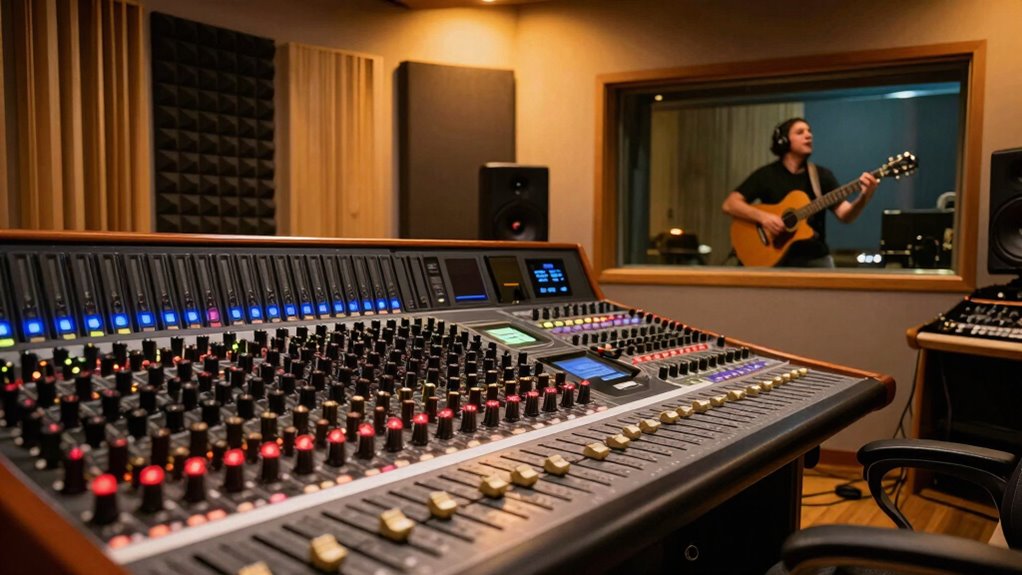

To keep your productions cohesive, focus on balancing ambient layers, tonal qualities, and dynamic range. Choose sounds that support the scene’s emotional tone and interact well together without causing clutter. Properly managing volume levels ensures important elements stand out while background sounds remain subtle. Pay attention to frequency and tonal balance to create a unified sonic palette. Mastering these principles will help your project feel polished and immersive—if you want more insights, keep exploring these key sound selection techniques.
Key Takeaways
- Prioritize ambient sounds that complement the main elements’ tonal and frequency qualities for a unified sonic palette.
- Balance dynamic range to maintain consistency and prevent jarring shifts in loudness throughout the scene.
- Select sounds that support the emotional and narrative intent, ensuring effective interaction within the scene.
- Use layered ambient textures to enhance immersion without cluttering the mix or masking key sounds.
- Employ technique-driven sound design to create contrast, movement, and evolution that keep the production engaging.

Choosing the right sound is fundamental to creating an effective audio experience, whether you’re designing a game, editing a film, or setting up a concert. One of the most important rules to keep your production cohesive is understanding how to select sounds that complement each other without overwhelming the listener. Ambient layering plays an essential role here. When you add multiple layers of subtle sounds—such as distant city noises, gentle wind, or soft environmental textures—you create a richer, more immersive environment. However, it’s critical to balance these layers carefully. Too many competing ambient sounds can muddy the mix, while too few might leave it feeling empty. Your goal is to create a seamless background that enhances the main elements without distracting from them.
Alongside ambient layering, managing the dynamic range of your sounds is key. Dynamic range refers to the difference between the quietest and loudest parts of your audio. If you don’t control this aspect well, your production can feel inconsistent—either too jarring or too dull. You need to decide what sounds should be prominent and what should stay in the background. For example, during a tense scene, you might emphasize a whisper or subtle ambient sounds to heighten intimacy, while louder effects or music build up during action sequences. By carefully adjusting the dynamic range, you guarantee that each sound fits within the overall narrative and emotional tone. Understanding soundscape and its impact on listener perception is crucial for crafting immersive audio environments. Recognizing how different sounds interact within a scene’s context helps in selecting elements that support the story and emotional intent. A thoughtful sound interaction can significantly enhance the overall cohesiveness of your production.
Controlling dynamic range ensures clarity, emotional impact, and consistency in your soundscape.
When you’re selecting sounds, think about how they interact within the scene’s context. Aim for cohesion by choosing sounds that share similar tonal qualities or frequencies. For instance, if your main elements are warm and rounded, select ambient sounds that complement this warmth, avoiding harsh or discordant textures. This creates a unified sonic palette that feels intentional. Additionally, consider how sounds will evolve over time. Dynamic range isn’t just about volume; it’s about the movement and contrast within your audio. Effective use of this concept keeps the listener engaged and prevents your mix from becoming monotonous. Incorporating sound design techniques can further refine how individual elements interact and evolve, ensuring a cohesive overall experience. Paying attention to frequency balance can also help maintain clarity and prevent masking of important sounds.
As an affiliate, we earn on qualifying purchases.
Frequently Asked Questions
How Do I Develop My Own Sound Selection Intuition?
To develop your own sound selection intuition, trust your personal taste and explore different genres to expand your palate. Listen actively to various productions, analyze what appeals to you, and identify patterns that resonate with your style. Experiment with new sounds and techniques, and don’t be afraid to take risks. Over time, your instincts will sharpen, helping you choose sounds that feel authentic and suited to your creative vision.
Can the Sound Selection Rule Apply to All Music Genres?
Yes, the sound selection rule can apply across all genres, but you’ll find that genre-specific techniques and cultural influences shape how you choose sounds. For example, hip-hop might prioritize rhythmic samples, while classical emphasizes orchestral textures. By understanding these nuances, you can adapt the rule to fit any style, ensuring your music remains cohesive while honoring its unique cultural roots and genre conventions.
What Are Common Mistakes When Applying the Sound Selection Rule?
When applying the sound selection rule, common mistakes include sacrificing sound consistency for genre flexibility or vice versa. You might choose sounds that clash, disrupting the overall flow, or stick too rigidly to a genre’s typical sounds, limiting creativity. To avoid this, balance genre expectations with your unique style, ensuring your sounds complement each other while maintaining the desired vibe. This approach keeps your production cohesive yet flexible across genres.
How Does Technology Influence Sound Selection Decisions?
Technology profoundly influences your sound selection decisions through digital tools that streamline editing, mixing, and analysis. These tools enhance your auditory perception by offering precise control over sound elements, making it easier to identify and match tones, textures, and qualities. With advanced software, you can experiment more freely, ensuring cohesive and polished productions. Ultimately, technology empowers you to make more informed, efficient choices that align with your creative vision.
Is There a Psychological Basis for the Sound Selection Rule?
You bet there’s a psychological basis. Our brains are wired to respond to psychoacoustic effects, which influence how we perceive sound. When sound choices align with neural responses, they create a sense of harmony and cohesion. This instinctively keeps productions feeling unified, like two peas in a pod. So, your subconscious plays a big role in sound selection, ensuring the audience stays engaged and connected to the overall experience.
Conclusion
Mastering the sound selection rule isn’t just a good idea—it’s the secret weapon that transforms your productions from ordinary to legendary. When you carefully choose sounds that harmonize perfectly, you wield the power to captivate audiences and command attention like a maestro. Ignore this rule, and your work risks falling into oblivion. Embrace it with unwavering precision, and you’ll create sonic masterpieces so cohesive, they’ll resonate through eternity, leaving an indelible mark on every listener’s soul.