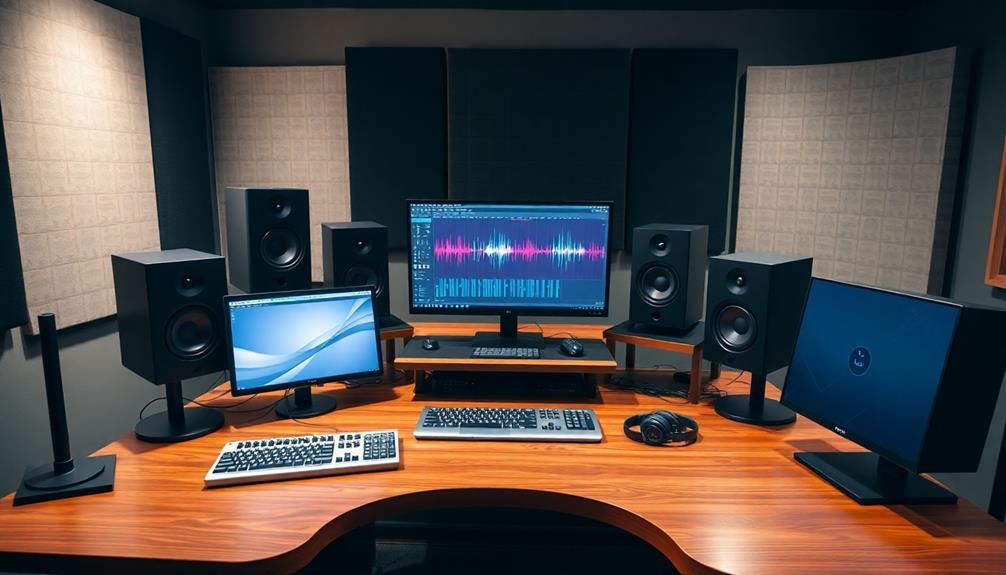

You should prioritize redundancy over fancy gear because it guarantees your stage performance can handle unexpected issues like technical glitches or equipment failures. Backup vocals, extra instruments, and emergency protocols act as safety nets, keeping your show on track even when things go wrong. Relying solely on high-tech equipment increases the risk of disruption, but good backup plans boost reliability and professionalism. Keep exploring—there’s more to know about how redundancy keeps performances smooth.
Key Takeaways
- Redundancy ensures performance continuity despite technical failures or unexpected issues during live shows.
- Backup systems like spare instruments and microphones prevent disruptions and maintain audience engagement.
- Prioritizing safety measures over flashy equipment enhances reliability and professionalism on stage.
- Redundancy creates a safety margin that minimizes risks and ensures consistent performance quality.
- Focusing on stability through backup plans is more crucial than relying solely on high-end, but fallible, gear.
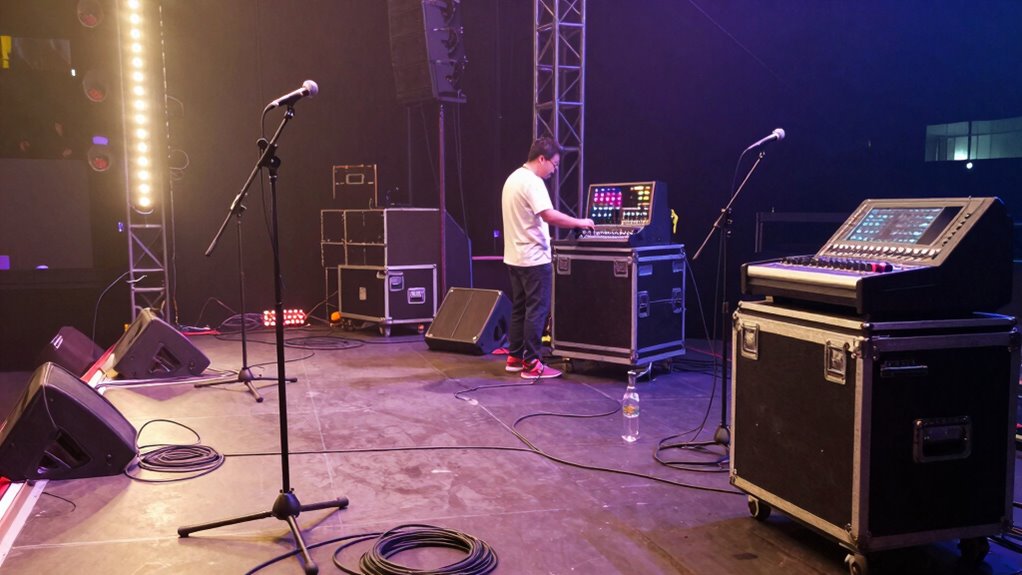
Have you ever noticed how performers sometimes repeat lines or actions on stage? It’s not just for dramatic effect or to fill time. Often, it’s a deliberate part of their backup vocals or a backup move to ensure the show keeps flowing smoothly, even if something unexpected happens. Redundancy on stage isn’t about unnecessary repetition; it’s about creating a safety net. When you rely solely on fancy gear or high-tech equipment, you risk losing everything if that equipment fails. That’s where backup vocals come into play—not just for harmony but as a form of redundancy. If the main singer’s microphone cuts out, the backup vocals can fill the gap, maintaining the integrity of the performance. Similarly, if a guitar amp shorts or a keyboard crashes, having a backup plan ensures the music continues uninterrupted.
Redundancy ensures smooth performance when gear or cues unexpectedly fail.
This principle applies beyond just sound systems. Emergency protocols are vital. When you’re on stage, you need to anticipate possible failures—whether it’s a broken string, a lost cue, or a technical glitch—and prepare responses. These protocols act as a form of redundancy, allowing performers and crew to adapt quickly. For example, a backup plan might involve having spare instruments, extra microphones, or pre-arranged cues so the show doesn’t stop. The goal isn’t to hide mistakes but to keep the audience engaged without noticing the hiccup. When you prioritize redundancy, you’re investing in stability over flashiness.
Sometimes, people get caught up in the allure of high-end gear—fancy lighting, state-of-the-art soundboards, or elaborate staging. While these can enhance a performance, they shouldn’t be relied upon exclusively. Technology can malfunction, and when it does, your backup vocals and emergency protocols take center stage. They’re your real safety net. Think of it this way: a well-rehearsed backup plan isn’t just about safety; it’s about professionalism. It shows that you’ve prepared for the unexpected and that your focus is on delivering a seamless experience, regardless of technical hiccups. Additionally, understanding the importance of laboratory equipment safety can help performers and crew alike recognize the value of proper safety measures in all aspects of their work.
In the end, it’s clear that investing in redundancy—whether through backup vocals, spare equipment, or solid emergency protocols—outweighs the allure of fancy gear. It’s about ensuring your performance endures, no matter what. When you prioritize redundancy, you’re not just protecting your show; you’re elevating it. Your audience will notice the difference, not because of the bells and whistles, but because of the smooth, confident delivery that comes from thorough preparation and reliable backup plans. Additionally, considering risk management can help performers and crews develop comprehensive safety strategies that minimize disruptions and enhance overall performance quality. Furthermore, understanding the limitations of technology highlights the importance of backup strategies in maintaining reliability during live performances.
stage backup microphone
As an affiliate, we earn on qualifying purchases.
As an affiliate, we earn on qualifying purchases.
Frequently Asked Questions
How Do You Prioritize Redundancy in a Live Performance Setup?
You prioritize redundancy in your live setup by implementing backup plans for all critical equipment and ensuring reliable gear. You test your backup systems regularly, so you’re confident they’ll work if the primary fails. By choosing equipment known for reliability and having spare cables, microphones, and power sources, you minimize risks. This focus on equipment reliability and backup plans keeps your performance smooth, even if technical issues arise unexpectedly.
What Are Common Redundancy Mistakes to Avoid on Stage?
You should avoid common redundancy mistakes like neglecting to establish backup plans and skipping thorough equipment checks. Always have backup gear ready, such as extra cables, microphones, or batteries. Regularly test your equipment before the show to identify potential issues. Don’t assume everything will work perfectly; proactive planning and equipment checks help prevent on-stage failures, ensuring a smooth performance and peace of mind for both you and your audience.
How Does Redundancy Impact Overall Stage Management?
Redundancy positively impacts your stage management by ensuring smooth operations through backup plans and equipment resilience. When you implement redundancy, you reduce the risk of technical failures disrupting performances. You can quickly switch to backup gear or plans, maintaining professionalism and audience engagement. This proactive approach keeps the show running seamlessly, allowing you to handle unexpected issues confidently and maintain the overall quality of the production.
What Budget Considerations Are Involved in Implementing Redundancy?
Imagine a safety net catching a performer mid-air—redundancy acts like that net. When you do a thorough cost analysis and plan backup strategies, you guarantee reliable performance without overspending. Budget considerations include investing in additional equipment, training, and maintenance. While it may seem costly upfront, these investments prevent costly failures later, safeguarding your show’s success and reputation, proving that safety and reliability are priceless on stage.
Can Redundancy Improve Audience Experience During Technical Failures?
Yes, redundancy can considerably improve your audience’s experience during technical failures. By implementing backup systems and strict contingency planning, you guarantee smooth handovers and minimal disruptions. When one system fails, a backup kicks in seamlessly, keeping the show going. This proactive approach not only maintains professionalism but also keeps your audience engaged and satisfied, proving that redundancy is essential for delivering a flawless performance regardless of unforeseen issues.
spare instrument for live performance
As an affiliate, we earn on qualifying purchases.
As an affiliate, we earn on qualifying purchases.
Conclusion
In the end, redundancy is your safety net, the steady drumbeat amidst a storm of chaos. It’s like having a backup plan that’s always ready to step in—shielding you from unforeseen mishaps and keeping the show alive. Fancy gear might dazzle the crowd, but it’s your reliable backups that guarantee the performance goes on without a hitch. Remember, in the theater of live sound, redundancy isn’t just insurance; it’s the heartbeat that keeps everything pulsing smoothly.
performance redundancy equipment
As an affiliate, we earn on qualifying purchases.
As an affiliate, we earn on qualifying purchases.
emergency stage protocol kit
As an affiliate, we earn on qualifying purchases.
As an affiliate, we earn on qualifying purchases.