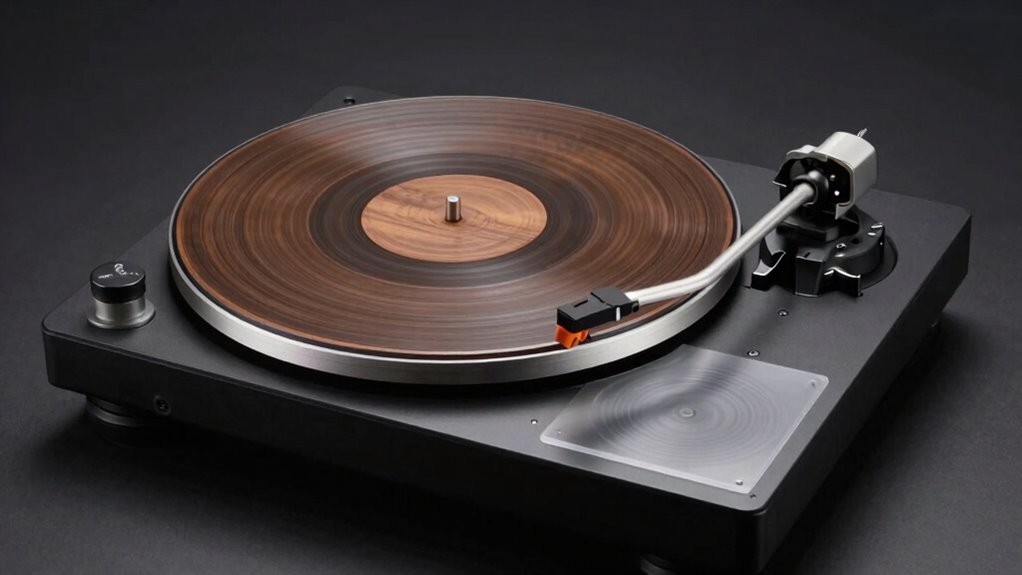

To stop bass rumble and feedback quickly, focus on isolating your turntable from external vibrations. Place it on a sturdy, vibration-dampening platform or pads designed for audio gear, and position it away from speakers and noisy equipment. make certain the surface is stable and absorbs vibrations. Proper equipment placement and damping can dramatically improve sound clarity. Keep experimenting with these solutions, and you’ll discover even more effective ways to achieve pristine sound quality.

Get audio and creator gear delivered free with Prime
- Fast, free delivery on millions of items
- Prime Video, Amazon Music and more included
- Member-only deals all year
Key Takeaways
- Place your turntable on a sturdy, vibration-absorbing stand away from speakers and foot traffic.
- Use isolation pads, platforms, or damping mats designed to reduce low-frequency vibrations.
- Ensure the turntable is properly grounded to prevent feedback and electrical hum.
- Position speakers and other equipment to avoid direct contact or proximity causing vibrations.
- Regularly check and tighten all connections and mounts to maintain stability and minimize unwanted vibrations.

Have you ever noticed how vibrations can ruin your listening experience on a turntable? Even the slightest tremor can cause unwanted noise, skipping, or muddled sound. That’s because your turntable is highly sensitive to external disturbances, especially bass rumble and feedback, which can distort your music. The key to preventing these issues lies in effective turntable isolation, starting with proper equipment placement and vibration damping techniques. When you place your turntable on the right surface, you minimize the transmission of vibrations from the environment. Avoid placing it directly on speakers, glass surfaces, or unstable furniture, as these tend to amplify vibrations. Instead, select a sturdy, solid stand made of dense material such as wood or metal, which absorbs and disperses vibrations more effectively. Position your turntable away from sources of mechanical vibrations, like foot traffic or appliances, to help keep external forces from reaching your record and stylus.
Vibration damping plays an essential role in turntable isolation. It involves adding materials or devices that absorb and dissipate vibrations before they reach your turntable components. You can use specialized isolation pads or platforms designed to reduce low-frequency disturbances. These damping tools act as a barrier, preventing vibrations from traveling through the surface and into your turntable. Some high-end turntables come with built-in vibration damping features, but if yours doesn’t, adding external damping mats or bases can considerably improve sound clarity. Remember, the goal is to create a stable, vibration-free environment that allows your stylus to track the record groove precisely, delivering clear, detailed audio without interference from unnecessary sound waves. Proper setup**** is crucial for achieving optimal sound quality and preventing feedback or bass rumble from compromising your listening experience.
turntable vibration isolation pads
As an affiliate, we earn on qualifying purchases.
As an affiliate, we earn on qualifying purchases.
Frequently Asked Questions
How Do I Identify if My Turntable Is Causing Bass Rumble?
You can tell if your turntable is causing bass rumble by listening for low-frequency vibrations or hearing rattling sounds during playback. To confirm, place your hand on the turntable and see if it vibrates excessively. In a recording studio, soundproofing techniques help minimize this issue, but proper turntable isolation is key. Use a sturdy, isolated platform to reduce vibrations and prevent bass rumble from affecting your recordings.
Can Room Acoustics Affect Turntable Isolation Effectiveness?
Think of your turntable as a delicate dancer on a stage. Room acoustics, like poor acoustic treatment or untreated walls, can shake that stage, making isolation less effective. When your space isn’t properly treated, vibrations and sound waves travel through the room, causing bass rumble and feedback. By adding room treatment, you dampen unwanted vibrations, ensuring your turntable stays steady, and your sound remains crisp and clear.
Are There Portable Solutions for Turntable Vibration Isolation?
Yes, there are portable solutions for turntable vibration isolation. You can use portable pads or mobile isolators that easily set up around your turntable, absorbing vibrations and reducing bass rumble and feedback. These lightweight options are perfect for moving between locations or quick setups. Simply place the pads or attach the isolators beneath your turntable, and you’ll notice improved sound clarity without sacrificing portability.
What Are the Signs of Feedback Issues During Playback?
Feedback issues can hit like a lightning strike, so stay alert. You’ll notice feedback symptoms such as loud squeals, ringing, or high-pitched noises during playback. Sound distortions may also appear, making music sound fuzzy or off-key. If you see these signs, stop playing immediately and check your setup. Proper isolation and positioning help prevent feedback, ensuring your vinyl sounds crystal clear without those disruptive noises.
How Often Should Turntable Isolation Equipment Be Maintained?
You should maintain your turntable isolation equipment every 6 to 12 months. Regular calibration ensures peak performance, and inspecting the isolation material for wear or damage helps prevent feedback issues and bass rumble. When maintaining, replace or upgrade the isolation material if necessary, and verify that the turntable remains stable. Proper upkeep guarantees clear sound and minimizes unwanted vibrations, keeping your playback smooth and free from feedback.
Conclusion
By investing in proper turntable isolation, you shield your sound from unwanted bass rumble and feedback, turning your setup into a fortress of clarity. Think of it as giving your turntable a sturdy foundation, allowing the music to shine without interference. With these simple steps, you’ll elevate your listening experience, transforming noise into a distant echo. Embrace these techniques, and watch your vinyl collection come alive like a symphony breaking free from its chains.
Halloween Picks
halloween
As an affiliate, we earn on qualifying purchases.