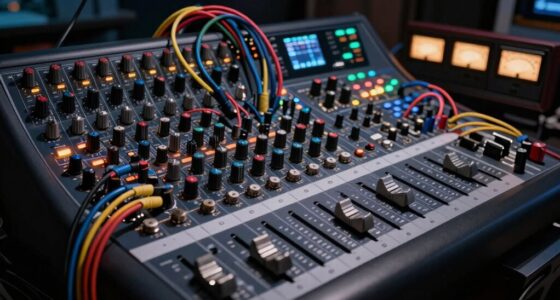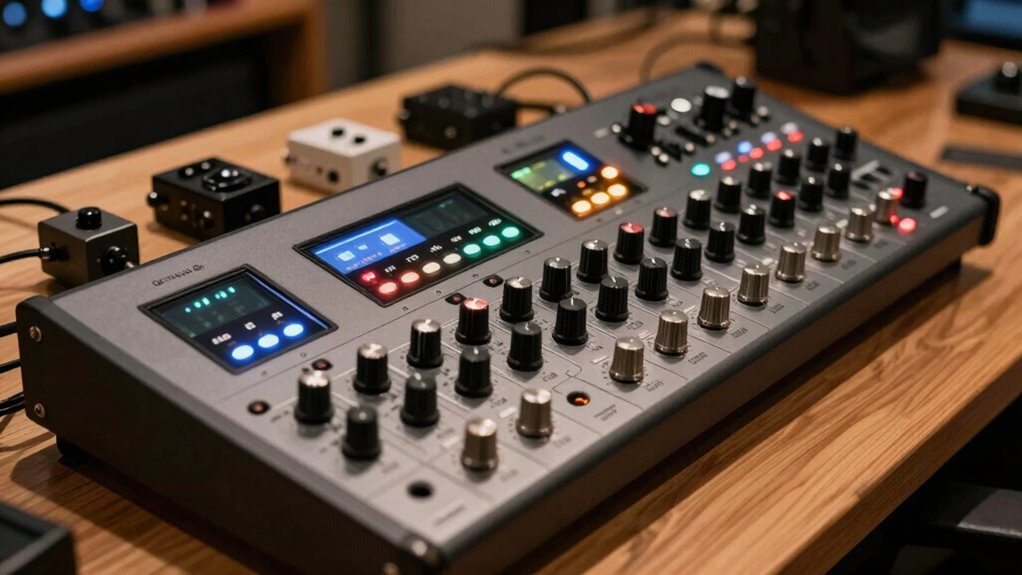

When choosing between a channel strip and separate gear, consider your budget, space, and workflow. Channel strips are budget-friendly, compact, and great for quick setups, making them ideal for beginners or limited spaces. Separate gear offers more flexibility and potential sound quality, perfect for those wanting to customize their signal chain and upgrade over time. To discover which option suits your needs best and learn more about their differences, continue exploring the details.

Get audio and creator gear delivered free with Prime
- Fast, free delivery on millions of items
- Prime Video, Amazon Music and more included
- Member-only deals all year
Key Takeaways
- Channel strips offer a cost-effective, space-saving solution with all-in-one functionality ideal for budget-conscious or small studios.
- Separate gear provides modularity and customization, allowing tailored signal chains and easier upgrades over time.
- Integrated channel strips streamline workflows, enabling quick setup and consistent performance, perfect for beginners or fast-paced environments.
- High-end separate components may deliver superior sound quality, appealing to professionals seeking maximum audio fidelity.
- Space limitations and future expansion needs influence the choice: channel strips for simplicity, separate gear for flexibility.
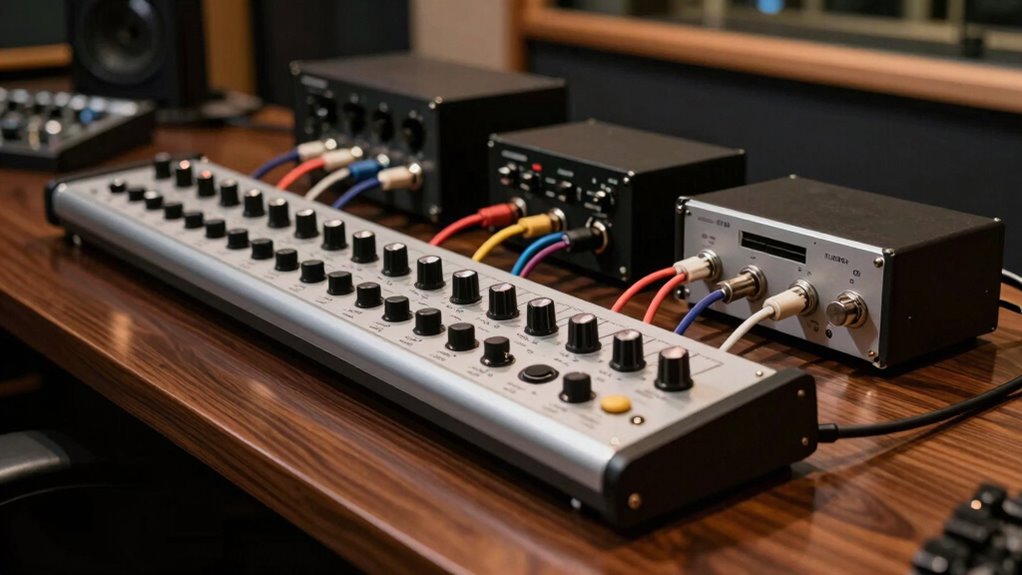
When choosing between a channel strip and separate gear for your audio setup, understanding their differences can help you make an informed decision. One of the first things to regard is the price comparison. Channel strips tend to be more cost-effective because they combine preamp, EQ, and compressor into a single unit, often offering a streamlined package at a lower overall cost. Separate gear, on the other hand, usually comes with higher individual prices, especially if you opt for high-end components. While investing in separate units might give you more flexibility and potentially better sound quality, it can also considerably increase your budget. If you’re just starting out or working within a limited budget, a channel strip provides a more economical solution without sacrificing too much in terms of functionality.
Space considerations are equally important when choosing between these options. Channel strips are designed to be compact and space-efficient, fitting neatly into a single rack or even sitting on a desk. This makes them ideal for home studios or setups where space is limited. Separate gear, however, requires multiple units, each needing its own rack space. This can quickly add up, making your setup bulkier and potentially harder to organize. If you have a small studio or a mobile setup, a channel strip’s integrated design can save considerable space, keeping your workspace cleaner and more manageable. Conversely, if you have ample room and want the ability to customize or upgrade individual parts over time, separate gear could be the better option despite the larger footprint.
Beyond price and space, you should also think about your workflow and future needs. Channel strips are great for quick setups, providing consistent, integrated sound with minimal fuss. They’re perfect if you prefer simplicity and efficiency. Separate gear, however, offers modularity—allowing you to mix and match different preamps, EQs, and compressors to craft a unique signal chain tailored to your style and projects. Although initially more complex and potentially more expensive, separate gear can evolve with your skills, giving you the flexibility to upgrade individual components rather than replacing entire units. Additionally, understanding how different audio technologies interact can help you select the best components for your setup.
As an affiliate, we earn on qualifying purchases.
Frequently Asked Questions
How Does Maintenance Differ Between Channel Strips and Separate Gear?
Maintenance for channel strips tends to be simpler because they offer integrated, all-in-one units with modular flexibility, making repairs straightforward. In contrast, separate gear involves more repair complexity since each piece often has different components and configurations, requiring more time and expertise. You’ll find that maintaining a channel strip usually means fewer parts to troubleshoot, while separate gear demands more careful attention to individual modules to keep everything functioning smoothly.
Which Option Offers Better Resale Value Over Time?
You’ll find that separate gear generally offers better resale value over time, especially in the resale market. They tend to have lower depreciation rates because buyers see them as more versatile and upgradeable. Channel strips often depreciate faster since they’re viewed as more integrated, and their value diminishes as technology advances. If resale value matters most, investing in quality separate gear could be the smarter choice.
Can Channel Strips Be Upgraded Individually?
Channel strips can be upgraded individually, making modular expansion and component customization simple. You can swap out or enhance specific parts, like preamps or EQ modules, without replacing the entire unit. This flexibility means you stay current with evolving technology while tailoring your setup to your needs. So, if you want to keep your gear fresh and functional, upgrading individual channel strip components is a smart, straightforward solution.
How Do Power Requirements Compare Between the Two Setups?
You’ll find that channel strips generally have lower power consumption compared to separate gear setups, making them more energy-efficient overall. When considering power requirements, a single channel strip uses less energy since it combines multiple functions into one unit. Separate gear, however, tends to consume more power because each piece operates independently. If energy efficiency is a priority, a channel strip offers a more streamlined, power-conscious solution for your recording needs.
Are There Specific Genres That Benefit More From One Setup?
Certain genres, like vocals or acoustic recordings, benefit from channel strip setups due to their genre-specific advantages, offering streamlined processing and quick adjustments. For genres that demand high flexibility, such as electronic or rock, separate gear provides better genre compatibility, allowing you to customize and tailor your sound precisely. Your choice depends on your genre focus; channel strips excel in simplicity, while separate gear offers more versatile options for diverse styles.
Conclusion
Ultimately, choosing between a channel strip and separate gear depends on your workflow and budget. While some worry that integrated units might limit flexibility, modern designs offer customization and high-quality sound. If you prefer simplicity without sacrificing tone, a channel strip can be a smart, cost-effective choice. Just remember, investing in quality gear—whether integrated or separate—will always serve your recordings better than cutting corners. Your decision should enhance your creative process, not hinder it.
Fall Picks
fall essentials
As an affiliate, we earn on qualifying purchases.