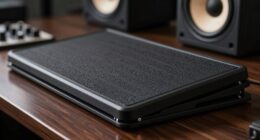
Reflection filters are practical tools that help improve your audio quality by reducing unwanted sound reflections and background noise during recordings. They work best when used alongside good microphone placement, especially in spaces with hard surfaces or poor acoustics. While they won’t fix every issue or replace proper room treatment, they can make your recordings sound more direct and focused. Keep exploring to discover how to get the most out of your setup.
Key Takeaways
- Reflection filters improve vocal clarity by reducing room reflections and reverberations during recordings.
- They are most effective in small, acoustically untreated spaces with reflective surfaces.
- Reflection filters complement good microphone placement but do not replace proper acoustic treatment.
- They do not influence camera quality or visual aspects but focus solely on sound quality.
- Their benefit is limited without proper environment setup; they are a practical addition, not a complete solution.
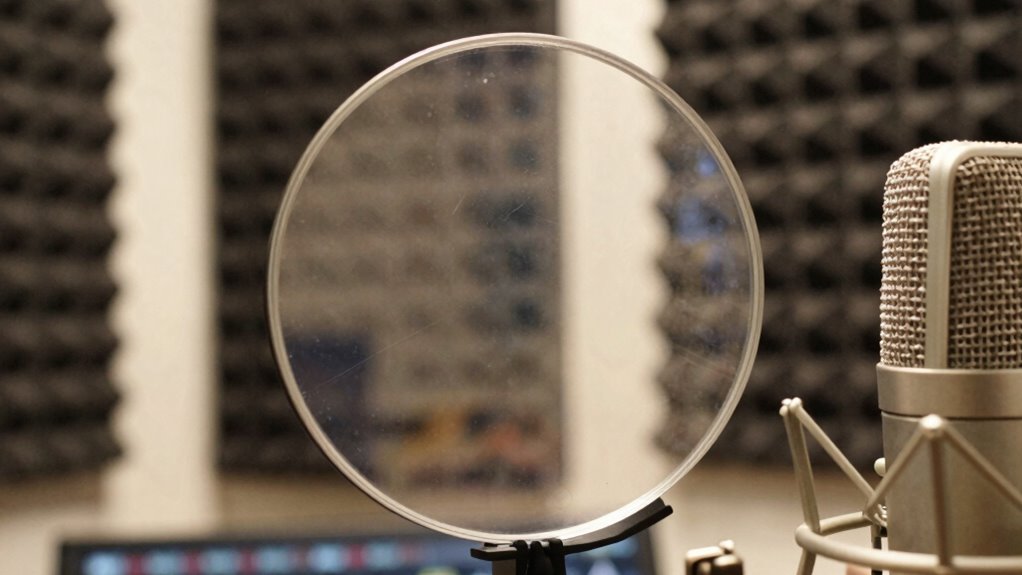
Reflection filters are essential tools for anyone recording audio, especially in less-than-ideal environments. They serve as a practical solution to improve sound quality without the need for a full-fledged studio. When you’re recording vocals or voiceovers, your environment can markedly impact the final audio. Echoes, room noise, and reflective surfaces can muddy your recordings, making it harder for your audience to focus on your message. A reflection filter helps redirect and absorb unwanted sound waves, reducing reverberation and background noise. This ensures your voice remains clear and consistent, no matter where you’re recording.
One common misconception is that reflection filters are a magic fix that instantly transforms poor recordings into studio-quality audio. In reality, they are best used as part of a broader setup that includes good microphone placement and proper acoustics. When used correctly, reflection filters can dramatically improve audio clarity by minimizing reflections that cause echo and reverb. They don’t alter your voice or improve your microphone’s camera quality, but they ensure that your voice is captured as cleanly and accurately as possible. The result is a more professional sound that’s free of distracting background noise, making your content more engaging and easier to listen to.
You might notice that with a reflection filter, your recordings sound more direct and focused. This is because the filter acts as a barrier, preventing sound waves from bouncing off nearby surfaces and reaching your microphone at different times. As a result, your voice is captured with greater precision, which can make a notable difference when editing or mixing your audio later. The clarity you gain isn’t just an aesthetic bonus; it reduces the need for excessive post-production correction, saving you time and effort.
It’s important to remember that reflection filters aren’t a one-size-fits-all solution. They work best in environments where you can’t control every aspect of your recording space. If you’re recording in a small room with hard surfaces, a reflection filter can make a tangible difference. However, if your space already has good sound treatment, the additional benefit might be marginal. Also, keep in mind that reflection filters won’t enhance your camera quality or visual aspects of your recording; they focus solely on improving the audio clarity. Additionally, proper acoustic treatment can complement the use of reflection filters for even better results.
Frequently Asked Questions
Do Reflection Filters Improve Sound Quality Significantly?
Reflection filters can improve your sound quality, but the extent depends on your studio acoustics and microphone compatibility. They reduce unwanted room noise and echo, helping your voice sound clearer. If your space has poor acoustics, a reflection filter offers noticeable benefits. However, if your studio already has good sound treatment, the difference may be minimal. Always consider your setup to determine if a reflection filter will truly enhance your recordings.
Can Reflection Filters Be Used With All Microphone Types?
Yes, reflection filters can be used with most microphone types, but their effectiveness depends on microphone compatibility and your acoustic treatment setup. They work best with cardioid microphones, which pick up sound primarily from one direction. Before using a reflection filter, verify it fits your microphone size and consider your room’s acoustic treatment to maximize sound quality. Proper compatibility ensures you get the most benefit from the filter.
Are Reflection Filters Suitable for Live Performances?
Reflection filters aren’t ideal for live performances because they’re designed mainly for studio setups. You might think they’re a quick fix, but they don’t withstand the movement and noise of live settings. If you’re on a budget, they can help improve sound quality in a controlled environment, but for live gigs, investing in proper stage mics and sound treatment is smarter. Reflection filters work best where stability and controlled acoustics matter most.
How Do Reflection Filters Affect Recording Environment Acoustics?
Reflection filters improve your recording environment by reducing room resonance and echo, creating a clearer sound. They block unwanted reflections that bounce off walls, helping your microphone focus on your voice. As a result, you’ll notice less muddiness and a more professional recording. By controlling the acoustics, reflection filters make your recordings sound more natural and polished, even in less-than-ideal spaces.
What Are the Maintenance Requirements for Reflection Filters?
You should regularly clean your reflection filter to maintain peak performance, using a damp cloth to remove dust and debris. Check that it remains securely attached to your setup, ensuring compatibility with your microphone stand and other equipment. While maintenance is minimal, consider cost considerations if you need replacement parts or upgrades. Proper upkeep keeps your filter functioning effectively and prolongs its lifespan, making it a worthwhile investment for your recording environment.
Conclusion
Remember, honesty is the best policy. Reflection filters can improve your recordings, but they’re not a magic fix. Use them wisely, understanding their strengths and limitations. Don’t rely solely on technology—your voice and technique matter most. As the saying goes, “A chain is only as strong as its weakest link.” Stay genuine, keep learning, and let your authentic sound shine through. That’s when your recordings truly resonate.