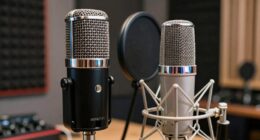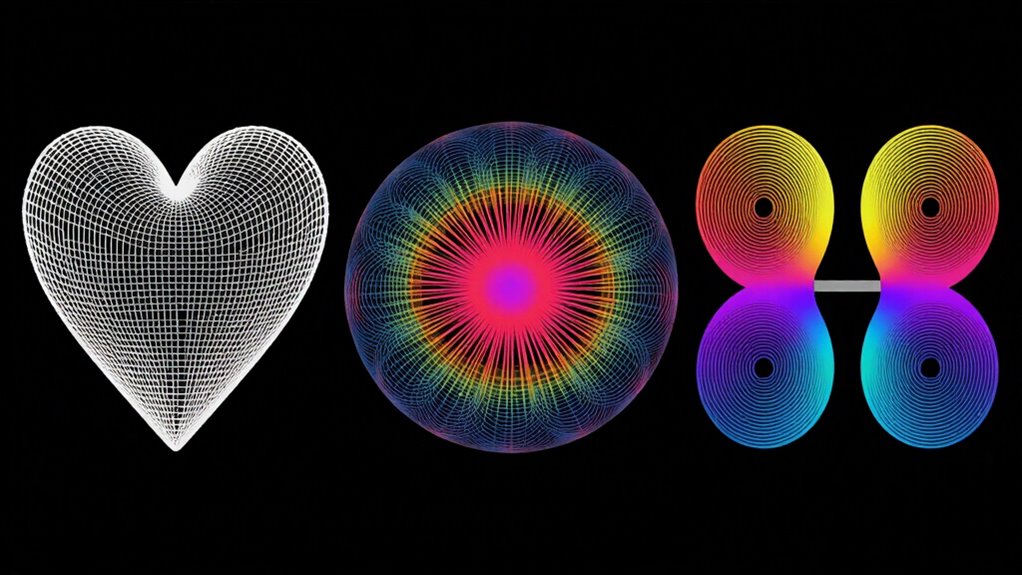
Understanding polar patterns helps you choose the right microphone for your needs. Cardioid picks up sound mainly from the front, perfect for isolating vocals. Omnidirectional captures sound equally from all directions, ideal for group or ambient recordings. Figure-8 listens from front and back while rejecting sides, great for face-to-face interviews. Learning about these patterns lets you improve your setup for better audio. Keep exploring to see how each pattern works best in different situations.
Key Takeaways
- Polar patterns describe how microphones pick up sound from different directions, affecting sensitivity and noise rejection.
- Cardioid microphones focus on sound from the front, rejecting most noise from sides and rear.
- Omnidirectional microphones capture sound equally from all directions, ideal for ambient recordings.
- Figure-8 microphones pick up sound from front and back, while rejecting sides, useful for stereo and face-to-face recordings.
- Understanding these patterns helps select the right microphone for specific recording needs and environments.
Understanding polar patterns is essential for anyone working with microphones, as they determine how your device captures sound from different directions. When you choose a microphone, knowing its polar pattern helps you predict how it will respond to sound wave direction and how sensitive it will be in various environments. Microphone sensitivity refers to how well a mic picks up sound, but the polar pattern defines which sounds it captures best based on their source location. This knowledge allows you to optimize your setup, reduce unwanted noise, and improve overall audio quality.
Imagine you’re recording vocals in a studio. If your microphone has a cardioid pattern, it primarily picks up sound coming from the front, rejecting most noise from the sides and rear. This directionality makes it ideal for isolating the singer’s voice from background noise, ensuring your recording is clean and focused. The sound wave direction is vital here because the cardioid pattern is designed to respond to sounds originating from directly in front of the mic, while diminishing sounds from other angles. The microphone sensitivity is highest at the front, where you want it, and tapers off toward the sides and back, making it easier to control what gets recorded.
A cardioid microphone isolates vocals by capturing sound mainly from the front, reducing side and rear noise.
Switch to an omnidirectional microphone, and you’ll notice a different behavior. This pattern captures sound equally from all directions, regardless of sound wave direction. This is perfect when you want a natural, ambient sound or are recording a group of people around a single microphone. Since the sensitivity is uniform across all angles, it picks up more background noise, but it also offers a more balanced, realistic sound. Understanding how the sound wave direction affects the mic’s response helps you decide whether an omnidirectional pattern suits your needs or if you should opt for a more focused pattern like cardioid.
The figure-8, or bidirectional, polar pattern is unique because it captures sound from both the front and back while rejecting noise from the sides. This pattern is often used in stereo recordings or interviews where two sources face each other. Here, sound wave direction plays a crucial role: the microphone’s sensitivity peaks at the front and back, but dips in the middle. Knowing how the sound wave direction influences this pattern helps you position the mic correctly for optimal recording. It’s especially useful when you want to capture two sources equally without capturing much from the sides. Additionally, understanding polar pattern variations can help you choose the right microphone for different recording scenarios.
Frequently Asked Questions
How Do Polar Patterns Affect Live Sound Reinforcement?
Polar patterns markedly impact live sound reinforcement by enhancing your setup’s versatility. For example, cardioid mics help reduce feedback and isolate sound sources, addressing common live sound challenges. Omni patterns capture more ambient sound, useful in certain situations. Understanding these patterns allows you to choose the right microphone for each scenario, minimizing issues like feedback and ensuring clearer, more controlled live performances.
Can a Microphone Switch Between Different Polar Patterns?
A microphone can absolutely switch between different polar patterns, thanks to advanced pattern switching mechanisms. This feature offers unparalleled polar pattern versatility, allowing you to adapt quickly to varied recording environments. With a simple switch, you can go from capturing a focused cardioid sound to a more ambient omni or figure-8 pattern, making your microphone a true chameleon in any recording or live setting.
What Is the Best Polar Pattern for Recording Vocals?
You should choose a cardioid polar pattern for recording vocals, as it focuses on your voice and minimizes background noise. This pattern helps capture vocal clarity by rejecting sounds from the sides and rear, ensuring your voice remains prominent. Using a cardioid mic allows you to record clean, professional-sounding vocals while reducing ambient noise, making it ideal for studio or live settings where clarity is essential.
How Do Environmental Factors Influence Polar Pattern Performance?
Imagine your microphone as a lighthouse guiding sound through foggy surroundings. Environmental factors like room acoustics and ambient noise can distort this beam, causing unwanted echoes or background sounds to creep in. These factors influence how well a polar pattern performs by either amplifying or dampening sounds from certain directions. To get clear recordings, you need to take into account your environment and choose a polar pattern that minimizes noise and reflections.
Are There Microphones With Adjustable or Hybrid Polar Patterns?
Yes, you can find adjustable microphones with hybrid polar patterns. These microphones let you switch or blend between patterns like cardioid, omni, and figure-8, giving you versatile sound control. For example, some condenser microphones feature adjustable polar pattern controls, allowing you to tailor the pickup to your environment or recording needs. Hybrid polar pattern microphones are perfect for dynamic situations where flexibility is key, enhancing your audio quality.
Conclusion
Now that you know these polar patterns, it’s almost like they found you just when you needed them. Whether you’re recording vocals, capturing a live performance, or just experimenting, understanding these patterns can unexpectedly improve your sound. It’s funny how the right mic at the right moment can make all the difference, isn’t it? So, keep these patterns in mind—sometimes, the perfect audio solution comes when you least expect it.