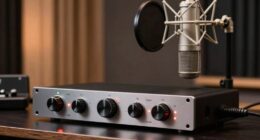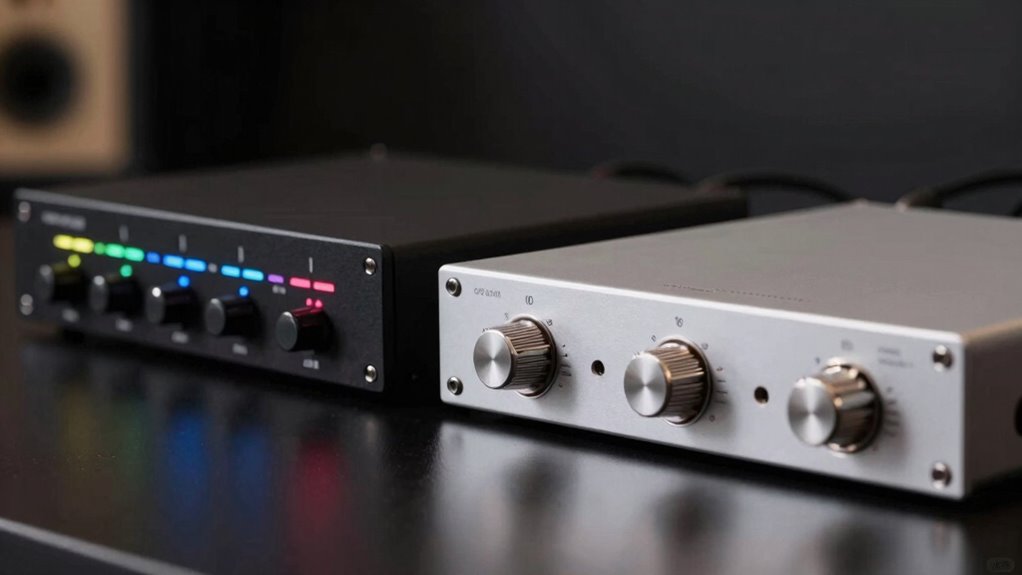

If you seek warmer, richer sounds for vocals or instruments, upgrading to external preamps makes sense. They add sonic character and depth that your interface’s built-in preamps often lack. External units excel at reducing noise and providing a more musical, pleasing tone. If your goal is pristine, transparent recordings, your interface preamps may suffice. Curious about how to choose the right option? Keep exploring to discover when and why an upgrade truly makes a difference.
Key Takeaways
- External preamps matter when seeking warmer, more musical tones for vocals and acoustic instruments.
- Upgrading external preamps benefits recordings needing greater depth, character, and sonic richness.
- Interface preamps are sufficient for projects prioritizing transparency and digital clarity over coloration.
- When noise reduction and clean signals are critical, high-quality external units can significantly improve sound quality.
- The decision to upgrade depends on your sonic goals, workflow, and whether you desire analog warmth or digital fidelity.

When choosing between interface preamps and external preamps, understanding their differences can substantially impact your recording quality. You might notice that some recordings sound warm and full, while others feel sterile or overly polished. That’s where the qualities of analog warmth and digital clarity come into play. Interface preamps are built into your audio interface, offering convenience and tight integration, but they often have limitations in capturing the richness of your sound. External preamps, on the other hand, are standalone units designed specifically for high-quality sound capture, often providing a more organic, warm tone that can elevate your recordings.
Analog warmth is a key advantage of many external preamps. When you use an external preamp, you often get a richer, more natural sound that can add depth and character to vocals and instruments. This warmth comes from the circuitry and components that emulate classic analog gear, giving you that desirable musicality and fullness. Digital clarity, however, is typically more prominent in interface preamps. Since these are designed to be transparent and minimize coloration, they produce a clean, precise signal that preserves your source material’s original detail. This clarity is especially useful when you want your recordings to sound pristine and true to life, or when you plan to process the sound further in your digital audio workstation. Additionally, high-quality analog preamps often feature better noise reduction capabilities, ensuring a cleaner recording environment.
Choosing between the two depends on your specific needs and workflow. If you’re after a sound with a bit of vintage character and a natural, warm feel, an external preamp can make a noticeable difference. It can add a pleasing color that enhances vocals or acoustic instruments, making your recordings more engaging. Conversely, if your priority is capturing the clearest, most accurate sound possible—perhaps for a project that involves heavy editing or processing—you’ll benefit from the digital transparency of an interface preamp. These are often more convenient and cost-effective, especially for home studios or mobile setups.
Keep in mind that some high-end audio interfaces now include preamps that strike a balance between warmth and clarity, offering a compromise that can work for many applications. But if you find yourself craving the organic qualities of analog warmth or need to achieve a certain sonic character, investing in an external preamp might be the upgrade that makes a real difference in your recordings. Ultimately, understanding these differences helps you make more informed decisions, ensuring your sound quality aligns with your artistic vision.
Frequently Asked Questions
How Do Preamp Quality Differences Impact Overall Recording Quality?
Your preamp quality directly impacts your recording’s clarity and detail. Higher-quality preamplifier circuitry provides a cleaner, more transparent sound, reducing distortion. It also improves the signal to noise ratio, meaning less background hiss and interference. When you upgrade to a better preamp, you’ll notice richer, more accurate recordings, especially with quiet sources. So, investing in quality preamp components makes a significant difference in achieving professional-sounding results.
Can Upgrading Preamps Improve All Types of Audio Recordings Equally?
Upgrading preamps can enhance your recordings, but it doesn’t improve all types equally. If you’re after analog warmth or want to reduce distortion effects, a higher-quality preamp makes a noticeable difference, especially in vocals or acoustic instruments. However, for electronic or heavily processed sounds, the upgrade might be less impactful. Focus on your specific needs; a better preamp truly shines where its character adds value.
Are External Preamps Always Better Than Interface Preamps for Vocals?
Think of your vocals as a delicate flower needing just the right sunlight. External preamps aren’t always better; they can offer richer tone and more power, but only if they’re compatible with your studio setup and have a reliable power supply. If your interface’s preamp suits your microphone and workflow, upgrading might not be necessary. It’s about matching the preamp to your studio’s harmony, not just chasing external prestige.
How Do Preamp Noise Levels Affect Sensitive Microphone Recordings?
When your preamp’s noise floor is high, it introduces unwanted noise into sensitive microphone recordings, making your vocals sound less clear. Low noise levels are essential to prevent preamp distortion, which can degrade audio quality. If you’re recording quiet sources or vocals, investing in a preamp with a low noise floor guarantees cleaner sound. Otherwise, noise and distortion may overshadow your performance, reducing overall recording quality.
What Budget Options Are Best for High-Quality External Preamps?
If you’re looking for budget-friendly options, consider preamps like the ART Pro MPA or Focusrite ISA One, which deliver surprisingly high-quality sound for their price. For high-end alternatives, look into units like the API 512c or Manley Classic, offering superior clarity and low noise. These choices let you upgrade your setup without breaking the bank, ensuring your recordings sound professional and clean.
Conclusion
Choosing between interface and external preamps can feel like deciding between a swift stream and a raging river. While your interface preamp might be enough now, upgrading to an external preamp can open a world of sonic clarity and depth that’ll blow your mind—making your recordings sound more alive than you ever thought possible. Don’t settle for mediocrity; when you upgrade, you’re stepping into a domain where your music truly becomes legendary.