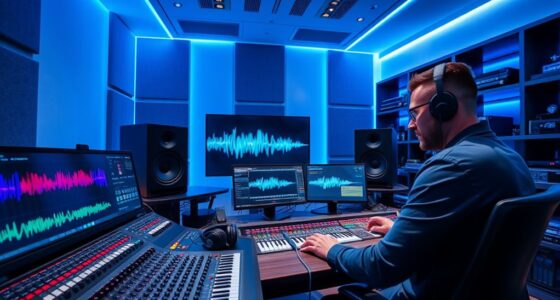
To guarantee your headphone mix translates well, focus on checking mono compatibility by regularly switching between stereo and mono to catch phase issues. Maintain a balanced, coherent stereo image by attentive panning, levels, and frequency distribution, especially keeping bass centered. Use visual tools like phase and correlation meters for precision. Practicing a disciplined workflow with reference tracks and cross-system checks helps your mix sound clear and impactful everywhere—continue exploring how to perfect this process for consistent professional results.
Key Takeaways
- Regularly toggle between stereo and mono to identify and fix phase issues that hinder translation.
- Maintain a balanced headphone mix by careful panning, level adjustments, and frequency distribution.
- Use reference tracks and visual meters to ensure consistency and mono compatibility across listening environments.
- Prioritize mono checks and phase alignment to guarantee clarity and impact on various playback systems.
- Develop a disciplined workflow focused on mono compatibility and cross-system listening for professional translation.

Mixing on headphones can be challenging, but with a clear workflow, you can achieve professional results. One of the most critical aspects to consider is ensuring your mix translates well across different playback systems. This begins with understanding mono compatibility, which involves checking how your mix sounds when summed to mono. Many listeners use devices that automatically switch to mono or experience phase issues that cause elements to disappear or sound thin. To avoid this, regularly switch your mix to mono during your session. This practice helps you identify problems like phase cancellation and guarantees that your mix maintains clarity and impact in mono. Additionally, maintaining a good headphone mix balance is essential. You want to create a balanced stereo image that feels natural and coherent, even when you collapse to mono. This means paying close attention to panning, levels, and frequency distribution to prevent certain elements from overpowering others or disappearing when summed.
Ensure your mix translates well by regularly checking mono compatibility and maintaining balanced headphone levels.
When working on your headphone mix, start by setting a solid foundation with a well-balanced stereo image. Use your reference tracks to gauge how a professional mix sits in terms of mono compatibility and headphone mix balance. Regularly toggle between stereo and mono to catch any phase issues or imbalances early. Be cautious with panning—extreme placements can sound great in stereo but may cause issues when summed to mono. Keep your bass and kick centered, as these are vital for clarity and should be mono-compatible. Vocals and lead instruments can be panned wider, but always check how they translate in mono to make sure they don’t phase out or become inaudible.
A key part of your workflow should involve referencing on multiple systems. Listen to your mix on different headphones, speakers, and even in mono to understand how it translates. This helps you fine-tune the headphone mix balance so that it sounds consistent across environments. Use visual tools like phase meters and correlation meters to monitor mono compatibility and stereo imaging. This visual feedback allows you to make precise adjustments, guaranteeing that your mix maintains clarity whether in stereo or mono. Paying attention to the contrast ratio of your monitoring environment can also help you better judge the overall dynamic range and depth of your mix, ensuring it translates well regardless of playback system.
Ultimately, a disciplined approach to mono compatibility and headphone mix balance guarantees your mix will translate well beyond your headphones. It’s about developing an ear for how elements interact in different listening scenarios and adjusting your workflow accordingly. With consistent practice and attention to these details, you’ll produce mixes that sound professional, balanced, and true to your artistic intent, no matter where they’re played.
Frequently Asked Questions
How Do I Choose the Best Headphones for Mixing?
To choose the best headphones for mixing, focus on a flat frequency response to guarantee accurate sound reproduction. Comfort is key, so pick headphones that fit well and feel comfortable during long sessions. Look for models with a wide frequency range, good isolation, and durable build quality. Try them on if possible, and read reviews to see how they perform for mixing, ensuring they translate well across different systems.
What Are Common Headphone Mixing Mistakes to Avoid?
You should avoid common headphone mixing mistakes like neglecting proper headphone calibration, which skews your sound perception. Be cautious with panning techniques; overdoing them can create an unbalanced mix. Always trust your ears, regularly calibrate your headphones, and use subtle panning to maintain clarity. Stepping back to evaluate your mix on different systems also helps prevent these mistakes and guarantees your headphones translate well to other listening environments.
Can I Achieve Professional Results With Budget Headphones?
Like a painter with a modest palette, you can still craft a masterpiece using budget headphones. While studio acoustics and headphone comfort shape your listening environment, they don’t have to limit your results. Focus on learning your gear’s nuances, trust your ears, and fine-tune your mixes carefully. With patience and attention, you’ll translate your vision into professional-sounding tracks, regardless of the price tag on your headphones.
How Do I Ensure My Headphone Mix Translates Well to Other Systems?
To guarantee your headphone mix translates well, focus on maintaining spatial awareness in your mix and regularly calibrate your headphones for accuracy. Use reference tracks and switch between systems to identify issues. Adjust your mix based on how it sounds across different devices. This approach helps you create a balanced, clear sound that translates reliably, giving you confidence that your mix will sound good everywhere.
What Are Essential Headphone Mixing Tips for Beginners?
Many believe headphone mixing is straightforward, but room acoustics and proper calibration are essential. As a beginner, start by calibrating your headphones accurately and listen in a quiet, treated space. Trust your ears, and avoid over-relying on visual cues. Regularly compare your mix on different systems, and take breaks to prevent ear fatigue. These steps help guarantee your headphone mixes translate well across various listening environments.
Conclusion
Think of your headphone mix as a finely tuned compass guiding your listener through a vast musical landscape. When you refine your workflow, every element aligns like stars in a clear night sky, leading to a seamless journey. Mastering this process transforms your headphones from mere tools into portals of immersive sound. With patience and precision, you’ll navigate the depths of your mix, ensuring it resonates just as vividly through any speaker or device—truly a voyage worth mastering.